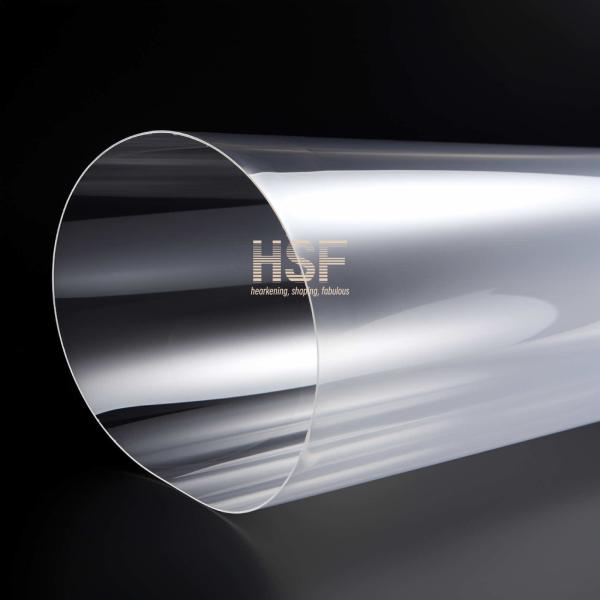
50μm PET Silicone Coated Release Film
50μm clear PET single side silicone coated release film is designed for applications requiring high-performance release liners. This versatile material offers excellent clarity, dielectric properties, and mechanical strength suitable for various industrial applications.
Primary Applications
- Pressure-sensitive Labels: High-quality surface finish and excellent clarity ensure easy removal without adhesive residue
- Die-Cut Adhesive Components: Excellent release properties maintain adhesive integrity during processing with easy alignment capability
- Protective Films: High tensile strength and puncture resistance protect surfaces from scratches and damage during manufacturing and transportation
- Photo-Receptive Films: Superior clarity and dielectric properties ideal for printing and imaging applications
- Insulating Materials: High dielectric strength and excellent insulation properties for electrical and electronics components
Technical Specifications
| S/N | Test Item | Unit | Standard | Value | Test Method |
| 1 | Thickness | μm | 50 ±2% | 49.72 | GB/T6672 |
| 2 | Color | - | Transparent | - | - |
| 3 | Tensile Strength MD | Mpa | ≥180 | 187 | GB/T 1040.3 |
| 3 | Tensile Strength TD | Mpa | ≥190 | 196 | GB/T 1040.3 |
| 4 | Elasticity Modulus MD | Mpa | / | 4144 | / |
| 4 | Elasticity Modulus TD | Mpa | / | 4230 | / |
| 5 | Elongation @ break MD | % | ≤200 | 148 | / |
| 5 | Elongation @ break TD | % | ≤200 | 139 | / |
| 6 | Thermal Shrinkage MD | % | ≤1.5 | 0.96 | 150℃/30min |
| 6 | Thermal Shrinkage TD | % | ≤0.0 | 0.00 | 200℃/10min |
| 7 | Friction Coefficient F/M-US | % | ≤0.65 | 0.5 | GB/T 10006 |
| 7 | Friction Coefficient F/M-UK | % | ≤0.50 | 0.3 | GB/T 10006 |
| 8 | Haze | % | ≤5 | 2.99 | GB/T2410 |
| 9 | Luminousness | % | ≥86 | 89.4 | GB/T2410 |
| 10 | Glossiness | % | ≥100 | 133 | GB/T8807 |
| 11 | Wetting Tension | mN/m | ≥50 | 58 | GB/T14216 |
| 12 | Release Force | gf/25mm | 10-20 | 15 | Final 10, 20min. |
| 13 | Sub-sequent Adhesion Rate | % | ≥85% | 92 | / |
Curing Method Comparison
Thermal vs UV Cured Silicone Coated Release Film
The primary differences between clear PET thermal cured and UV cured silicone coated release films lie in curing methods, processing conditions, properties, and applications.
Key Differences
- Curing Method: Thermal curing uses heat for cross-linking, while UV curing employs UV radiation for photochemical reactions
- Processing Conditions: Thermal curing requires high temperatures, limiting substrate compatibility; UV curing uses lower temperatures for broader substrate range
- Properties: Thermal cured offers better dimensional stability and temperature resistance with longer shelf life; UV cured provides superior optical clarity with less yellowing tendency
- Applications: Thermal cured suits high-temperature applications (medical, industrial, automotive); UV cured ideal for optical clarity requirements (labels, graphics, delicate substrates)
Tape Application Considerations
UV curing is most common in tape applications due to faster curing times, lower energy consumption, and substrate flexibility. However, thermal curing is required for high-temperature adhesive tapes used in automotive and electronics industries where temperature resistance is critical.
Industry Trends
The PET silicone coating industry is shifting toward electron-beam (EB) and UV curing processes due to environmental benefits, faster curing times, better controllability, increased substrate compatibility, and improved cost-effectiveness. While thermal curing remains widely used, EB and UV methods are becoming preferred for many applications.