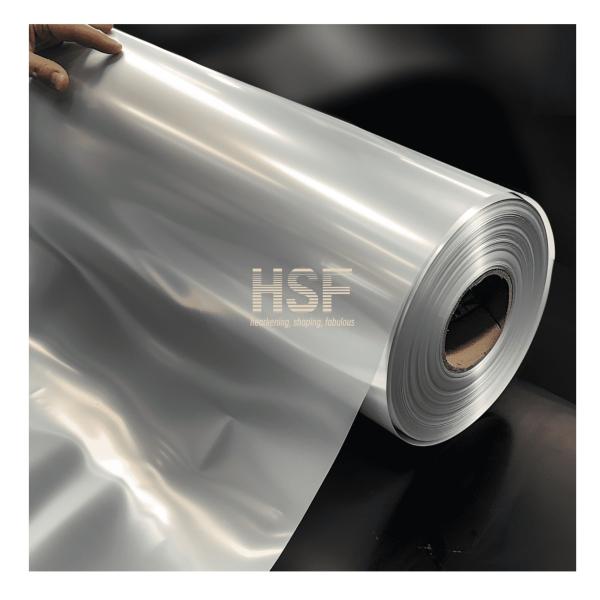
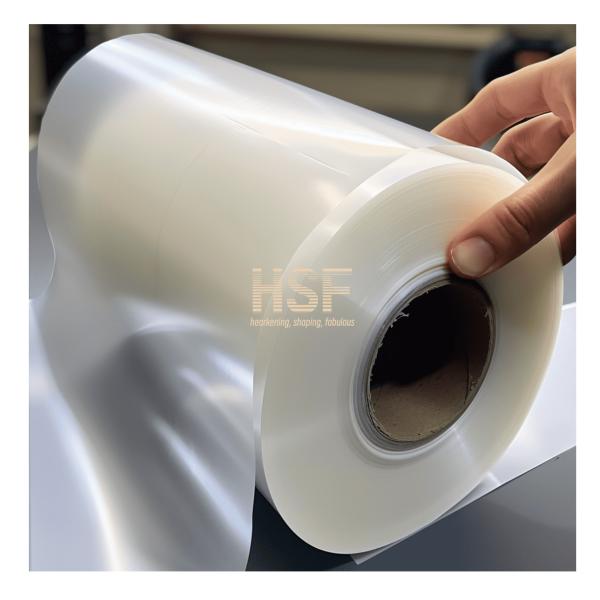
50μm BOPP Film
BOPP Film Production Process
The manufacturing of BOPP film involves a precise multi-step process:
- Raw Material Preparation: Selection and pretreatment of polypropylene resin including drying and filtration
- Extrusion: Melting and extruding the pretreated resin into film form
- Orientation: Biaxial stretching to orient molecular chains and enhance strength and toughness
- Heat Setting: Thermal treatment to stabilize film dimensions and properties
- Cooling: Controlled cooling to appropriate temperature levels
- Winding: Rolling the finished film for storage and transportation
Process parameters including extrusion temperature, stretching speed, and heat setting conditions are carefully controlled to ensure optimal product quality.
BOPP vs CPP Film Comparison
Biaxially Oriented Polypropylene (BOPP) film and Cast Polypropylene (CPP) film differ significantly in production methods and performance characteristics. BOPP undergoes biaxial stretching for enhanced molecular orientation, resulting in superior tensile strength, elasticity, and impact resistance with lower gas and water vapor permeability.
BOPP film is ideal for applications requiring high strength and toughness such as packaging and capacitor films, while CPP offers greater flexibility and transparency for food wrap and agricultural applications. BOPP also provides a wider thickness range compared to CPP films.
Matte BOPP Film Applications
Matte BOPP film serves diverse industrial applications by reducing glossiness and enhancing product texture:
- Packaging: Food, pharmaceutical, and cosmetic packaging for improved aesthetics
- Printing: Surface treatment for softer, more natural printed patterns
- Home Decor: Curtains and wallpaper for comfortable, warm atmospheres
- Electronics: Device surface covering to reduce reflection and improve visibility
- Automotive Interior: Instrument panels and consoles for enhanced texture and comfort
- Signage: Clear, eye-catching signs and displays
Product Specifications
Commercial Name: Bi-axially oriented polypropylene
Model Number: PBIP-50
Lot Number: 2403-29
Production Date: 2024.04.03
Test Environment: Temp 23±2℃, RH 50±5%
Inspection Date: 2024.04.03
Executive Standard: GB/T32021-2015
Quality Test Results
| Test Item | Standard Request | Typical Data | Results |
| Appearance - Defects | Not allowed | No | Ok |
| Appearance - Minor Issues | Slight allowable | Slight | Ok |
| White Points Φ0.2-0.5/㎡ | 0-80 | 40 | Ok |
| White Points Φ0.6-1.0/㎡ | 0-20 | 10 | Ok |
| White Points >Φ1.0/㎡ | Not allowed | 0 | Ok |
| Thickness Average | ±5.0% | 49.5 | Ok |
| Thickness Ultimate Deviation | ±6.0% | 3 | Ok |
| Thickness Average Deviation | ±3.0% | 0.2 | Ok |
| Tensile Strength MD | ≥ 100 MPa | 133 | Ok |
| Tensile Strength TD | ≥ 160 MPa | 265 | Ok |
| Elongation @ Break MD | ≤ 180% | 182 | Ok |
| Elongation @ Break TD | ≤ 65% | 57 | Ok |
| Shrinkage MD | ≤ 4.0% | 3.0 | Ok |
| Shrinkage TD | ≤ 2.0% | 0.5 | Ok |
| Friction Coefficient Inside | 0.25-0.50 | 0.22/0.20 | Ok |
| Friction Coefficient Outside | 0.25-0.50 | 0.21/0.19 | Ok |
| Glossiness | ≤ 15 | 4.8 | Ok |
| Haze | ≥ 76 | 93.4 | Ok |
| Wetting Tension Inside | ≥ 38 | 45 | Ok |
| Wetting Tension Outside | ≥ 38 | 45 | Ok |
| Density | ≥ 0.86 | 0.865 | Ok |
| Hygienic Performance | GB 4806.7-2016 | yes | Ok |
| Odor Free | No Odor | yes | Ok |
Inspection Conclusion: Fulfill the technical standard