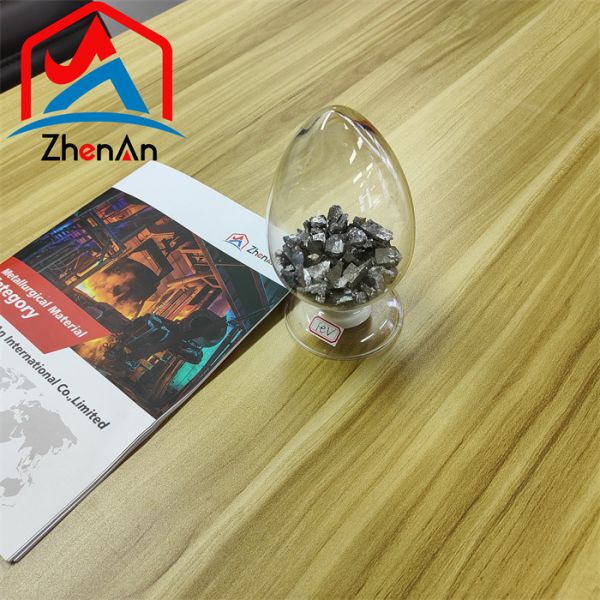
Ferrovanadium FeV 75 High Purity Lumps (Metallic Silver) – Optimized for Steel Deoxidation & Alloying
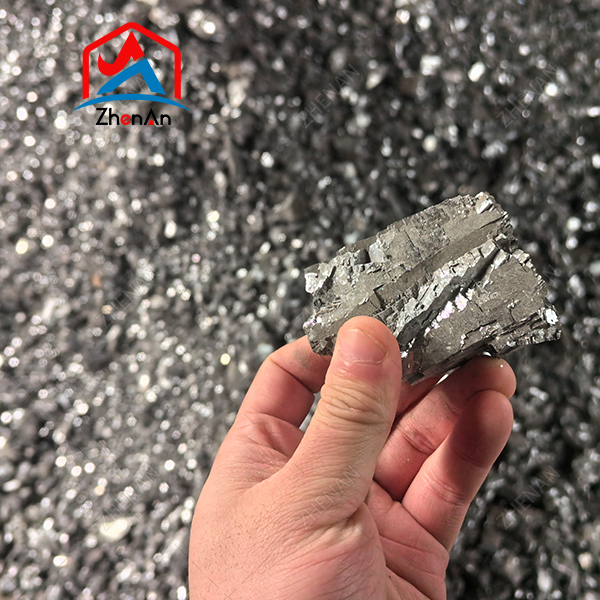
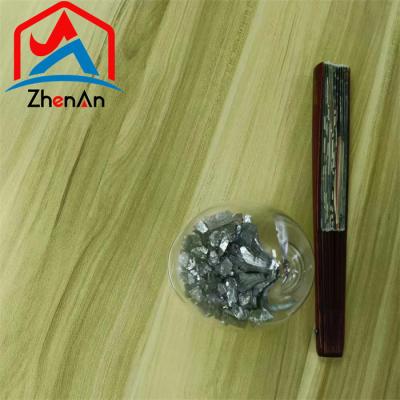
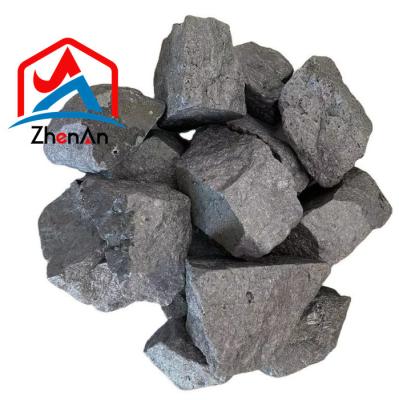
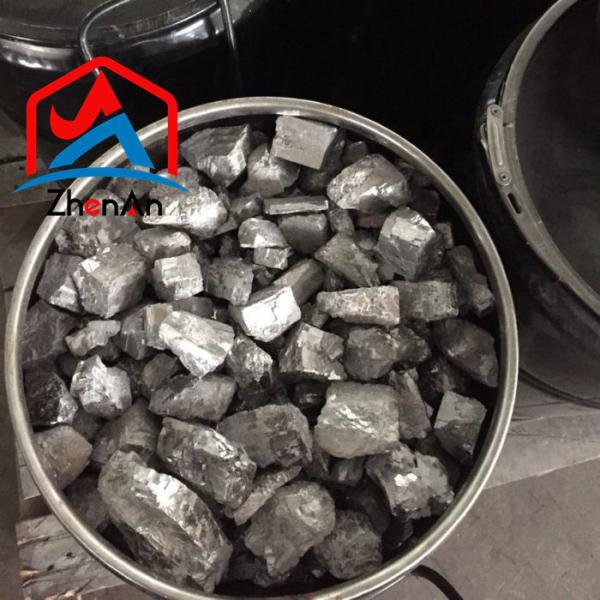
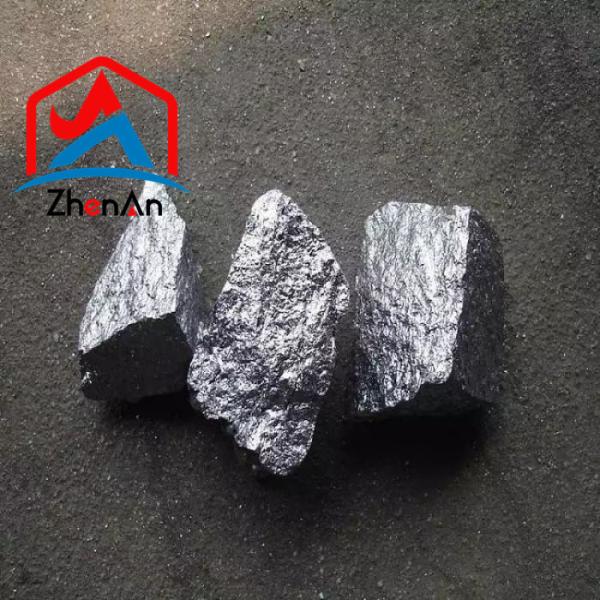
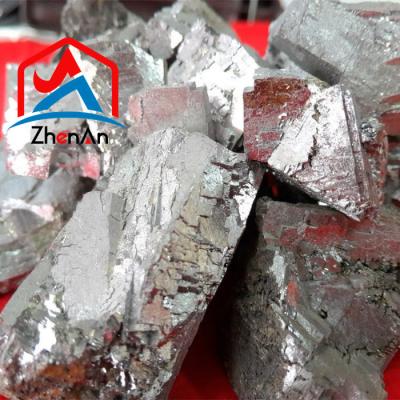
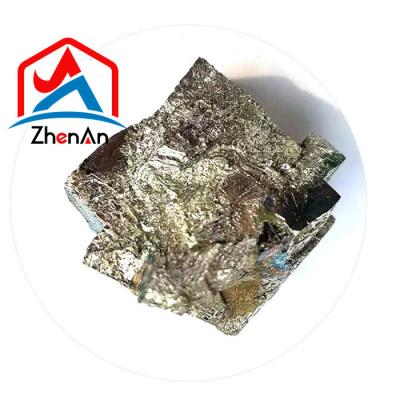
Ferrovanadium FeV 75, a high-purity FeV alloy with ~75% vanadium content, is a cornerstone additive in modern steelmaking, prized for its dual role as a deoxidizer and alloying agent. Characterized by its lustrous metallic silver hue, this Iron Vanadium Alloy (often labeled Ferro vanadium 75, FeVanadium 75, or Vanadium Iron Alloy 75) delivers exceptional metallurgical performance, thanks to its ultra-low impurity levels and balanced composition. Its lump form (irregular chunks, 10–50 mm) ensures seamless integration into steelmaking processes, from electric arc furnaces (EAF) to ladle refining, making it indispensable for producing high-quality structural, tool, and specialty steels.
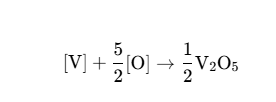
Vanadium’s strong affinity for oxygen makes FeV 75 a highly effective deoxidizer. During steelmaking, it reacts with dissolved oxygen in the molten bath:

The resulting vanadium pentoxide (V2O5) floats to the surface as slag, removing oxygen and preventing defects like porosity, blowholes, and inclusions. Compared to lower-vanadium grades (e.g., FeV60), FeV 75 achieves deeper deoxidation with smaller dosages (0.1–0.3% vs. 0.3–0.6%), reducing material costs and minimizing slag volume.
Beyond deoxidation, FeV 75 introduces vanadium as a micro-alloying element, driving three key improvements:
Carbide Strengthening: Vanadium reacts with carbon to form fine, thermally stable vanadium carbides (VC). These particles pin dislocations, increasing hardness (by 15–25%) and wear resistance—critical for tool steels and wear-resistant plates.
Grain Refinement: Vanadium segregates to austenite grain boundaries, inhibiting growth during heating. This results in a finer ferrite-pearlite or martensitic microstructure, improving toughness and fatigue resistance (e.g., in automotive chassis steels).
Hardenability: In alloy steels, vanadium extends the hardenability curve, allowing thicker sections to achieve uniform hardness after quenching—essential for large forgings and gears.
FeV 75’s “high purity" designation refers to its ultra-low impurity levels, achieved through advanced refining processes:
Sulfur (S) ≤ 0.03%: Prevents hot shortness (cracking during hot rolling).
Phosphorus (P) ≤ 0.02%: Reduces brittleness, especially in cold-formed steels.
Silicon (Si) ≤ 1.0%: Avoids excessive ferrite formation, ensuring predictable mechanical properties.
These low impurities are critical for producing clean steel—a prerequisite for high-performance applications like aerospace components, nuclear reactors, and precision machinery.
The metallic silver appearance of FeV 75 lumps indicates a dense, low-porosity structure with minimal surface oxidation, ensuring:
Rapid Dissolution: Lumps melt quickly in molten steel, enabling uniform vanadium distribution and reducing processing time.
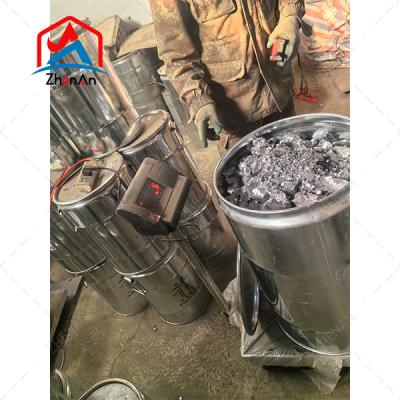
Easy Handling: Larger particle size minimizes dust generation, improving workplace safety and simplifying automated dosing systems.
Batch Consistency: Uniform lump size and composition ensure reproducible results across production runs.
FeV 75 is used across a spectrum of steel grades, including:
Structural Steels: Rebar, I-beams, and shipbuilding plates, where it enhances yield strength (by 10–20%) and toughness.
Tool Steels: High-speed steels (e.g., M2) and die steels, where VC particles retain red hardness (600–650°C) for cutting tools.
Specialty Steels: Stainless steels, nuclear-grade steels, and automotive advanced high-strength steels (AHSS), where purity and consistency are non-negotiable.
| Parameter | Details |
|---|---|
| Vanadium Content | 73–77% (ICP-OES certified) |
| Form | Metallic silver lumps (10–50 mm) |
| Iron Content | ~23–27% |
| Impurities | S ≤ 0.03%, P ≤ 0.02%, Si ≤ 1.0%, C ≤ 0.10% |
| Melting Point | ~1500°C |
| Bulk Density | ~4.8 g/cm³ |
Balanced Potency: More cost-effective than FeV80 (80% V) but nearly as effective, ideal for mid-to-high-performance steels.
Versatility: Performs equally well in deoxidation and alloying, reducing the need for multiple additives.
Reliability: High purity and consistent composition ensure compliance with stringent industry standards (e.g., ASTM, EN, JIS).
Ferrovanadium FeV 75 High Purity Lumps (Metallic Silver) are a testament to the power of precision metallurgy. By combining efficient deoxidation, potent alloying, and ultra-high purity, they enable steelmakers to produce cleaner, stronger, and more durable steels—meeting the demands of industries from construction to aerospace. For manufacturers seeking a versatile, high-performance ferroalloy, FeV 75 is an indispensable solution.
| Grade | V | Al | P | Si | C |
|---|---|---|---|---|---|
| FeV40-A | 38-45 | 1.5 | 0.09 | 2.00 | 0.60 |
| FeV40-B | 38-45 | 2.0 | 0.15 | 3.00 | 0.80 |
| FeV50-A | 48-55 | 1.5 | 0.07 | 2.00 | 0.40 |
| FeV50-B | 48-55 | 2.0 | 0.10 | 2.50 | 0.60 |
| FeV60-A | 58-65 | 1.5 | 0.06 | 2.00 | 0.40 |
| FeV60-B | 58-65 | 2.0 | 0.10 | 2.50 | 0.60 |
| FeV80-A | 78-82 | 1.5 | 0.05 | 1.50 | 0.15 |
| FeV80-B | 78-82 | 2.0 | 0.06 | 1.50 | 0.20 |
Q: What is ferrovanadium?
A: Ferrovanadium is an iron–vanadium alloy used as a master alloy to introduce vanadium into steel and cast iron for strengthening and toughening.
Q: Ferrovanadium definition and primary function?
A: It is an alloy of iron and vanadium, primarily used to add controlled amounts of vanadium to alloys, improving strength, wear resistance, and hardenability.
Q: Difference between ferrovanadium and vanadium metal?
A: Ferrovanadium is an Fe–V alloy (typically 40–80% V) for adding vanadium to other metals; vanadium metal is nearly pure V, used in superalloys and chemicals.
Q: Common types of ferrovanadium grades – FeV40, FeV60, FeV80?
A: FeV40 (~40% V), FeV60 (~60% V), FeV80 (~80% V); number indicates approximate vanadium content.
Q: Composition of ferrovanadium – typical vanadium content?
A: Vanadium content varies by grade; typical ranges 40–80%, balance mainly iron with minor impurities (Al, Si, C).
Q: How is ferrovanadium produced?
A: Produced by aluminothermic or silicon reduction of vanadium pentoxide mixed with iron in an electric furnace or crucible.
Q: Ferrovanadium manufacturing process steps?
A: Mix V₂O₅ with iron reductant, heat in furnace to initiate exothermic reaction, melt, cast into lumps or grind to powder.
Q: Raw materials for ferrovanadium production – vanadium pentoxide, iron ore?
A: Mainly vanadium pentoxide (V₂O₅) and iron (scrap or ore) as reductant and base metal.
✅ Extensive Production Capacity
Annual production and sales volume exceeding 150,000 metric tons.
Two large production bases with integrated hydrometallurgical and smelting capabilities.
Full in-house quality control, lab testing, and R&D with a team of experienced metallurgists.
✅ Global Reach & Custom Solutions
Exporting to clients worldwide with tailored product specifications, packaging, and logistics support.
Commitment to providing “the right quality and quantity" to match your exact process requirements.
Dedicated global sales & technical support team offering one-stop solutions for metallurgical and alloy needs.
✅ Quality Assurance & Certifications
Adherence to international quality and safety standards.
Continuous investment in advanced testing equipment and process optimization.
Focus on customer satisfaction, on-time delivery, and long-term partnerships.
✅ Business Philosophy
“Customer-centered, market-oriented, reputation-based development, and management to create benefits."
ZhenAn strives to be a leader in the global metallurgical alloy industry, delivering reliable, high-purity, and cost-effective products for steel, foundry, energy, and advanced manufacturing sectors.