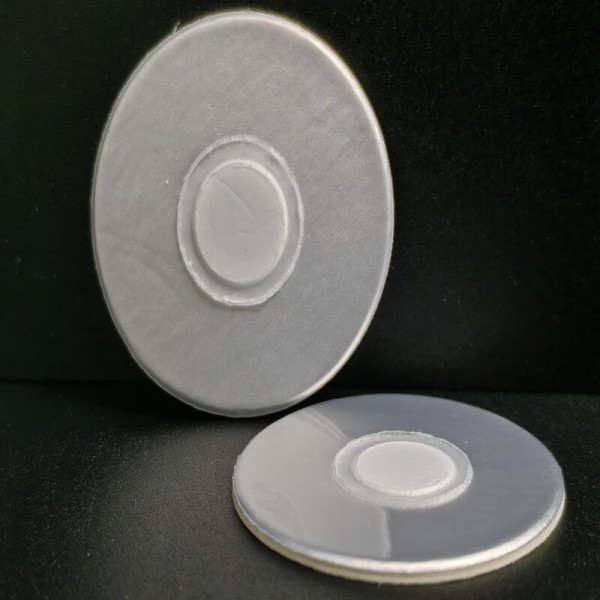
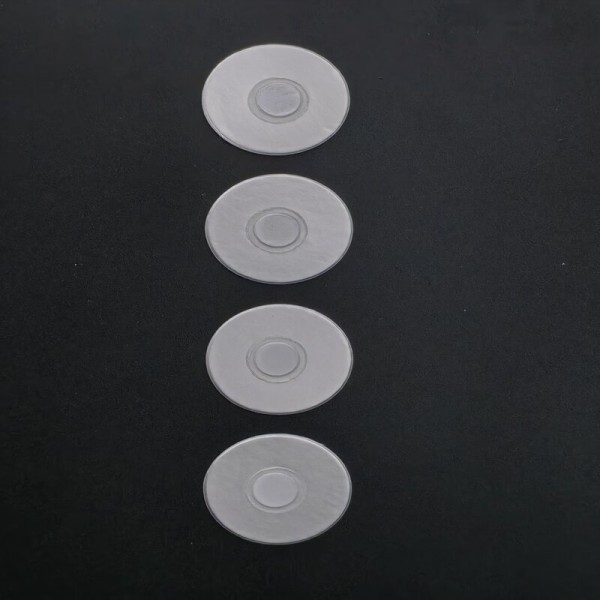
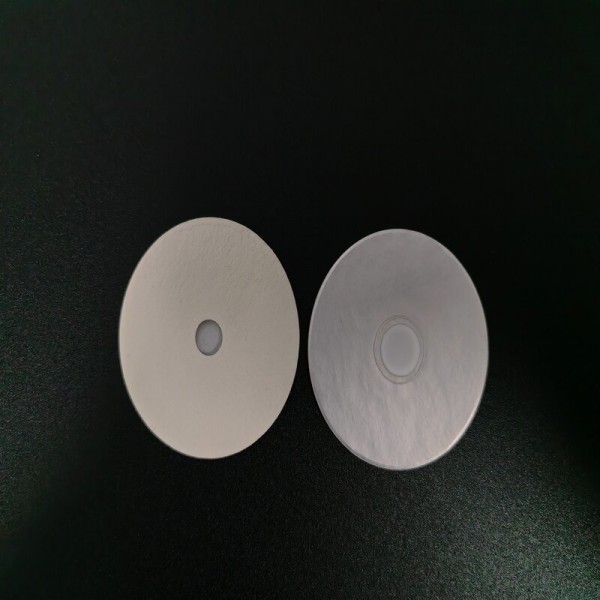
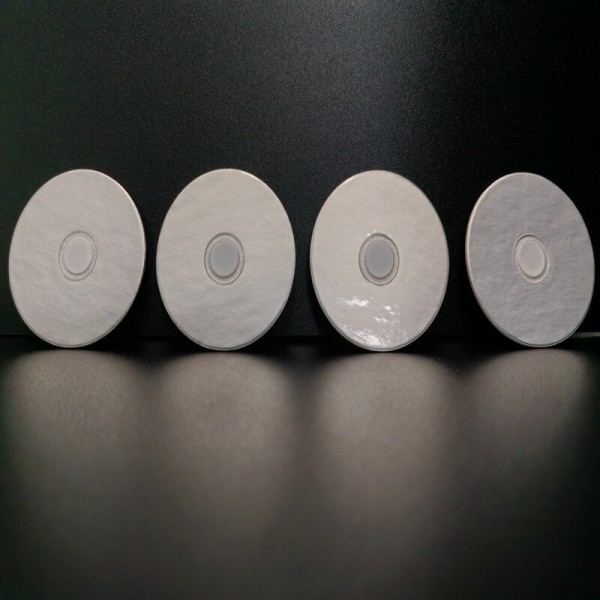
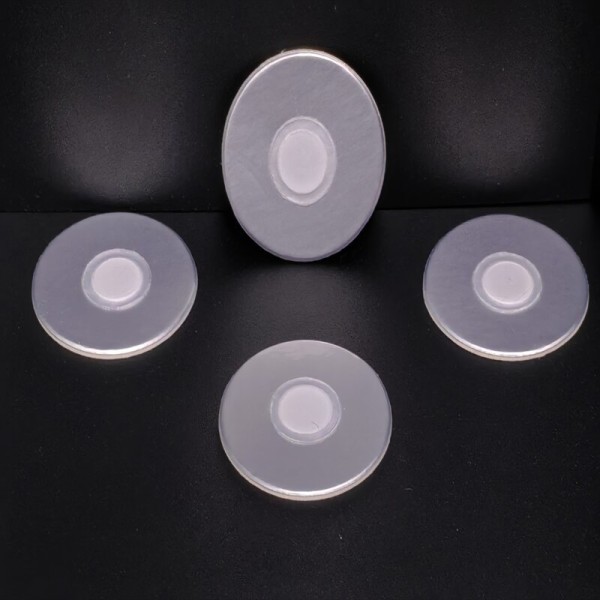
The adhesive ePTFE vent for blood collection and plasma separation device packaging is a sterile barrier and gas exchange component engineered for the complex blood processing consumables that are central to modern transfusion and diagnostic medicine. This vent integrates a medical-grade, hydrophobic ePTFE membrane with a validated, blood-compatible adhesive carrier, designed for direct application to the housings of blood collection tubes, plasma separation cards, microfluidic blood analysis cartridges, and apheresis kit packaging. It provides a sterile airway that enables the precise pressure equalization required for capillary-driven microfluidic blood flow and for the vacuum draw of evacuated blood collection tubes. The vent maintains an absolute bacterial and viral barrier, protecting the blood sample from environmental contamination and protecting healthcare workers from exposure to bloodborne pathogens. It also prevents liquid blood or plasma from leaking, ensuring that the hazardous sample is fully contained.
Blood collection and plasma separation devices operate on precise pressure differentials. An evacuated blood collection tube (e.g., ) relies on a pre-set internal vacuum to draw the exact volume of blood from the vein. Any leakage in the closure that allows air to enter over time will degrade this vacuum, resulting in an under-filled tube and an incorrect blood-to-additive ratio that compromises laboratory test results. Plasma separation cards and microfluidic blood analysis cartridges use capillary action, requiring atmospheric pressure to drive the blood through the micro-channels. If the device is sealed without a vent, the advancing blood column compresses the trapped air, creating back-pressure that stops the flow. A vent is needed to allow the air to escape. However, any vent on a blood-containing device must be a complete biological barrier, preventing the escape of potentially infectious blood (hepatitis B, C, HIV) and preventing the ingress of bacteria that could contaminate the sample or the sterility of the device interior.
The adhesive ePTFE vent provides a sterile, hydrophobic airway directly on the blood collection or separation device. For plasma separation cards, applied over the air exit port, the vent allows the displaced air to escape as the blood fills the microfluidic channels, ensuring complete, uniform filling without back-pressure. For evacuated tubes, the vent can be integrated into the closure to provide a redundant sterile barrier behind the primary rubber stopper. The 0.2-micron hydrophobic membrane is an absolute barrier to bacteria, viruses, and liquid blood. The membrane will not allow blood—even plasma, which has lower surface tension—to leak out, even under the pressure of centrifugation or if the device is dropped. The adhesive bond is validated to withstand the centrifugal forces of laboratory centrifuges (up to 5,000 g) and the temperature extremes of refrigerated storage and transport.
| Parameter | Specification |
|---|---|
| Product Type | Adhesive ePTFE Vent |
| Membrane Material | Medical-grade hydrophobic/oleophobic ePTFE |
| Pore Size | 0.2 μm (sterilizing-grade) |
| Biological Barrier | Bacterial & viral retention; bloodborne pathogen barrier |
| Airflow | 100-500 ml/min @ 1 psi |
| Water/Plasma Entry Pressure | ≥ 80 kPa |
| Adhesive Type | Medical-grade acrylic (centrifuge-stable) |
| Operating Temperature | -20°C to +60°C |
| Centrifuge Compatibility | Up to 5,000 g (validated) |
| Sterilization | Gamma, EtO |
| Biocompatibility | ISO 10993; non-hemolytic, non-cytotoxic |
The vent is applied over a precision port on the blood collection tube cap, separation card, or microfluidic cartridge. For a microfluidic device, as the blood sample is introduced and flows through the channels by capillary action, the displaced air escapes through the ePTFE membrane. This prevents any back-pressure buildup, allowing the blood to fill the channels completely and uniformly. For an evacuated tube, the vent provides a secondary sterile barrier behind the primary stopper. If the stopper is accidentally compromised, the vent prevents bacterial ingress. The hydrophobic/oleophobic membrane ensures that liquid blood, plasma, or serum cannot penetrate and leak, even during centrifugation. The adhesive maintains its bond to the plastic or glass substrate throughout the device's use.