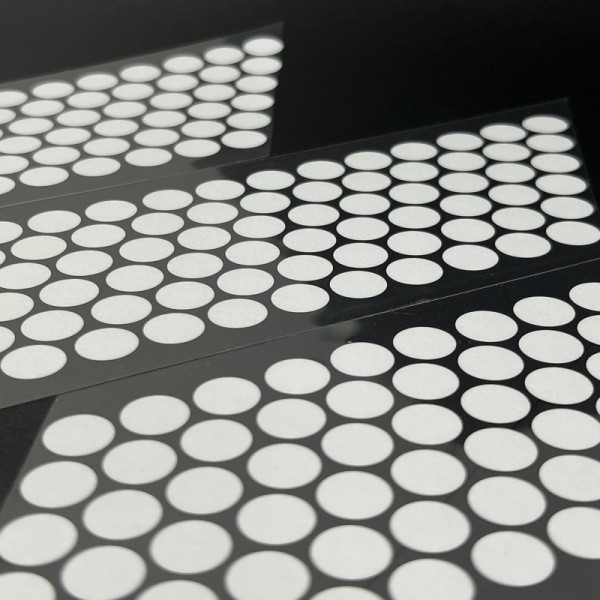
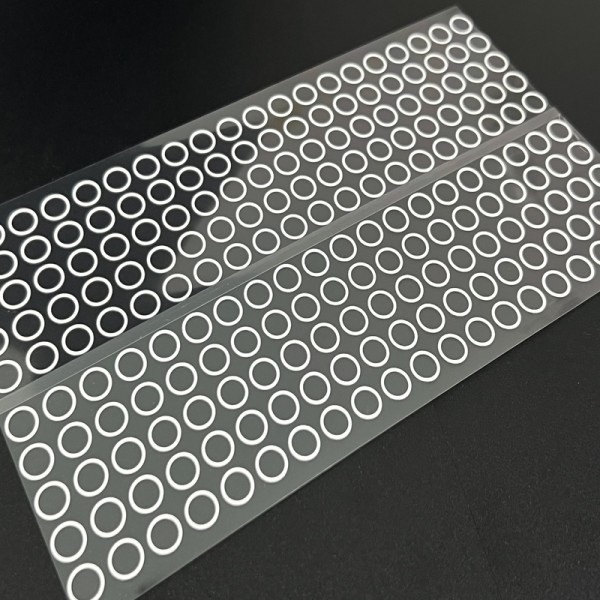
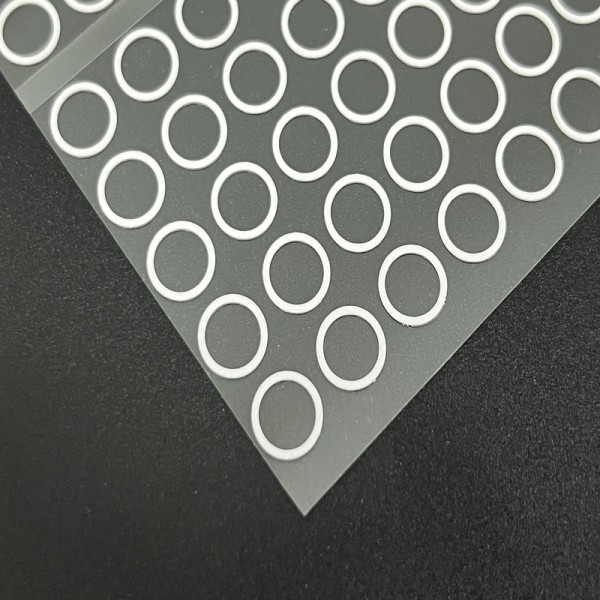
EPTFE Pressure Equalization Vent For Carbonated Soft Drink & Beer PET Bottles
The ePTFE pressure equalization vent for carbonated soft drink and beer PET bottles is a specialized barrier and pressure-management component that solves the unique dual challenge of carbonated beverage packaging: retaining the high internal CO₂ pressure that keeps the beverage carbonated, while simultaneously allowing the slow escape of over-pressure that could otherwise cause bottle deformation or burst. This vent integrates a precisely engineered, low-permeability ePTFE membrane into a weldable or adhesive-backed carrier that is integrated into the bottle closure or the PET bottle wall itself. Unlike a standard breathable vent that allows free gas exchange, this vent is engineered to have a precisely controlled gas transmission rate. It allows the very slow, molecular-level diffusion of excess CO₂ that builds up during temperature fluctuations, while effectively retaining the saturated CO₂ that defines the beverage's fizz and mouthfeel. This protects the PET bottle from the dangerous over-pressurization that can occur when a cold-filled carbonated beverage warms up during distribution, while ensuring the consumer enjoys a perfectly carbonated drink.
Carbonated soft drinks and beer are filled with dissolved carbon dioxide at low temperatures and sealed under pressure. The dissolved CO₂ creates an internal pressure of 2-4 volumes (i.e., 2-4 liters of CO₂ per liter of liquid), which at room temperature translates to an internal bottle pressure of 3-5 bar (45-75 psi) or more. PET bottles are designed to withstand this pressure, with a safety margin. However, if the bottle is exposed to higher temperatures—during summer transport, in a warm warehouse, or in direct sunlight—the dissolved CO₂ comes out of solution, and the internal pressure can spike dramatically, exceeding the bottle's burst strength. At the same time, the PET material itself undergoes creep under continuous pressure, slowly expanding. The combination of thermal expansion and PET creep can cause the bottle to bulge, the base to push out ("rocker bottom"), or, in extreme cases, the bottle to burst. A bottle that releases a small amount of the excess CO₂ through a controlled vent can manage these over-pressure events without losing its overall carbonation.
The ePTFE pressure equalization vent is engineered for this precise, controlled gas release. The ePTFE membrane is selected or post-treated to have a significantly lower gas permeability than a standard breathable vent. Under normal, room-temperature storage, the CO₂ transmission through the vent is negligible—the beverage retains its full carbonation for the labeled shelf life. However, if the bottle is exposed to elevated temperatures and the internal pressure rises toward unsafe levels, the increased pressure differential drives a higher rate of CO₂ diffusion through the membrane. A controlled amount of excess CO₂ is vented, reducing the pressure to a safe level. When the bottle cools back to ambient temperature, the CO₂ transmission rate drops back to near zero. The vent thus acts as a passive safety valve, protecting the bottle integrity without noticeably affecting the beverage's carbonation level.
| Parameter | Specification |
|---|---|
| Product Type | ePTFE Pressure Equalization Vent |
| Membrane Material | Controlled-permeability food-grade ePTFE |
| CO₂ Transmission Rate | Engineered to application: 10-100 cc/pkg·day·atm |
| O₂ Ingress Rate | Minimized by CO₂ outward flow; < 0.1 cc/pkg·day |
| Activation Pressure Differential | Typically 1-2 bar above standard fill pressure |
| Water Entry Pressure | ≥ 200 kPa (withstands internal carbonation pressure) |
| Operating Temperature | 0°C to +50°C |
| Installation | Integrated into bottle cap or welded into PET bottle preform |
| Bottle Compatibility | PET (standard and recycled content) |
| Food Contact Compliance | FDA 21 CFR, EU 10/2011 |
The vent is integrated into the bottle closure—typically a vented cap liner—or, for advanced applications, into a dedicated vent insert in the PET bottle wall. When the bottle is at its standard fill pressure and storage temperature, the CO₂ transmission through the ePTFE membrane is negligible. The beverage maintains its carbonation. If the bottle is warmed and the internal pressure rises, the pressure differential across the membrane increases. The controlled-permeability membrane allows CO₂ molecules to diffuse through at a higher rate, venting the excess pressure. The bottle does not bulge or burst. When the bottle cools, the CO₂ transmission rate returns to its baseline low level. The vent does not allow oxygen to enter, because the internal pressure is always higher than atmospheric, creating a constant outward flow.
A: The vent is engineered to release CO₂ only when the internal pressure significantly exceeds the normal fill pressure—typically during a temperature abuse event. Under normal storage conditions, the CO₂ loss through the vent is negligible and does not affect the beverage's labeled shelf life.
A: No, the internal pressure in a carbonated beverage bottle is always higher than atmospheric pressure, creating a constant outward gas flow. This prevents oxygen from diffusing inward.
A: The vent is designed for integration into plastic closures. It can be used on the plastic cap of a glass bottle, providing the same controlled pressure relief function.
A: Oxygen scavenging closures actively remove O₂ that enters the bottle. This vent focuses on controlled CO₂ release for pressure management. The two technologies can be complementary.
A: The vent, as part of the closure, is typically separated from the PET bottle in the recycling process. The bottle body is fully recyclable in the PET stream.