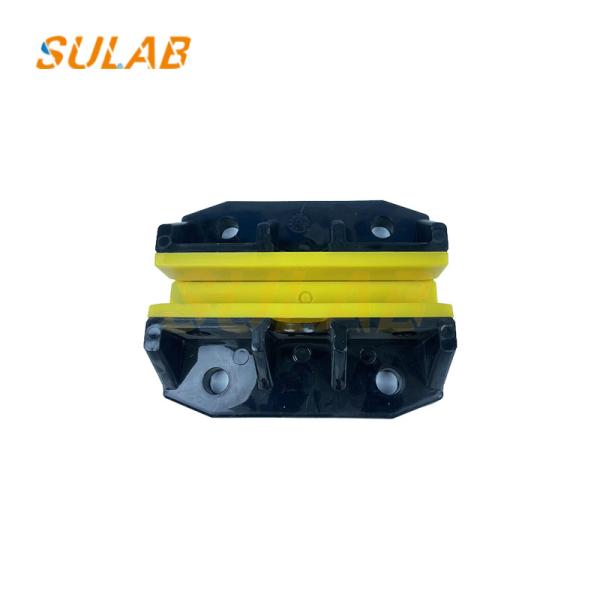
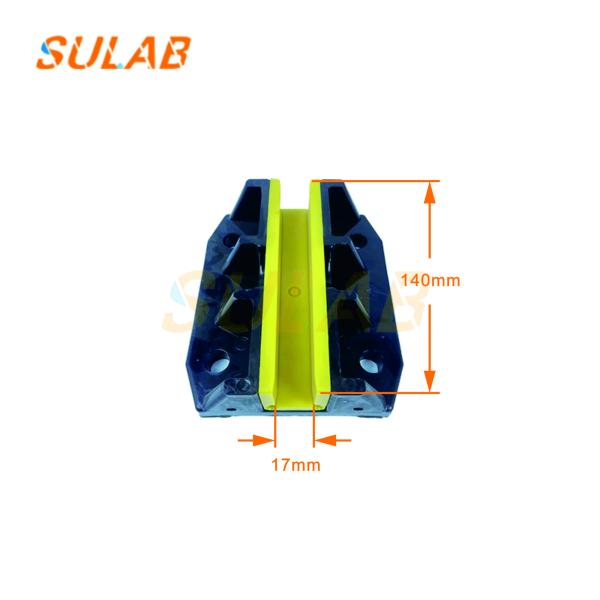
The Elevator Counterweight Guide Shoe (17 mm) is a crucial component in elevator systems, designed to ensure smooth and stable movement of the counterweight along the guide rails. This guide shoe minimizes friction, reduces vibrations, and enhances the overall safety and efficiency of the elevator.
Material: High-strength nylon, polyurethane, or composite materials (depending on application)
Thickness: 17 mm (standard)
Compatibility: Fits standard T-type or flat elevator guide rails
Load Capacity: Designed to withstand dynamic and static loads as per elevator specifications
Operating Temperature Range: -20°C to +80°C
Standards Compliance: EN 81-20/50, ASME A17.1, or other relevant elevator safety standards
Material Selection: High-quality, wear-resistant polymers or composites are chosen for durability.
Precision Molding/CNC Machining: The guide shoe is manufactured using injection molding or CNC machining for exact dimensions.
Surface Treatment: Smooth finishing to reduce friction and prevent rail damage.
Quality Inspection:
Dimensional accuracy check (17 mm thickness verification)
Load and wear resistance testing
Dry run testing for smooth operation
Packaging: Protective packaging to prevent damage during transit.
Reduced Noise & Vibration: Ensures quiet elevator operation.
Long Service Life: High wear resistance minimizes maintenance needs.
Easy Installation: Designed for quick replacement in existing systems.
Corrosion Resistant: Suitable for various environmental conditions.
Passenger & freight elevators
Hydraulic & traction elevator systems
Modern & retrofitted elevator installations
Q1: What is the difference between sliding and roller elevator guide shoes?
Sliding guide shoes use sliding contact surfaces to guide the elevator along its rails, while roller guide shoes use rotating rollers. Their suitability depends on elevator speed, load, and guiding system design.
Q2: Can elevator guide shoes be replaced with different models?
Replacement may be possible if the guide rail dimensions, mounting geometry, mechanical loading, and guiding characteristics are compatible.
Q3: What causes excessive wear on elevator guide shoes?
Possible causes include guide rail misalignment, lubrication conditions where applicable, abnormal loading, worn contact materials, or installation problems.
Q4: Can only the guide shoe liner be replaced?
Some sliding guide shoes use replaceable liners, while others may require replacement of a larger assembly. The correct approach depends on the product design and manufacturer requirements.
Q5: What dimensions are needed for elevator guide shoe replacement?
Please provide the original model, guide rail size, mounting dimensions, guide shoe type, photos, and the elevator's application requirements.