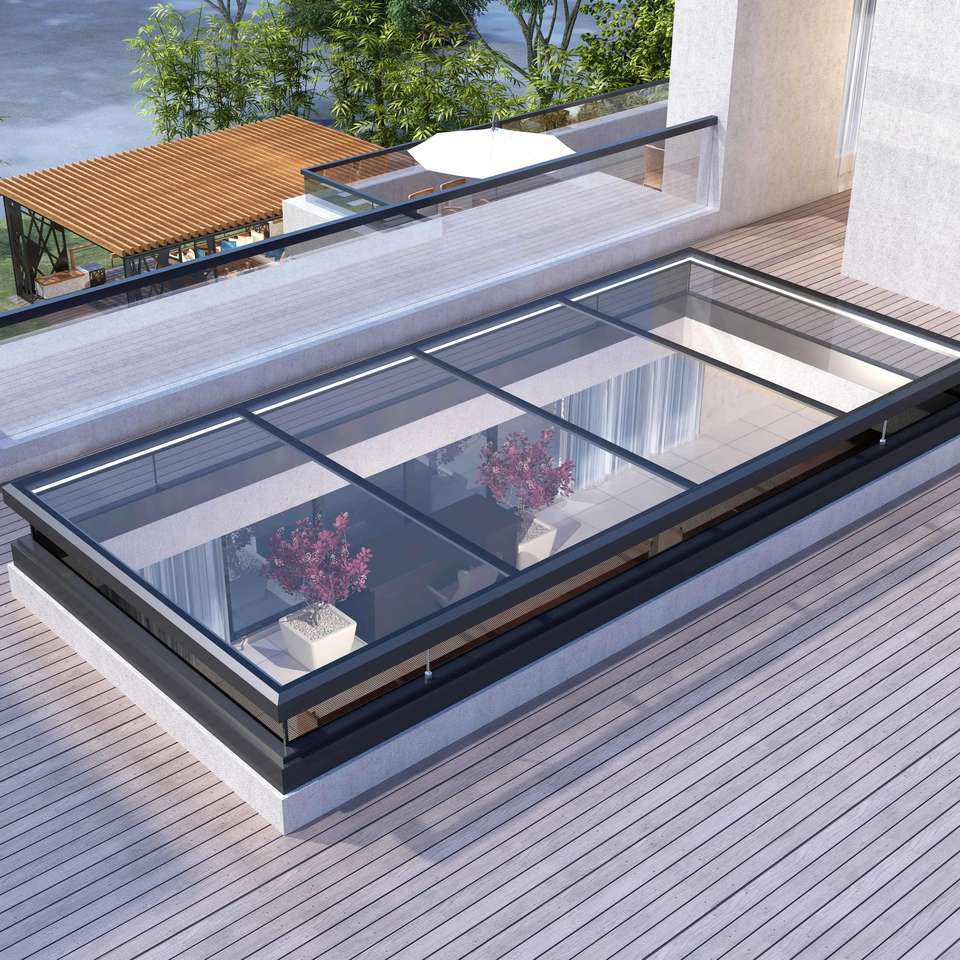
This smart skylight combines roof daylighting with electric operation, weather protection and connected ventilation control. It is designed for homeowners who want convenient roof-window operation, automatic closure during rain and optional smart-home integration.

A smart skylight uses an electric actuator to open and close the sash. The system can be operated locally through a wall switch, by remote control or through a mobile application when connected to a compatible smart gateway.
Rain sensors can automatically close the skylight when rain or moisture is detected. Optional indoor climate sensors can monitor temperature, humidity and air quality, then activate programmed ventilation or shading routines. [375][376][384][389]
| Product Type | Electric smart skylight for residential roof installation |
|---|---|
| Opening Method | Electric chain actuator, spindle actuator or motorized opening system |
| Local Control | Wall switch, wireless remote control or wired control panel |
| Smart Control | Mobile application and gateway connection, subject to selected control system |
| Rain Protection | Integrated or optional rain/moisture sensor for automatic closing |
| Climate Sensing | Optional temperature, humidity, CO₂ or indoor-air-quality sensor integration |
| Frame Material | Thermally improved aluminum alloy or aluminum-wood composite frame |
| Glass Configuration | Double-glazed safety glass; optional Low-E, laminated inner pane or tinted glazing |
| Thermal Performance | Specified by overall skylight U-factor or U-value for the local climate |
| Solar Control | Specified by SHGC, glazing type and optional exterior or interior shading |
| Accessories | Motorized blinds, blackout shades, insect screens, battery backup and smart-home modules |
The actuator transfers motor force to the sash through a chain, spindle or linkage mechanism. The frame must include reinforced mounting points to carry repeated opening loads and maintain stable gasket compression after closing.
Rain and climate sensors communicate with the control unit. The controller manages opening limits, detects rain events and can coordinate the skylight with blinds, wall switches, remotes and app-based commands.
Insulated safety glazing, weather seals and a roof-specific flashing system remain essential. Smart controls improve convenience, but thermal performance and waterproofing still depend on correct glass, frame and installation design.
Smart skylights bring daylight into central spaces while allowing convenient high-level ventilation without using manual rods.
Combine electric ventilation with blackout blinds, scheduling and automatic rain closure for better comfort.
Humidity-aware ventilation can help manage moisture in rooms where steam and warm air accumulate.
Remote monitoring and automatic rain protection are useful where the property is unattended or the skylight is difficult to reach.

A smart skylight is an electric roof window that can be controlled through a switch, remote or app, with optional automated weather and ventilation functions.
Yes. A compatible rain or moisture sensor can trigger automatic closing when rain is detected.
Yes. App control is available when the skylight is connected through a compatible smart gateway and network.
Yes. Optional temperature, humidity or air-quality sensors can support programmed ventilation routines.
Yes. Motorized blinds or shades can be integrated for glare control, privacy and thermal comfort.
Basic wall-switch and remote operation may work without Wi-Fi, while app control and remote monitoring typically require a gateway and network connection.
The available function depends on the selected configuration. Manual emergency operation, solar power or battery backup may be offered as options.
Yes. Automatic ventilation and rain closure are especially useful for moisture-prone rooms such as bathrooms.
Double-glazed safety glass is common, with Low-E, laminated and tinted options selected for climate, solar control and overhead safety requirements.
Inspect the glass, seals, flashing, drainage, actuator, rain sensor and control functions regularly to maintain weather protection and automation reliability.