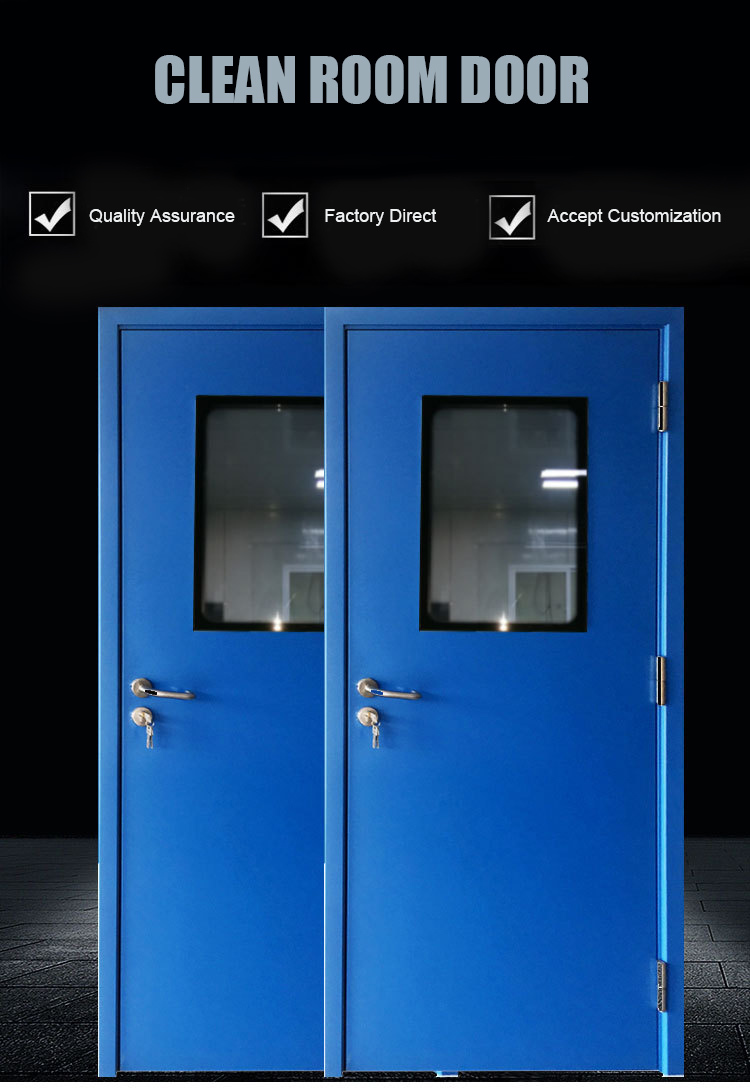
This application-driven cleanroom door concept is built for engineering teams who need different structures and parameters for pharmaceutical, electronics and laboratory environments. The focus is on door leaf construction, sealing lines, pressure control and manufacturing logic, rather than a single generic model.
Instead of one door for all situations, this page presents three application-focused configurations. Each block outlines structural logic, key parameters and typical use cases for a specific industry.
Flush swing doors for Grade A/B and C/D spaces, designed for GMP compliance, validated cleaning and airlock operation. Emphasis on seamless surfaces and low leakage.
Anti-static, low-particle doors for microelectronics and wafer production. Door design supports ESD control and stable airflow around sensitive equipment.
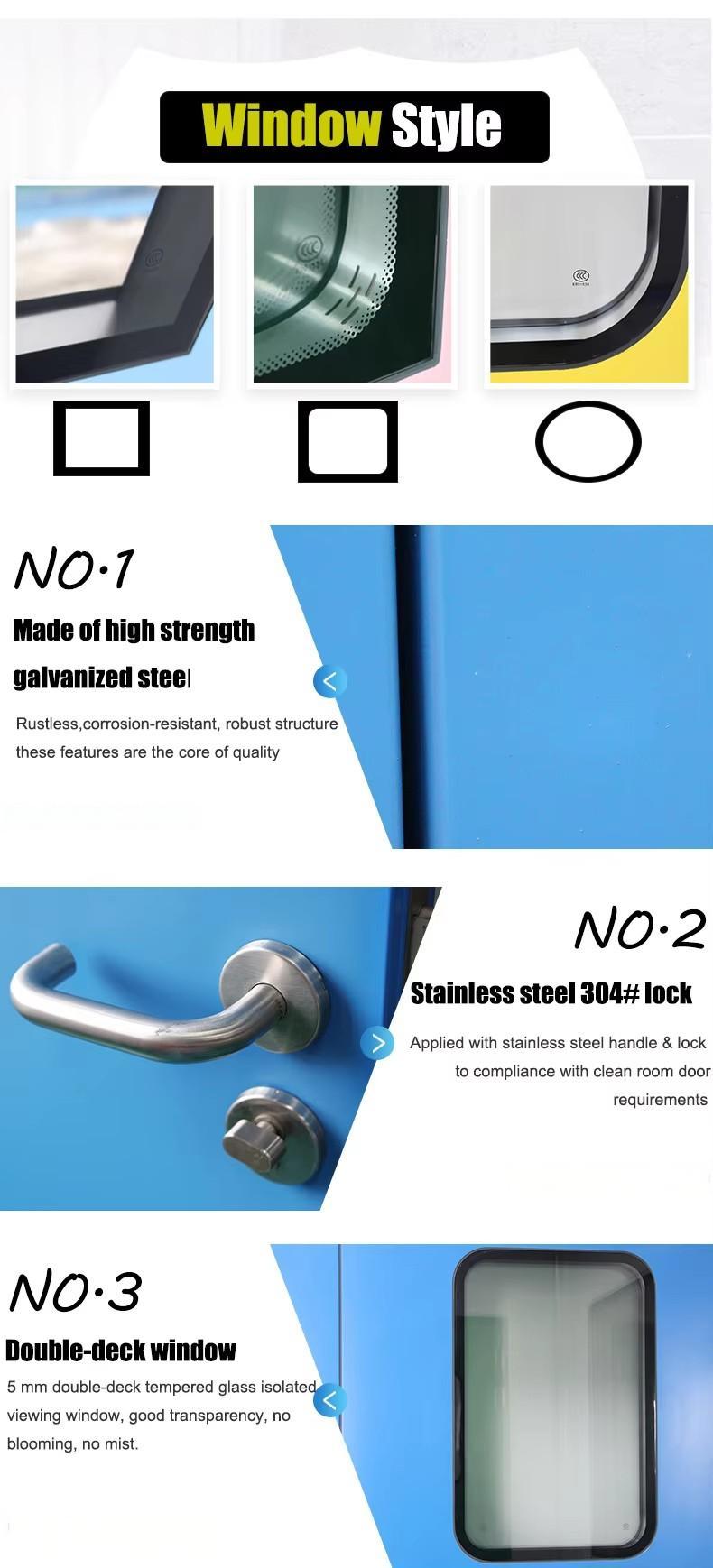
Doors with vision panels, sound insulation and odor control for labs, BSL spaces and test rooms. Focus on user comfort and safety, while maintaining clean boundaries.
| Application | Door Type | Leaf Construction | Sealing & Pressure |
|---|---|---|---|
| Pharmaceutical GMP | Flush swing door for Grade A/B/C/D | Stainless steel or HPL skins, reinforced core, seamless edges | Perimeter gasket, low leakage, suited for airlocks and pressure cascades |
| Electronics & Semiconductor | Anti-static swing or sliding door | ESD-safe panels, conductive hardware, low particle shedding structure | Controlled leakage, balanced with cleanroom airflow and ESD constraints |
| Laboratory & Research | Door with vision panel and sound-insulating core | Composite leaf with acoustic or dense core, integrated glazing | Good gasket compression for odor and noise control, moderate pressure |
Structural Logic and Door Leaf DesignFor each application, the door leaf is designed around different structural priorities. In pharmaceutical spaces, flush surfaces and fully sealed edges reduce contamination traps and support validated sanitation. Electronics facilities require non-shedding, anti-static surfaces and frames that do not disturb critical airflow around tools. Lab doors add sound and odor control, with cores chosen for acoustic mass and tight seals.
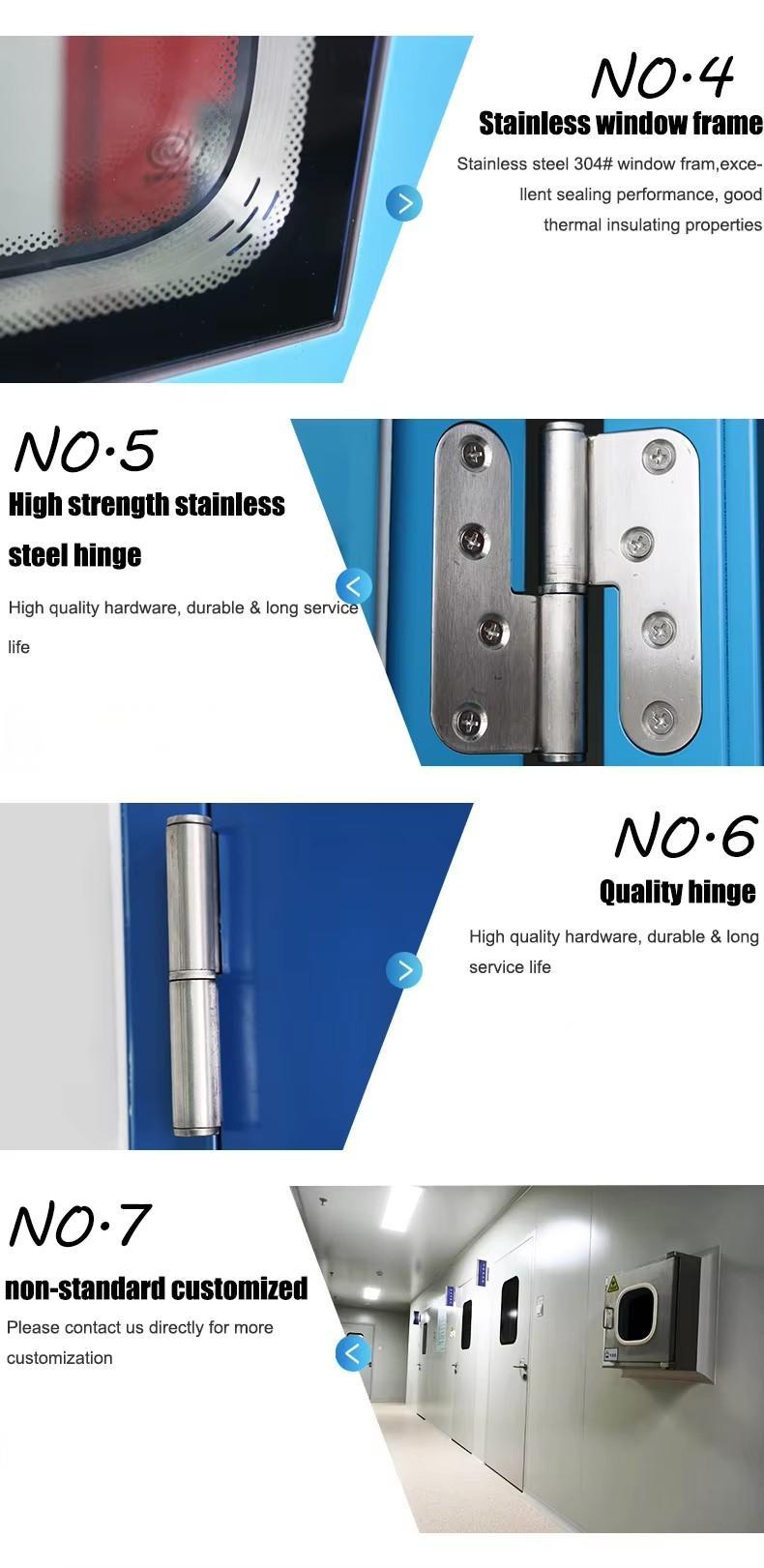
Frame attachment to walls is coordinated with the cleanroom panel system. Hinge loads, leaf stiffness and gasket compression are analysed against pressure differentials and expected cycle counts, giving engineering teams clear logic rather than purely decorative choices.
Typical Application ScenariosFor each scenario, door structure, parameters and seals are selected to match process flows, people traffic and environmental control, so that the door becomes part of the contamination control strategy rather than a generic add-on.

FAQFlush swing doors with seamless surfaces, sealed frames and GMP-grade hardware are typically best for pharmaceutical production, especially in Grade A/B and high-risk zones.
Doors should be chosen with anti-static finishes, low particle generation and alignment with ESD flooring and grounding systems, while maintaining stable airflow around sensitive equipment.
Vision panels, sound insulation, odor-tight sealing and chemical resistance are key features for laboratory doors, especially in BSL and analytical spaces.
It is possible to combine GMP-compliant flush construction with anti-static surfaces and conductive hardware, provided materials and seals are selected carefully.
Pressure differentials influence leaf stiffness, hardware loads and gasket compression. Door structure and seals must be sized to limit leakage without making closing forces excessive.
Pharma doors require seal and surface checks aligned with cleaning; electronics doors need ESD and panel checks; lab doors focus on gaskets, cores and vision panel integrity.
We select steels, laminates and seals based on the facility’s cleaning agents and process chemicals, using materials tested for corrosion and swelling under expected exposure.
Yes, retrofit projects are common. Frames and leaves can be designed to fit current openings while upgrading structure, sealing and compliance performance.
Door selection is reviewed alongside HVAC and airflow design, so leaf stiffness, seal lines and traffic patterns support the intended pressure cascade and air change rates.
Technical drawings, material data, sealing information, installation guides and maintenance recommendations are supplied to assist engineering design and validation protocols.