Frequently Asked Questions
What is the displacement and pressure rating of this pump?
The geometric displacement is 5.6 cm³/rev. It has a maximum continuous working pressure of 250 bar, an intermittent pressure of 280 bar, and a peak pressure of 300 bar.
What type of shaft and port connection does this model have?
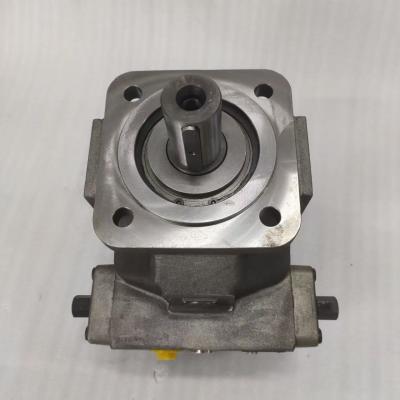
This model (RAB) features a straight cylindrical shaft (Ø18 mm) with a keyway. The port connection is Pipe Thread (ISO 228-1 / BSP), which is different from the metric threaded or flanged ports found in other AZPF models.
What is the rotation direction?
Clockwise rotation when viewed from the shaft end.
What are the critical installation requirements?
- Shaft Alignment: Use a flexible coupling. Radial runout should be < 0.1 mm, angular error < 1 degree. Rigid connections cause bearing failure.
- Suction Conditions: Inlet absolute pressure must be ≥ 0.7 bar to prevent cavitation. For this small displacement pump, ensure the suction line is short and direct.
- Priming: Never run the pump dry. Fill the housing with clean oil before the first start.
How should the case drain port be connected?
The drain line must connect directly to the tank (no valves/filters), below the fluid level but above the pump centerline. Backpressure must not exceed 1 bar.
The pump is very noisy. What is the cause?
Noise is usually
cavitation (whining) or
aeration (crackling).
- Cavitation: Check for clogged inlet filters, high oil viscosity, or low oil level.
- Aeration: Check for air leaks in the suction line.
- Mechanical Noise: Check for shaft misalignment or worn bearings.
How do I calculate the actual flow output?
Theoretical flow = 5.6 (cm³/rev) × Speed (rpm) / 1000. Actual flow will be 5-10% lower due to internal leakage. A drop of more than 15% indies significant wear.
The pressure does not reach the rated value. What is wrong?
Common causes include:
- Internal Wear: Increased clearance between gears and side plates.
- System Leakage: Check relief valves and actuators.
- Low Motor Speed or incorrect system settings.
What type of oil and cleanliness are required?
Use ISO VG 32/46/68 mineral-based oils (HL, HLP). The oil cleanliness must be NAS Class 9 or cleaner (ISO 4406 18/16/13) for long bearing life.
Can I repair this pump myself?
Not recommended for critical appliions. While seals can be replaced, rebuilding the precision sliding bearings and pressure-compensated side plates requires special tools and testing. An exchange unit is often safer.
What is the expected service life?
Under correct conditions (clean oil, proper viscosity, rated load), the B10 life can reach several thousand hours. Oil contamination is the primary cause of premature failure.