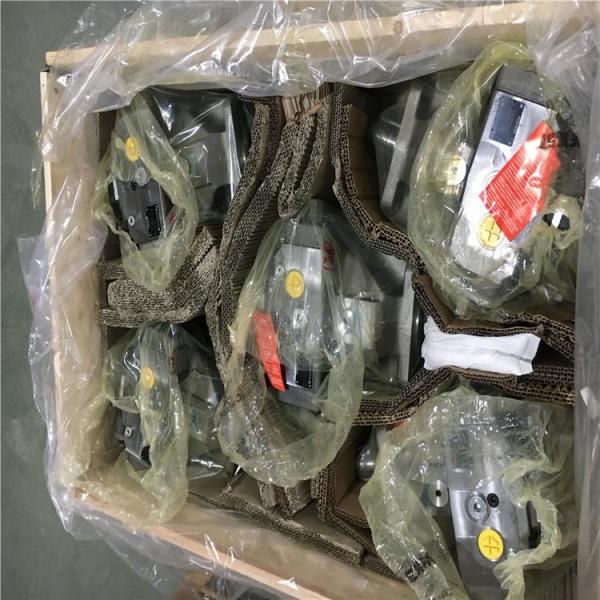
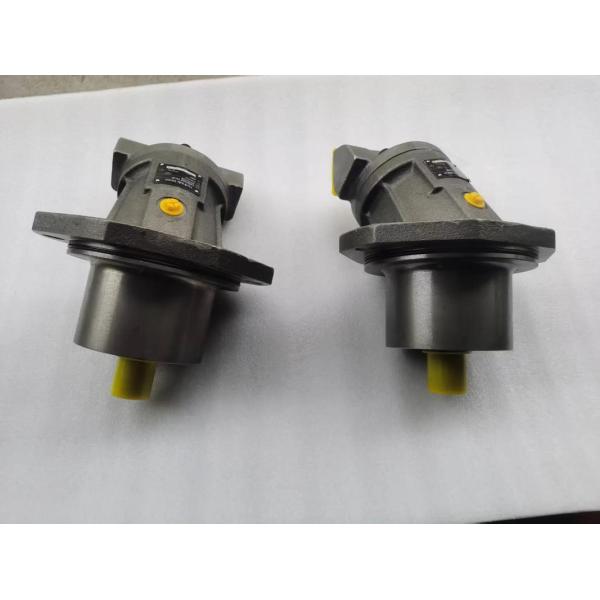
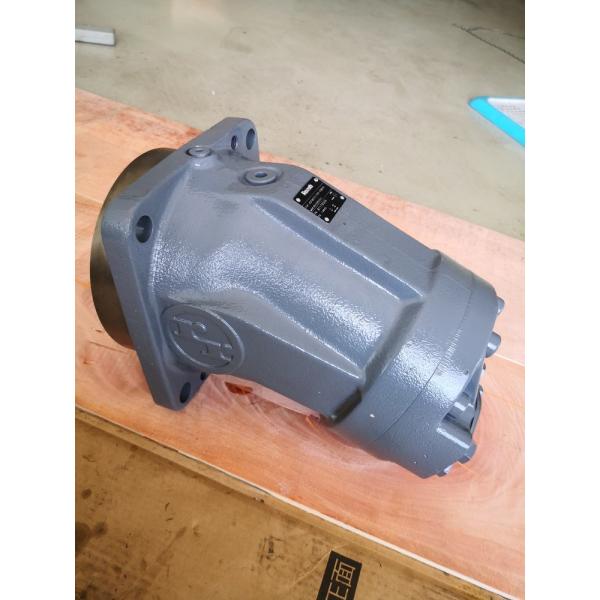
High-performance swashplate axial piston pump manufactured by Rexroth in Germany, designed for demanding industrial applications with hydraulic load-sensing control.
| Parameter Category |
Parameter |
Specification / Description |
| General Information |
Manufacturer / Model |
Rexroth (Germany), A4VSO Series |
|
Complete Model |
A4VSO500LR2/30L-PPB13N00 |
|
Pump Type |
Swashplate Axial Piston Pump, Open Circuit |
| Hydraulic Performance |
Nominal Displacement |
500 cm³/rev |
|
Nominal Pressure (Continuous) |
350 bar |
|
Peak Pressure (Intermittent) |
400 bar |
|
Recommended Speed |
750 - 1200 rpm (Max ~1500 rpm subject to inlet conditions) |
|
Theoretical Flow @ 1200 rpm |
~600 L/min |
|
Control Type |
LR2 — Hydraulic Load-Sensing Control with Pressure Limiter |
| Mechanical Interface |
Shaft Type |
Parallel Key Shaft (DIN 6885) |
|
Rotation Direction |
Counter-Clockwise (L) — viewed from shaft end |
|
Mounting Flange |
ISO 3019-2 (4-bolt, metric) |
|
Port Configuration |
PPB13: SAE flanged ports, metric screws, 13 series port plate |
|
Through Drive |
N00: No through-drive capability |
| Sealing & Media |
Seal Material |
NBR (Standard, code P implied) |
|
Compatible Fluids |
Mineral oils (HL/HLP), HFC (Water Glycol with derating) |
|
Weight (approx.) |
~240 kg |
A4VSO40DFR/10R-PKD63N00
A4VSO40DFR/10R-PKD63N00E
A4VSO40DFR/10X-PKD63N00
A4VSO40DFR/10X-PKD63N00-SO62
A4VSO40DP/10R-PKD63N00
A4VSO40DP/10R-PKD63N00E
A4VSO500DP/30R+A4VSO500DP/30RE
A4VSO500DP/30R-PPH13K43E
A4VSO500DP/30R-PPH25K43
A4VSO500LR2G/30R-PPH13N00E
Q1: What does "LR2" control mean and how is it different from EO1 or DFR?
- LR2 = Purely hydraulic Load Sensing + Pressure Limiter. Requires an external Load Sense (LS) line from the valve bank connected to the pump's LS port (usually X port). The pump delivers only the flow demanded by the valve, saving energy. No electrical input is needed for basic operation.
- EO1 = Electro-hydraulic control requiring an external pilot pressure (often from a proportional valve/controller) — no internal LS spring.
- DFR/DFR1 = LS + DR with internal spring defining ∆p — simpler for standard fixed-∆p applications.
LR2 gives flexibility in LS signal conditioning and is common in large systems with distributed valve banks.
Q2: The rotation code is "L" (30L) — what does that mean practically?
"L" = Counter-Clockwise when viewed from the drive shaft end. This is the opposite of the more common "R" (Clockwise). The pump must be driven in this direction — running it in reverse will cause immediate failure due to loss of lubrication and improper suction. Always verify your prime mover / coupling rotates counter-clockwise from the shaft side.
Q3: What are the suction (inlet) requirements for this 500 cc pump?
With 500 cm³/rev displacement, inlet conditions are critical:
- At 1200 rpm, inlet absolute pressure should be ≥ 1.0-1.2 bar (boost pump strongly recommended for sustained high-speed operation).
- For speeds >1200 rpm, a dedicated charge pump / supercharge circuit is essential to prevent cavitation.
- Use generously sized inlet piping (≥ DN80/100), minimize elbows/restrictions, and fit a 149 µm (100 mesh) suction strainer.
Q4: Can I mount an auxiliary pump (gear pump) on the rear?
No. The suffix N00 indicates no through-drive shaft. The rear of the pump housing is blanked. If you need a through-drive for a charge / pilot gear pump, select a version with a through-drive code such as K01, K02, etc.
Q5: How should the case drain (L port) be handled?
Connect one case drain port directly to the tank with a dedicated line — zero backpressure (max 0.5 bar). The second drain port must be plugged. Route the drain line to above the tank oil level or provide a loop to prevent air ingestion. A blocked or pressurized drain = shaft seal failure.
Q6: What drive motor power is required?
At 1200 rpm, 350 bar, and 500 cc:
- Theoretical hydraulic power ≈ (500 × 10⁻⁶ × 350 × 1200) / 600 ≈ 350 kW
- Including mechanical losses (~90%), input power ≈ 390 kW
Recommend a 400 kW (≈535 HP) prime mover with adequate starting torque reserve for 400 bar peak conditions.
Q7: Is the standard NBR seal okay for water glycol (HFC) or phosphate ester (HFD)?
Standard NBR is compatible with HFC (water glycol) with pressure/temp derating. It is NOT compatible with HFD (phosphate ester) — for HFD you need FKM (Viton) seals, typically a custom order with /V suffix. Confirm with Rexroth if your fluid is not mineral oil (HL/HLP).