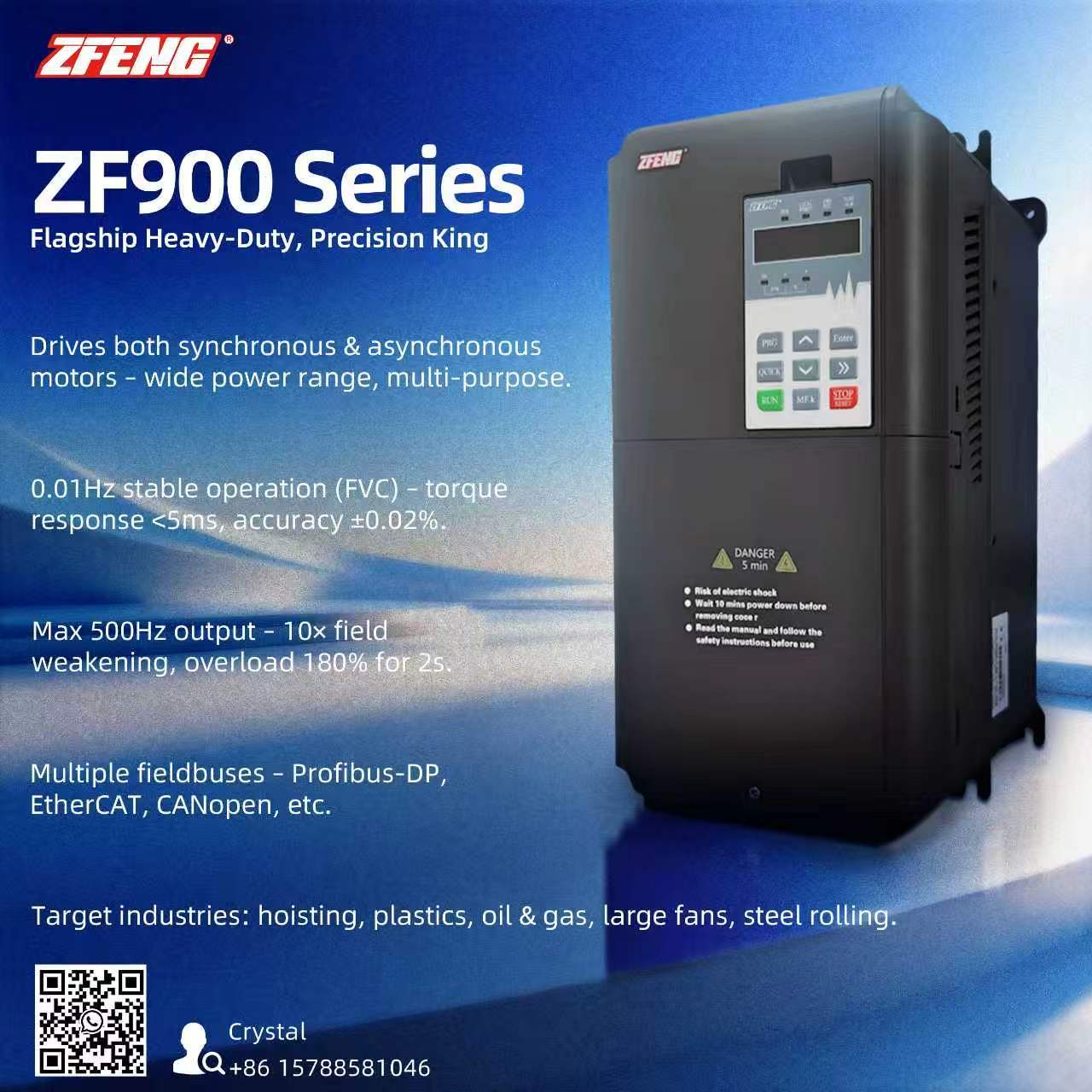
The dedicated frequency converter for conveyor lines is a professional driving and control equipment designed for the operating characteristics of conveyor lines. It achieves precise control of the speed and torque of the conveyor line motor by changing the frequency and voltage of the motor input power supply. It can continuously adjust the operating speed of the conveyor line within the range of 0-rated speed according to the weight of the conveyed material, conveying distance, process requirements, etc., to meet the needs of different production scenarios. Our frequency converter uses high-quality electronic components and advanced manufacturing processes, with multiple protection functions such as overcurrent, overvoltage, undervoltage, overheating, overload, etc. It can operate stably in harsh industrial environments, reducing equipment failures and downtime
Accurate speed regulation, suitable for multiple scene requirements
The conveyor line frequency converter supports 0-100% wide width speed regulation, which can adjust the speed in real time according to parameters such as material weight, conveying distance, and process rhythm, meeting the personalized needs of different scenarios such as food packaging, logistics sorting, and mineral material conveying.
For example, reducing speed during light loads to save energy consumption, and increasing torque during heavy loads to ensure stable operation.
Energy conservation and consumption reduction, lowering operating costs
By using frequency conversion speed regulation technology, the motor output power is dynamically matched with the load demand, avoiding energy waste caused by traditional fixed speed motors that pull small cars with large horses.
Actual test data: Under partial load conditions, the energy saving rate can reach 15% -30%, and long-term use can significantly reduce electricity expenses.
Soft start and smooth braking extend equipment lifespan
The frequency converter achieves zero impact starting of the motor, eliminating the current surge generated by traditional direct starting (usually 6-8 times the rated current), and reducing the impact on the power grid and motor.
Support smooth braking function to avoid material slipping or mechanical damage caused by emergency stop of conveyor belt, and extend the service life of components such as belts and rollers.
Power range: Covering 7.5kW-800kW, it meets the needs of small conveyor lines (such as food packaging lines) to medium-sized conveyor systems (such as logistics sorting lines).
Voltage and current: Three-phase 380V(±10%) input, suitable for different power grid environments.
The rated current range is 25A-1350A, supporting heavy-duty starting requirements.
Control method
V/F control: suitable for constant torque loads, such as belt conveyors.
Sensorless vector control: provides higher precision and dynamic response, suitable for scenarios that require fast speed regulation.
Closed loop control: precise position control is achieved through encoder feedback, suitable for automated production lines.
communication interface
Supports mainstream industrial bus protocols such as Modbus, Profinet, ASi, etc., and can seamlessly integrate with devices such as PLC and HMI to achieve remote monitoring and fault diagnosis.
Some models are equipped with Bluetooth/APP debugging functions to simplify the on-site configuration process.
Logistics sorting system: The frequency converter drives the conveyor belt to achieve speed grading control, and cooperates with barcode scanners or vision systems to complete operations such as cargo sorting and merging.
Food packaging line: Adjust the speed of the conveyor belt through a frequency converter to match the rhythm of the packaging machine and avoid material accumulation or idling.
Automated production line: The combination of frequency converter and servo motor enables precise positioning and multi axis synchronization of the conveyor line, suitable for high-precision scenarios such as electronic assembly and automotive parts production.
Select based on load type
Constant torque load (such as belt conveyor): Prioritize V/F control or sensorless vector control models.
Variable torque load (such as fans, pumps): Optional energy-saving mode frequency converter to further optimize energy consumption.
Select based on communication needs
When integrating with the upper computer, priority should be given to models that support Profinet/Modbus protocol.
When on-site debugging is frequent, choose products with Bluetooth/APP debugging capabilities.