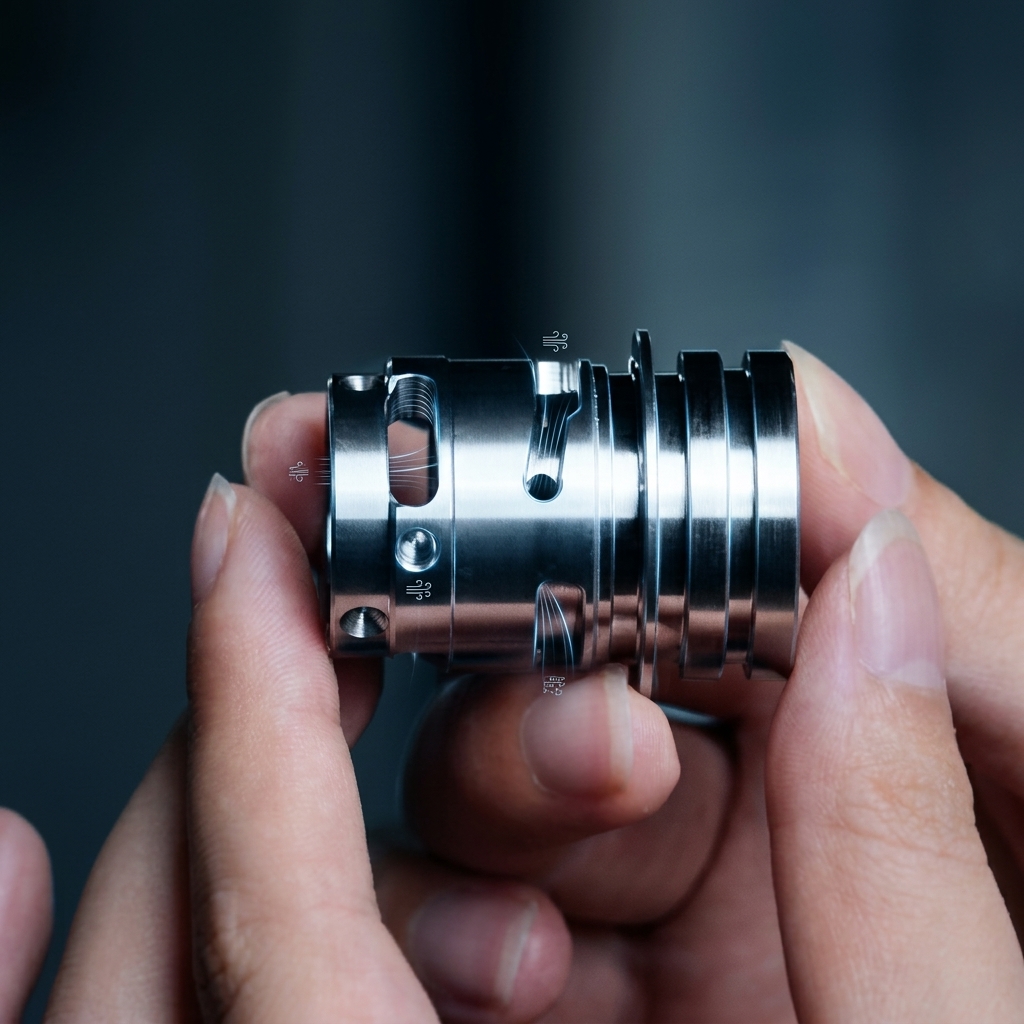
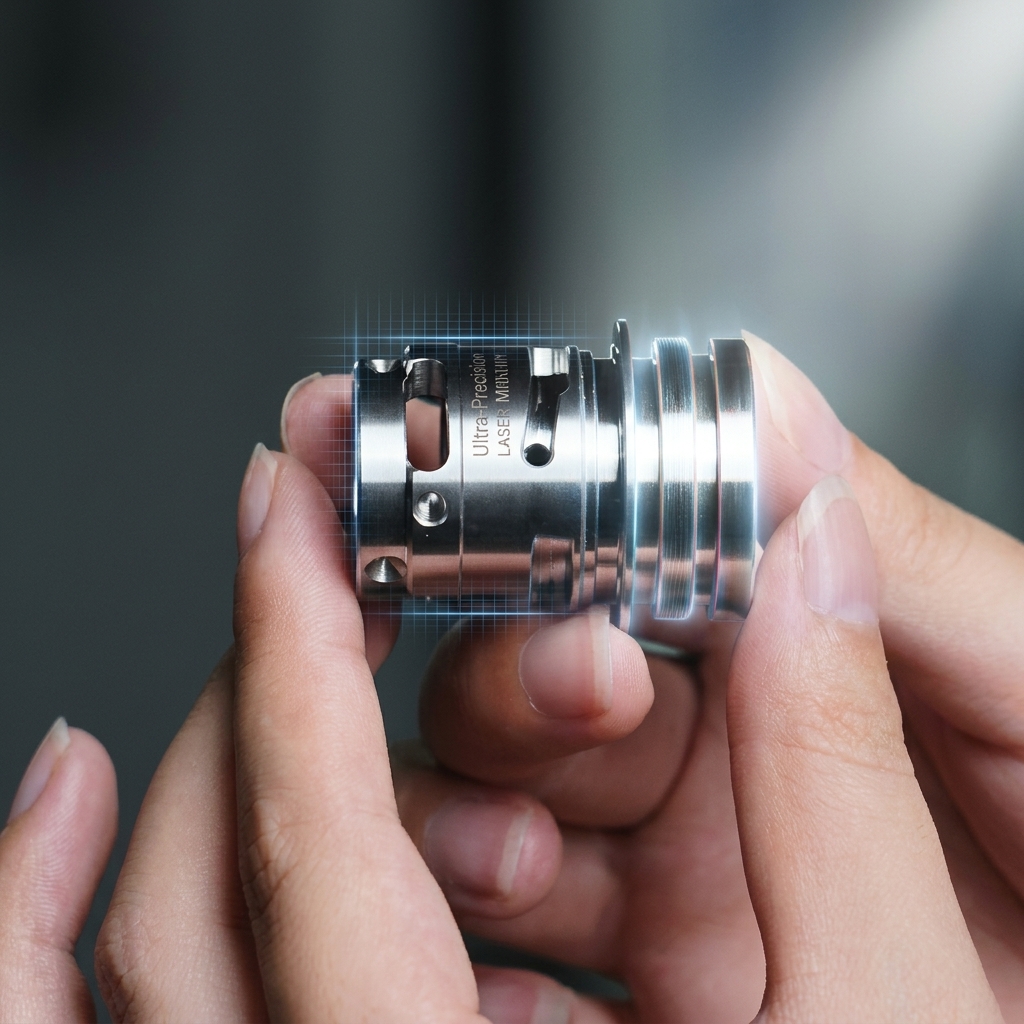
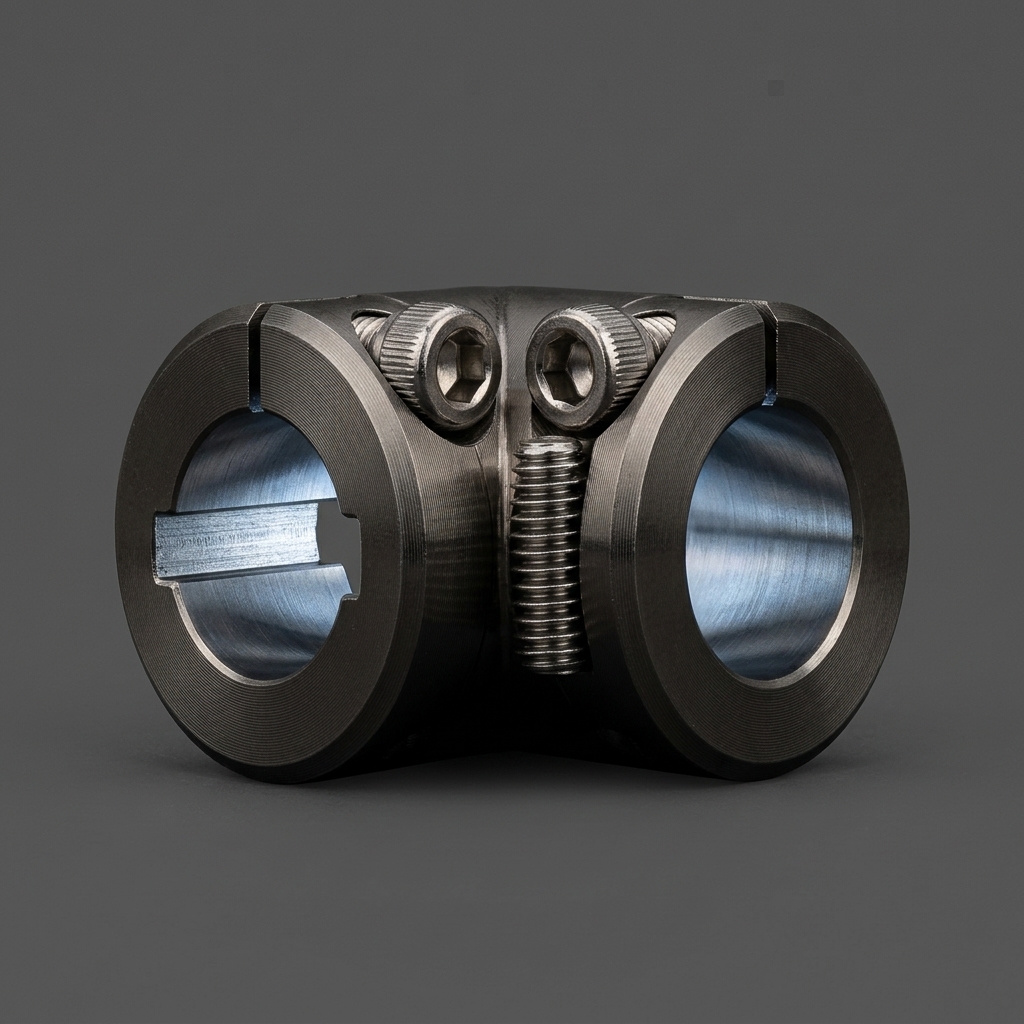
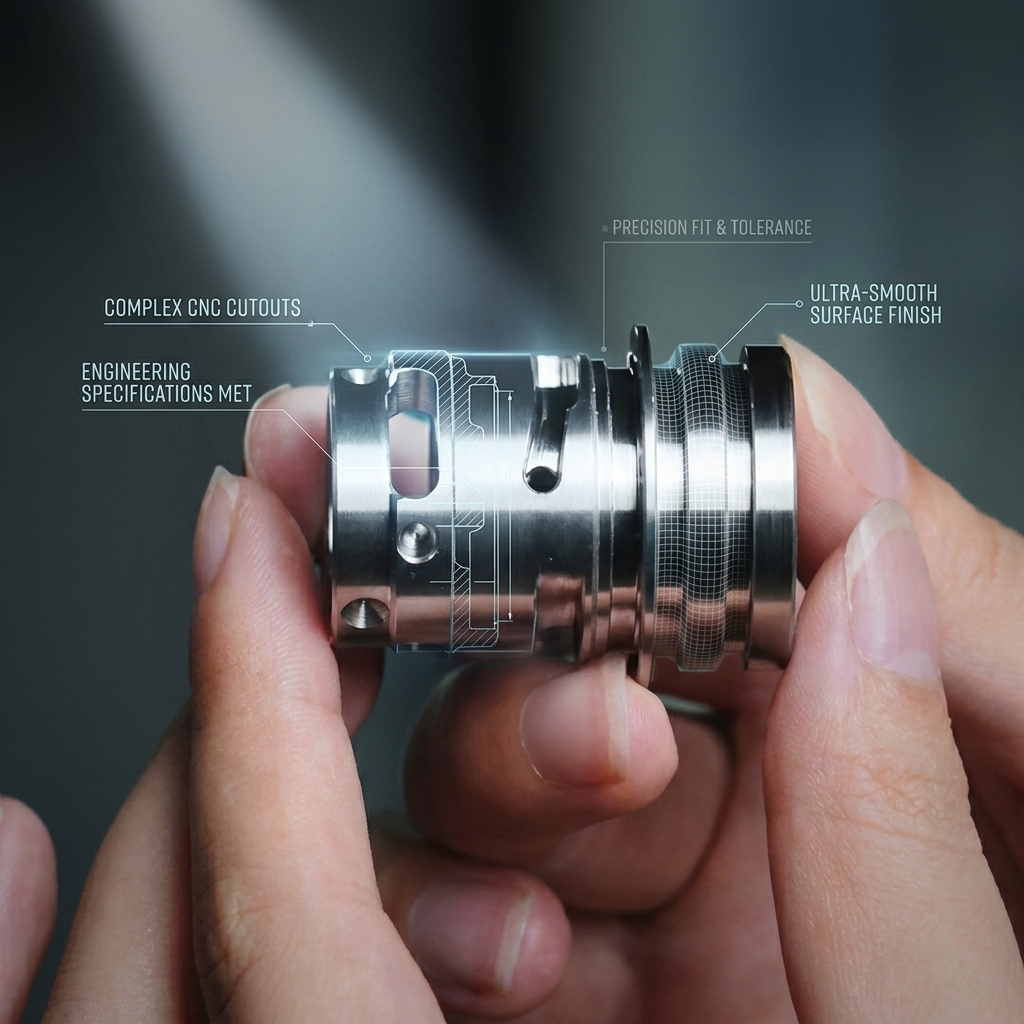
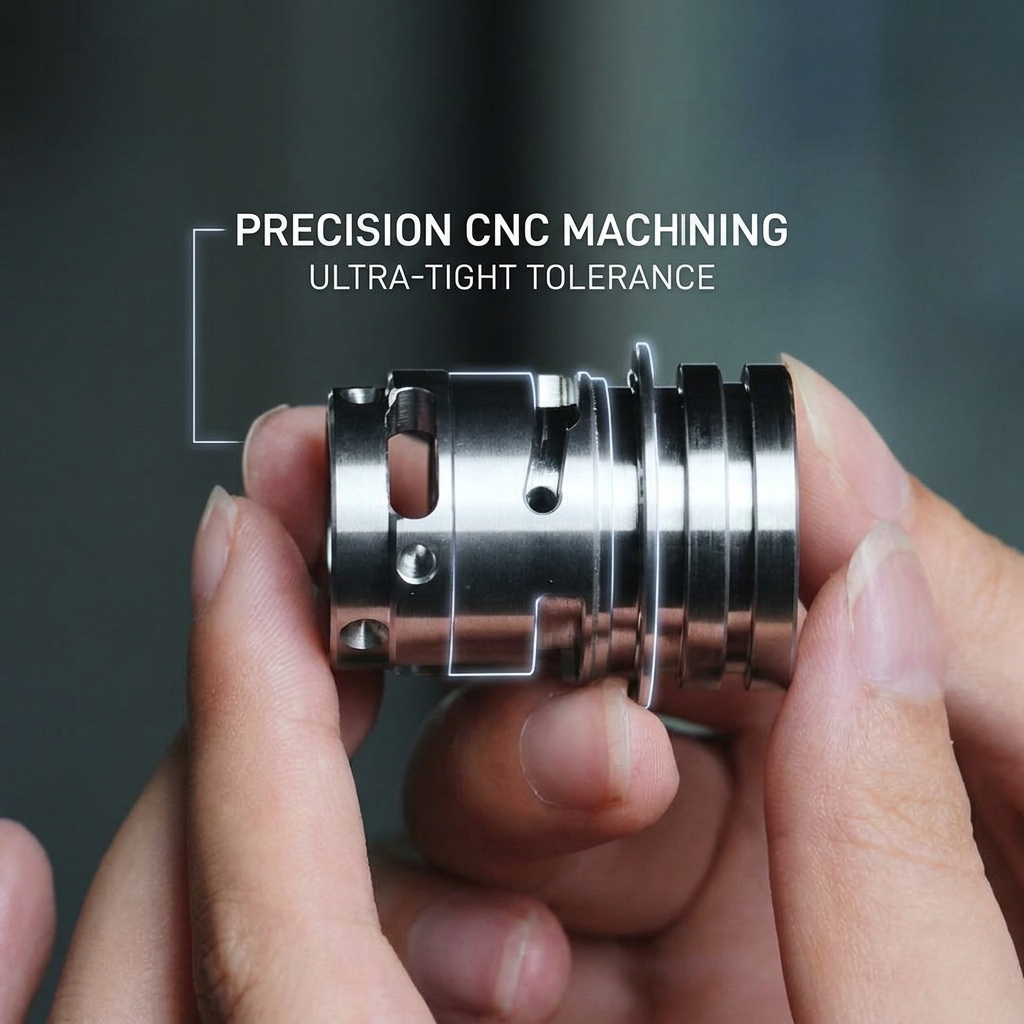
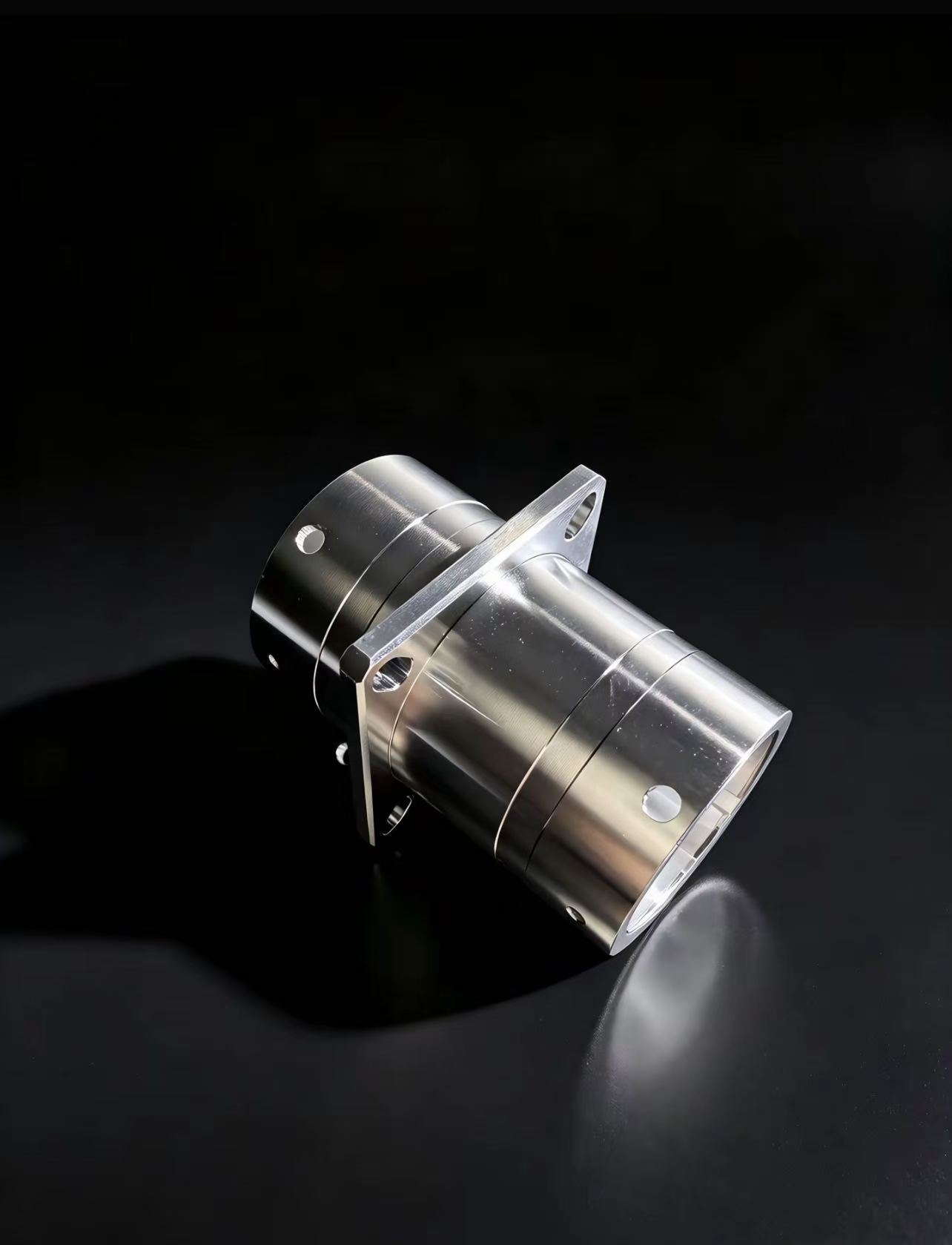
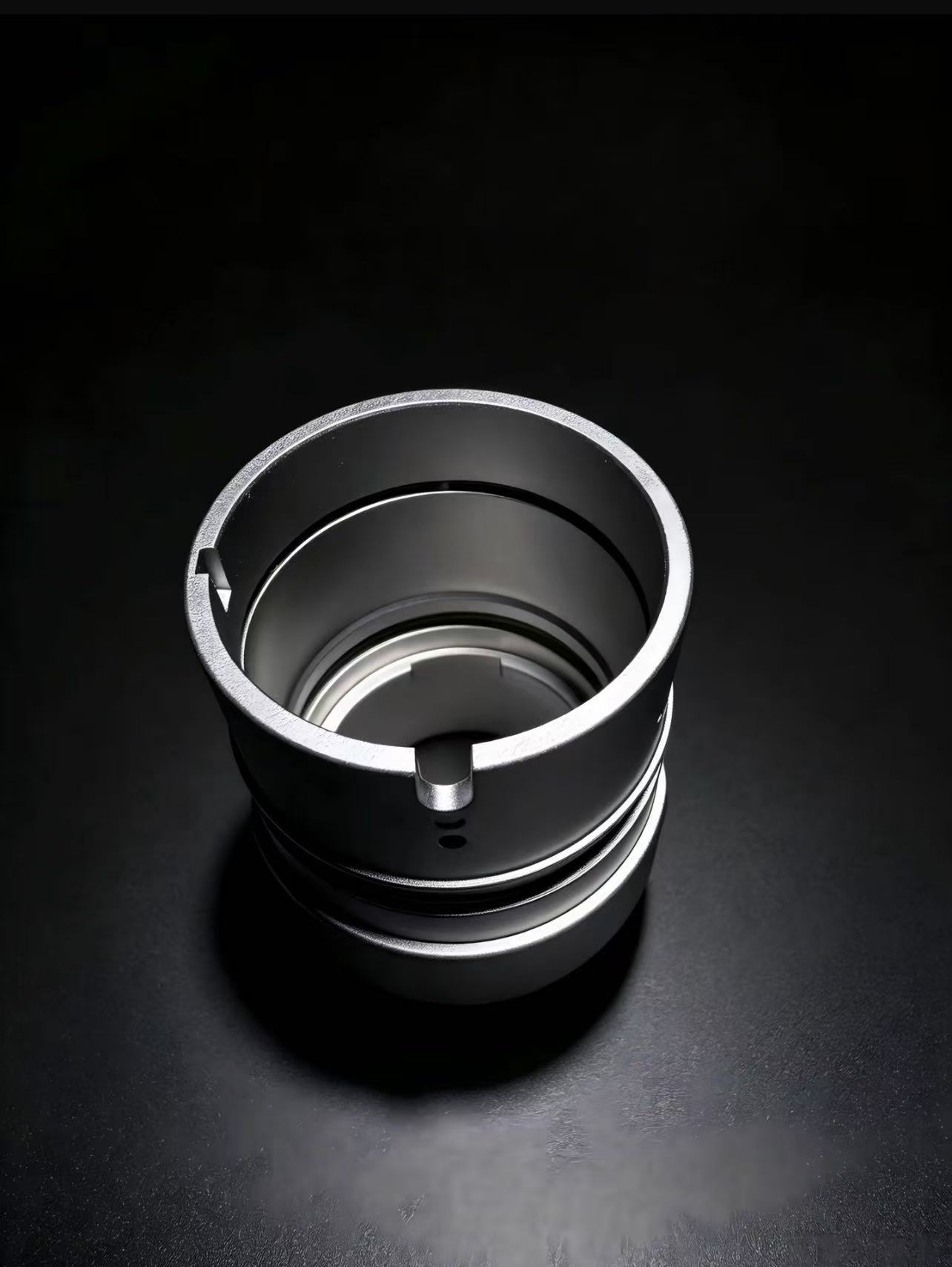
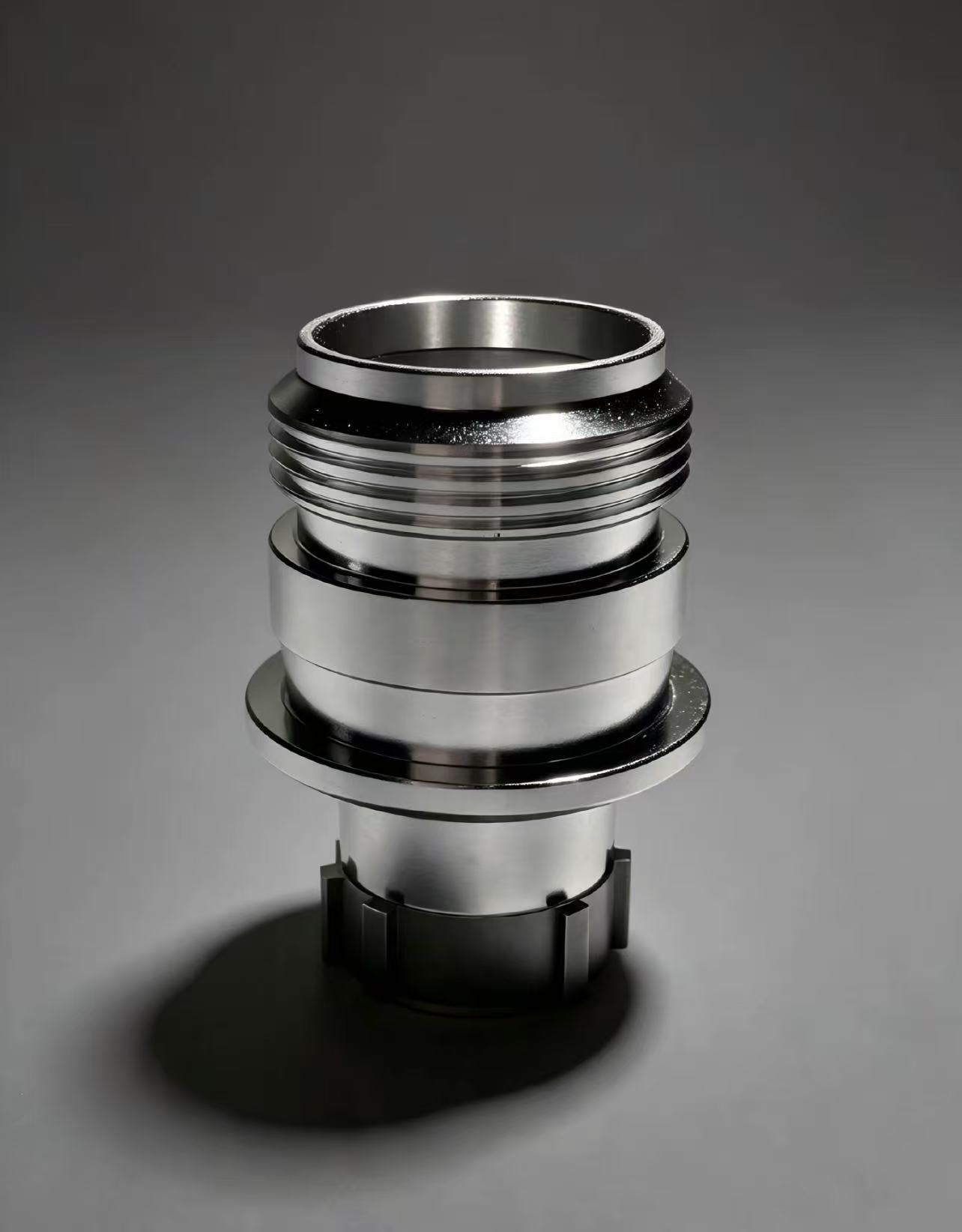
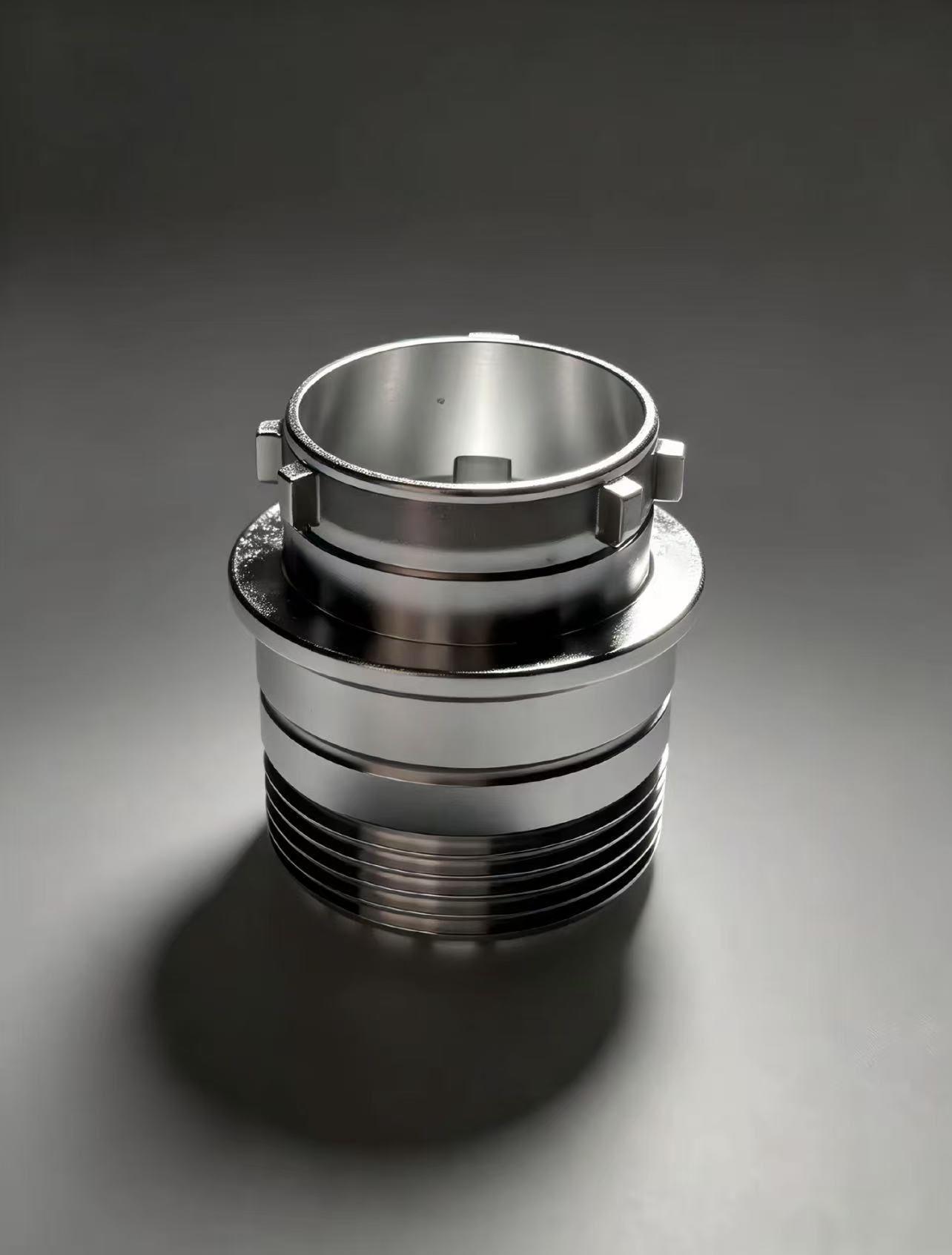
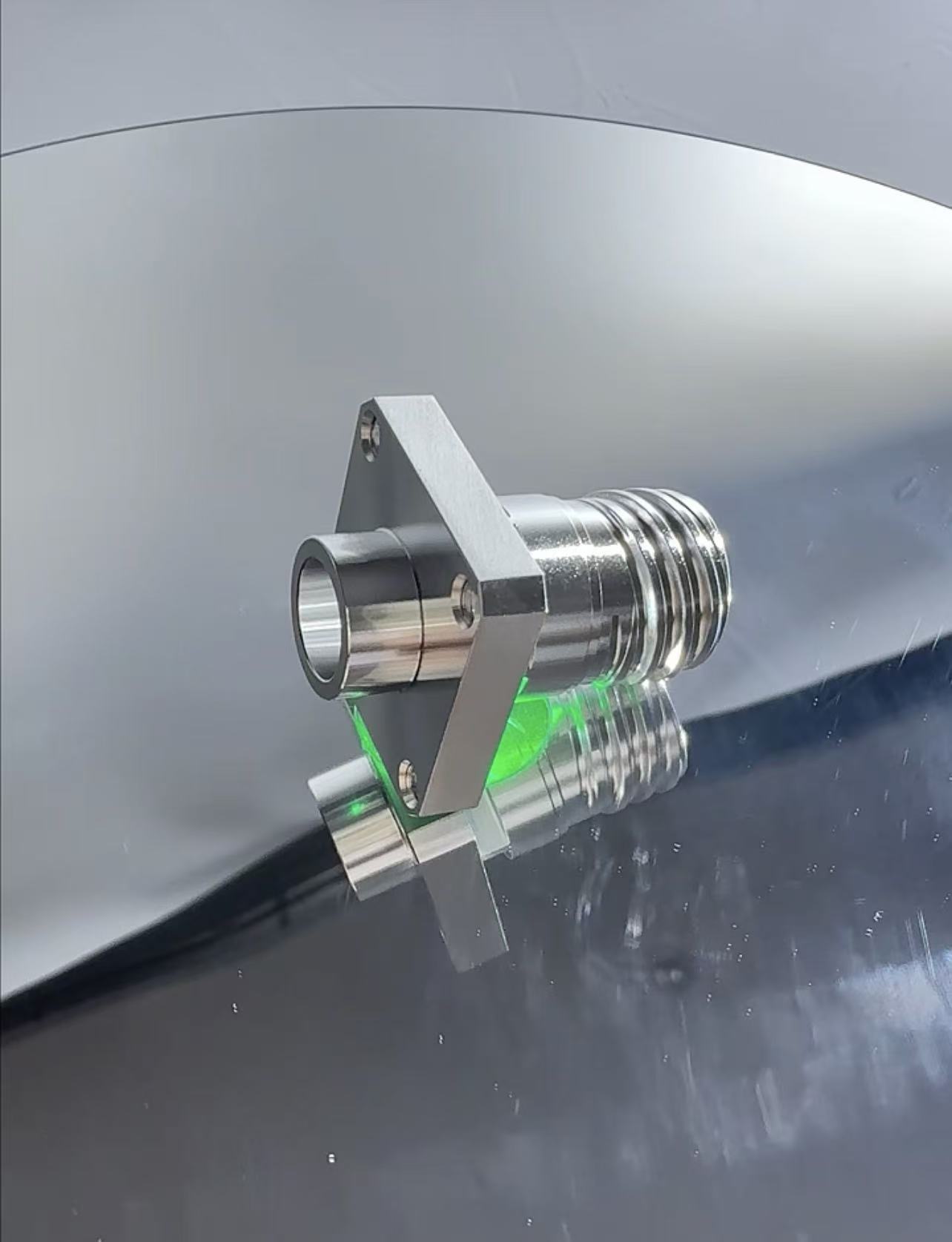
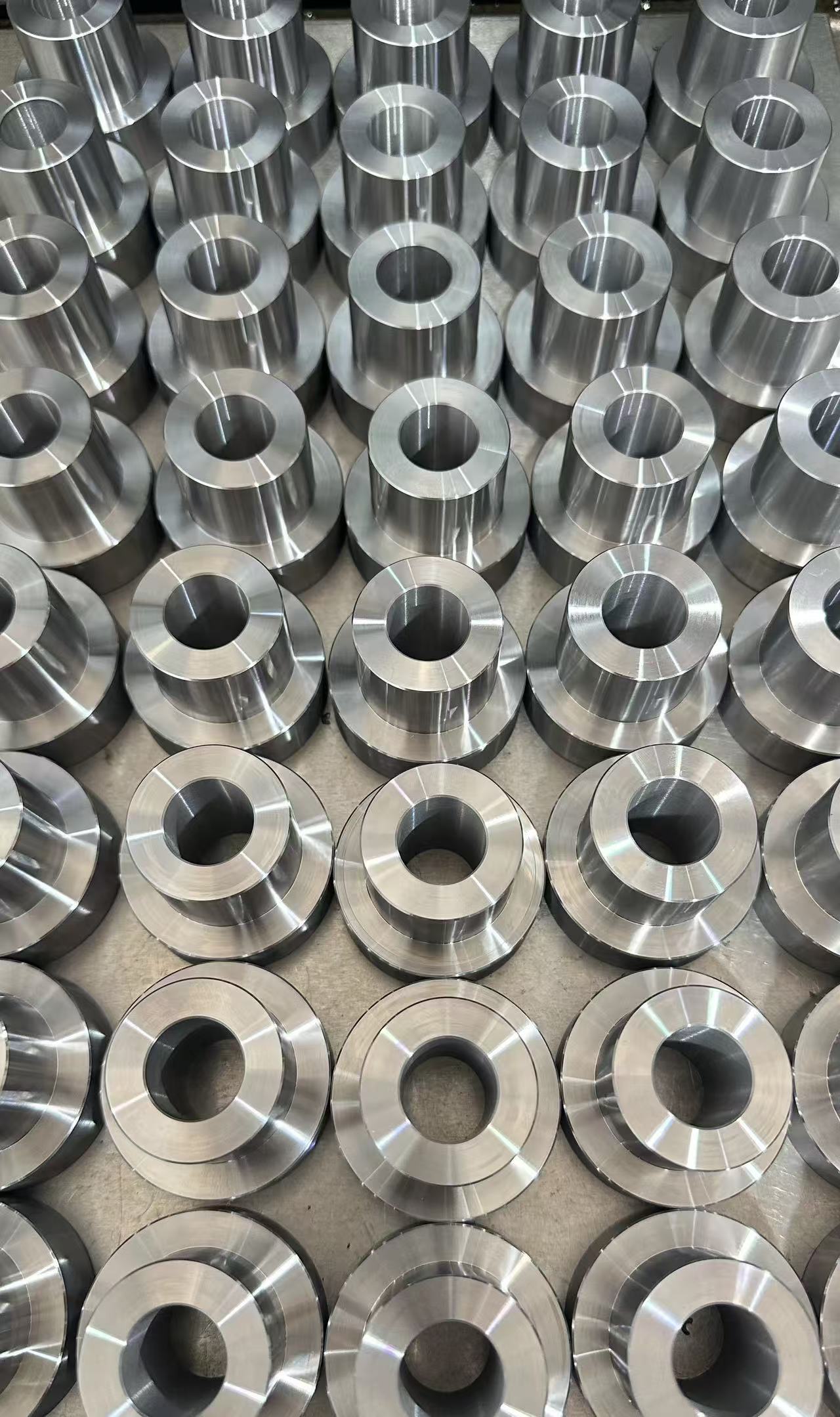
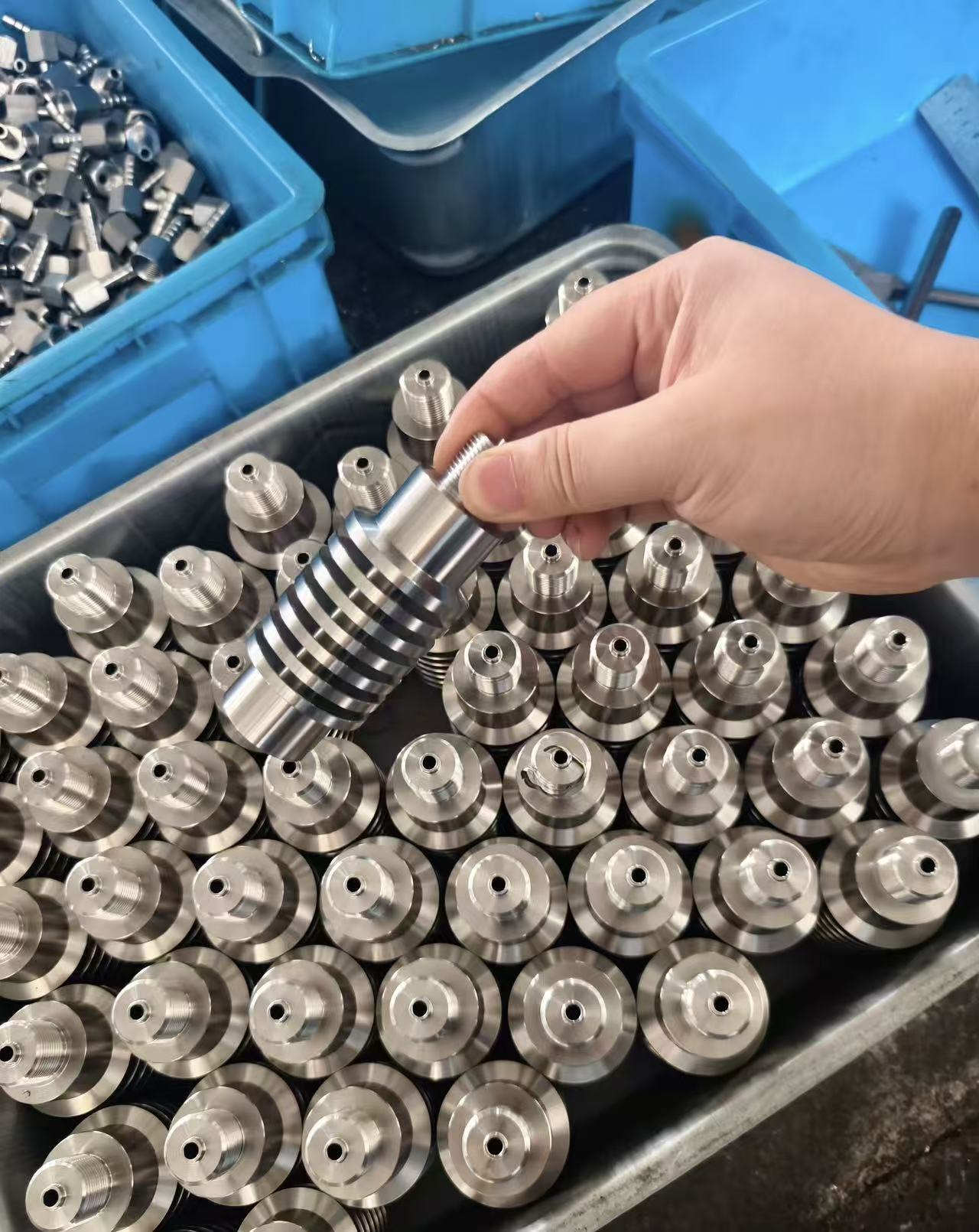
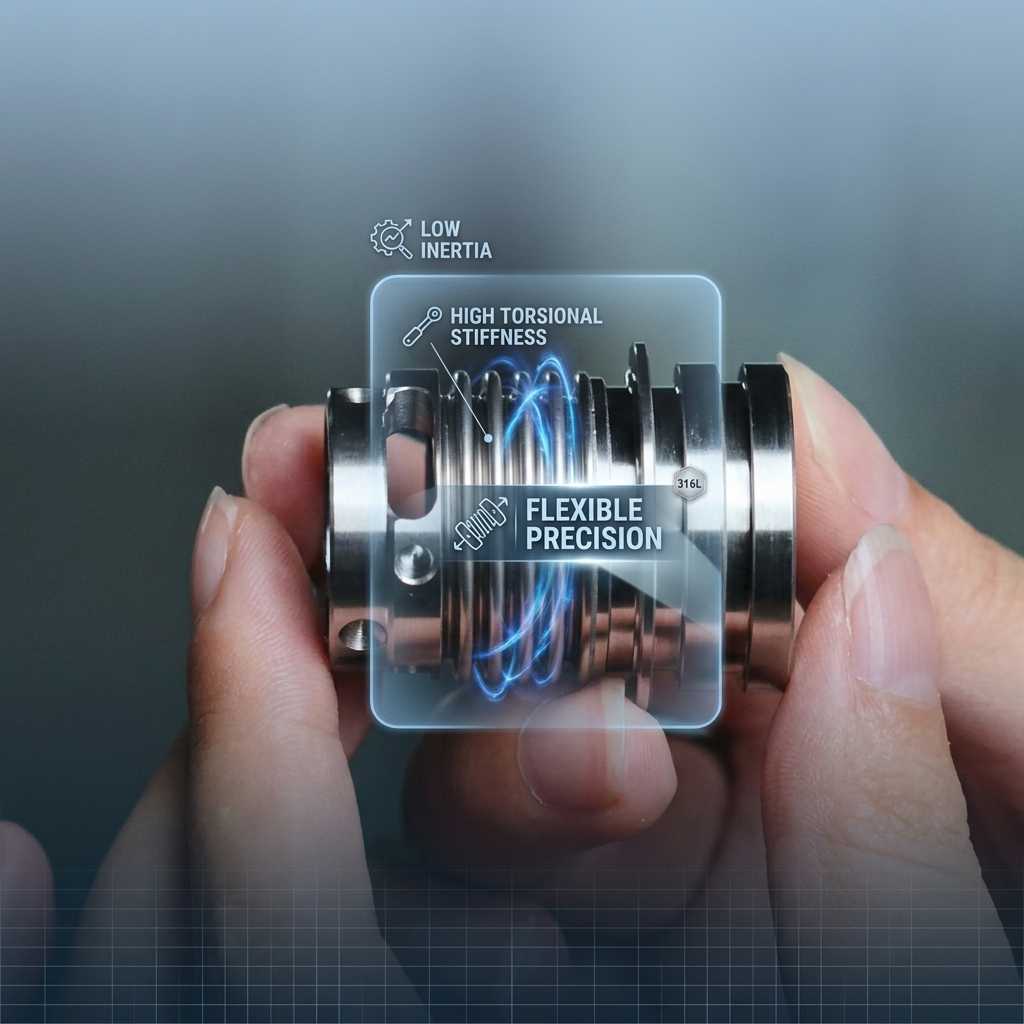
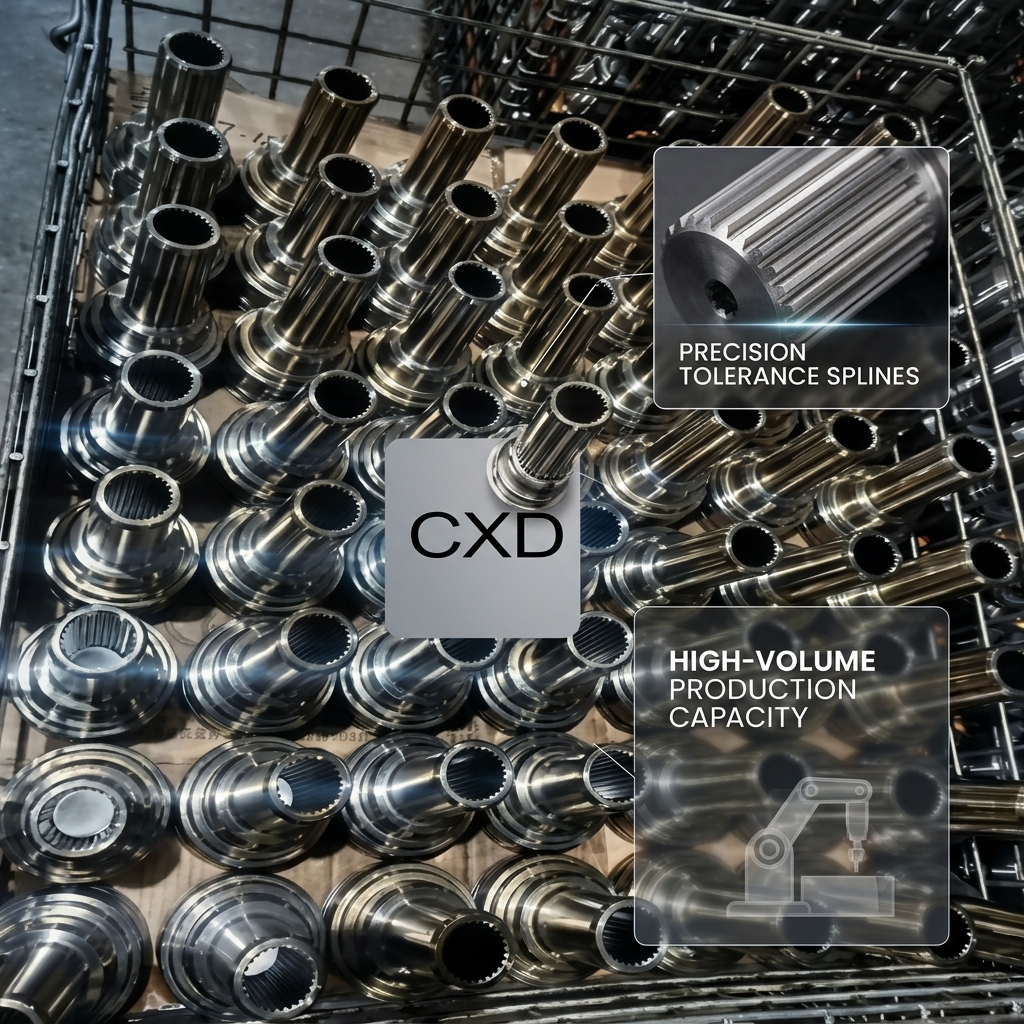
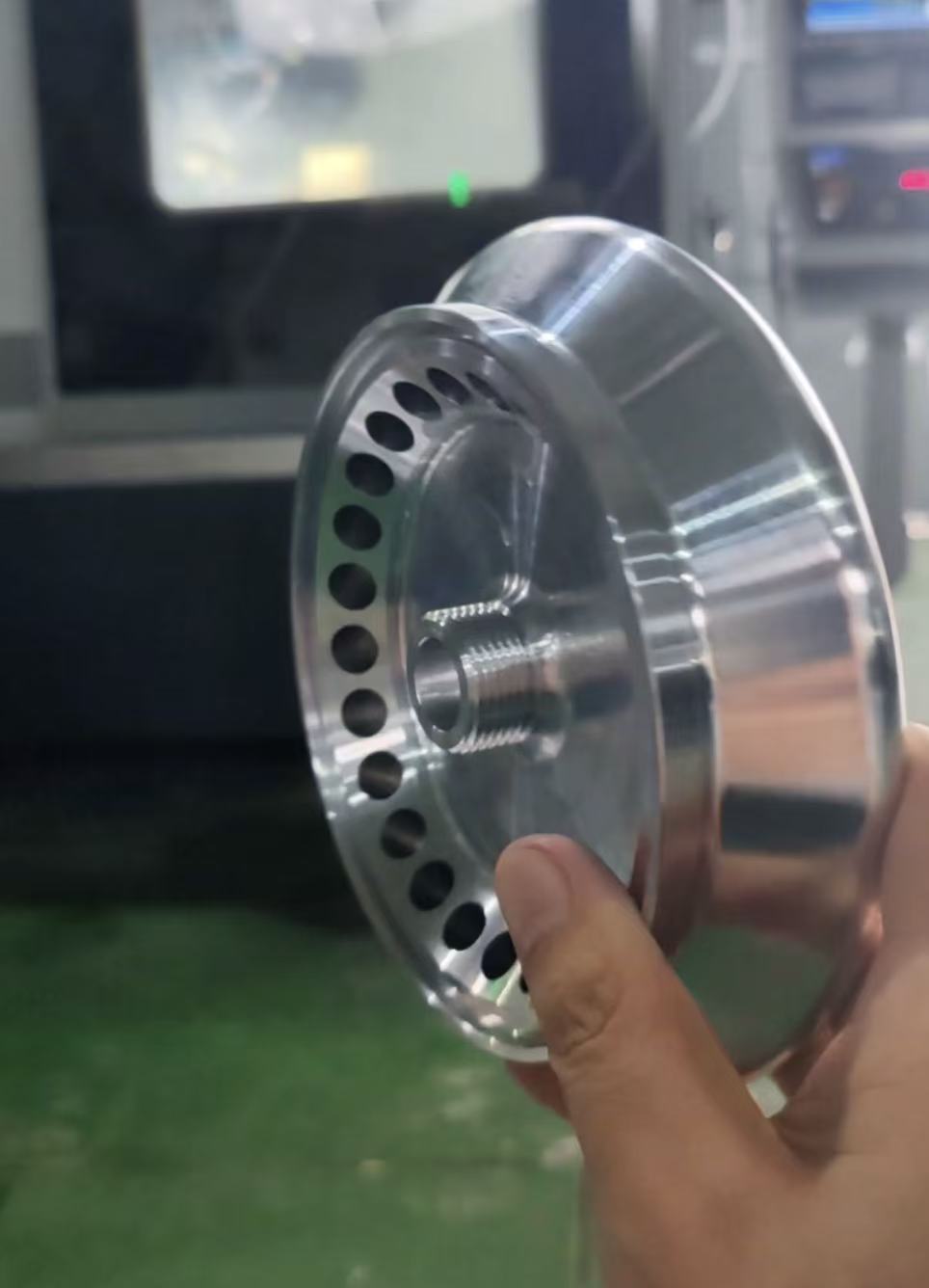
This rigid coupling sleeve is machined from 17-4PH stainless bar and then aged to condition H900, giving a clamp-type sleeve that transmits torque without the wind-up of a flexible element. Both ends carry a split clamp collar with socket head screws, one end has a machined keyway, and the through bore is finished by grinding after heat treatment so concentricity survives the hardening cycle. It is used for shaft trains that must stay rigidly aligned: ball screw to gearbox, test stand drive lines, machine tool spindles and servo axes with a separately supported shaft.
Heat treatment is what separates this part from a plain turned sleeve. Every dimension that matters is finished after aging, because 17-4PH moves in the H900 cycle.
| Step | Operation and control point |
|---|---|
| 1. Material verification | 17-4PH bar in the annealed condition, chemistry and hardness verified, heat number recorded against your job. |
| 2. Soft machining | Outside diameter, shoulders and the bore roughed and semi-finished with grinding allowance left inside the bore. |
| 3. Keyway milling | Keyway milled in the soft state with width held to +0.02/0mm, depth to +/-0.05mm, ends radiused to avoid a stress riser. |
| 4. Clamp collar slitting | Collar slit cut on the C-axis with controlled slot width, positioned so the clamp screws act across the slit. |
| 5. Clamp screw holes | Radial holes drilled and tapped, thread depth controlled so screws do not bottom on the bore wall. |
| 6. Aging to H900 | Solution and aging treatment to condition H900, 40-45 HRC, with dimensional growth factored into the soft-machining stock. |
| 7. Bore grinding | Bore ground after aging to H6 and cylindricity 0.005mm; both ends ground in the same clamping so the two bores share one axis. |
| 8. Face and shoulder grinding | Shoulder faces ground square to the bore within 0.005mm so the sleeve seats flat against the shaft shoulder. |
| 9. Passivation and marking | Passivated, cleaned, laser marked with part number and heat code. |
| 10. Final inspection | CMM concentricity across both bores, keyway gauge, hardness check, torque test on a sample assembly with certificates shipped. |
| Bore tolerance | H6, ground after heat treatment |
| Bore cylindricity | 0.005mm |
| Concentricity between both bores | 0.005mm |
| Runout at clamp collar | 0.01mm TIR |
| Keyway width | +0.02/0mm, depth +/-0.05mm |
| Shoulder squareness to bore | 0.005mm |
| Clamp slot width | +/-0.02mm |
| Hardness | 40-45 HRC after H900 aging |
| Surface roughness | Bore Ra 0.4um ground, OD Ra 0.8um turned |
| General tolerance | +/-0.01mm critical, +/-0.05mm general |
Because the part is ground after aging, the bore is not affected by heat treat distortion, and the clamp collar slit is cut before hardening so the slit faces stay parallel without a secondary EDM operation. Hardness is verified on every lot, not only on the first article.
Rigid sleeves are built to the shaft interface, so bore, keyway and clamping details follow your drawings and torque requirement.
Send the shaft diameters, keyway standard and torque figure, or a STEP model, and our engineering team confirms the clamp capacity, hardness and fit before quoting, usually within one to two working days.
Dongguan Changxinda Precision Technology Co., Ltd has been a custom CNC machining supplier since 2008, based in Dongguan, Guangdong, China. The facility operates turn-mill combined CNC lathes, 4-axis and 5-axis machining centers and CNC lathes with about 100 employees, including in-house CAM programming and a dedicated quality department. Over 200 customers are served in medical equipment, robotics, automotive, aerospace, automation, laser, LED, lithium battery and precision testing instruments, and 50-60 percent of output is exported. The company is ISO 9001:2015 certified, with annual sales between USD 10 and 20 million and in-house inspection on CMM and optical equipment. Couplings, sleeves, shafts with keyways and post-heat-treat grinding are established work, sharing the same capability used for robotics and fluid handling parts.
Ball screw to gearbox connections on machine tools, servo axis shaft trains with a separately supported shaft, test stand and dynamometer drive lines, printing and packaging line drive shafts, pump and compressor shaft couplings, agricultural and construction drive shafts, and custom non-standard rigid shaft connections built to customer drawings.
Why is the bore ground after heat treatment?
17-4PH grows and distorts slightly in the H900 aging cycle, so a bore finished before aging would lose both size and cylindricity. Grinding after aging holds H6 with 0.005mm cylindricity and keeps concentricity between the two bores at 0.005mm.
How much torque can a clamp collar take compared with a keyed fit?
A split clamp collar transmits moderate torque reliably without marking the shaft. For high torque we recommend clamp plus keyway, which is what the standard version here provides; the achievable figure depends on bore size and screw size, and we confirm it during the DFM review.
Can you make a non-standard bore, keyway or stepped sleeve?
Yes. Bore diameter, stepped bores, DIN or ANSI keyway, double keyway, spline and taper lock are all standard customization. Send the shaft data and torque figure or a STEP model and we confirm clamp capacity and fit before quoting.
What hardness and material certificate do I receive?
Parts are aged to condition H900 with hardness verified at 40-45 HRC per lot, and each shipment includes the material certificate with heat number, the hardness result and the CMM report.
How is repeat-order delivery kept stable with heat treatment in the process?
Heat treat lots are booked on a fixed process sheet with the same subcontractor, programs and grinding fixtures are archived against your part number, and repeat lots run on reserved capacity above 10,000 pieces per month, so both hardness and timing stay repeatable.