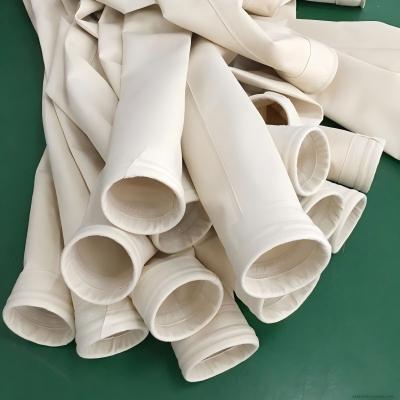
Cement plant dust filter bags are professional high-performance filter materials specially customized for the harsh working conditions of cement production lines. They are the key consumables of bag dust collectors, widely used in cement kilns, raw material grinding, clinker transportation, cement silos and other working sections.
Materials & Applications
| Material |
Key Features |
Continuous Temp |
Typical Uses |
| Polyester (PE) |
Cost-effective, good strength, acid-resistant |
≤130°C |
Cement, metallurgy, general dust |
| PPS (Polyphenylene Sulfide) |
Excellent chemical stability, acid/alkali resistance |
≤160°C |
Coal-fired boilers, power plants |
| Aramid (Nomex) |
High-temperature resistance, flame-retardant |
≤204°C |
Asphalt mixing, carbon black production |
| PTFE (Teflon) |
Ultimate corrosion resistance, self-cleaning |
≤260°C |
Waste incineration, chemical industry |
| Fiberglass |
Ultra-high temperature resistance |
≤280°C |
Steel mills, high-temperature flue gas |
When selecting dust filter bags for cement production conditions, you need to confirm working conditions, material performance and matching parameters step by step.
1. Confirm flue gas temperature
Cement plant working sections have different temperature ranges:
- Raw mill, cement silo, packaging section: normal temperature, Polyester (PET) filter bags are cost-effective.
- Kiln tail, clinker production: medium high temperature, choose PPS filter bags (continuous resistance 160°C).
- Ultra-high temperature kiln conditions: adopt Aramid(Nomex) or fiberglass filter bags.
2. Consider corrosion and moisture
Cement flue gas contains acid gas, moisture and easy-to-harden dust.
- PPS material owns excellent acid resistance and hydrolysis resistance, the first choice for most cement lines.
- For strong acid and wet flue gas, PTFE coated filter bags are recommended to avoid bag damage and blockage.
3. Focus on wear resistance
Cement powder has high hardness and strong friction.
Choose thickened felt materials with high density; surface finishing treatment can greatly improve wear resistance and extend service life.
4. Dust cleaning method
Most cement dust collectors use pulse jet cleaning.
Match filter bag thickness, air permeability and surface treatment to suit pulse cleaning, prevent dust bonding and ensure stable pressure difference.
5. Environmental protection emission requirements
For ultra-low emission standards, select
PTFE membrane finished filter bags.
They can intercept ultra-fine dust, achieve high filtration efficiency and meet strict industrial emission standards.
6. Service life and cost performance
Balance initial cost and service life.
PPS filter bags feature long service life and low maintenance cost, which is the most cost-effective solution for cement plants.