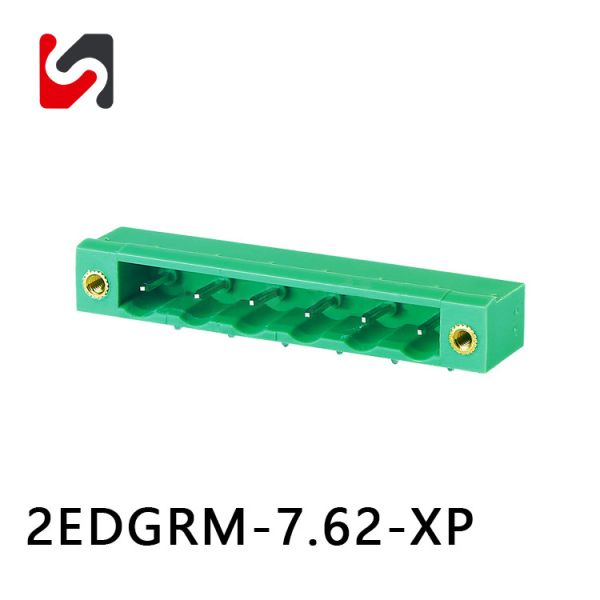
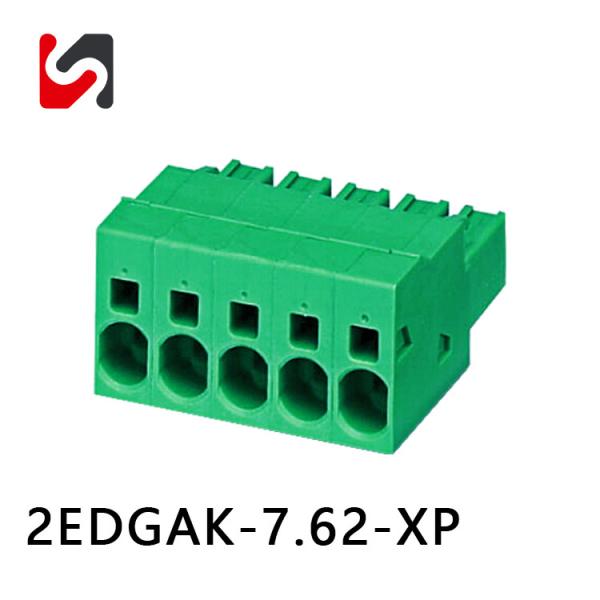
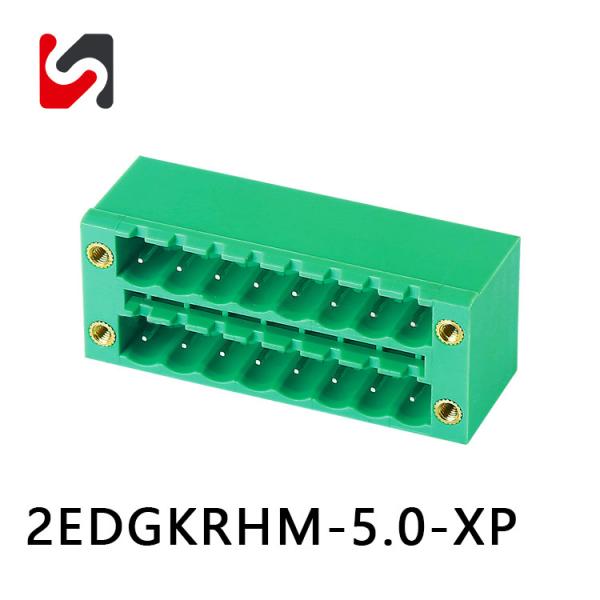
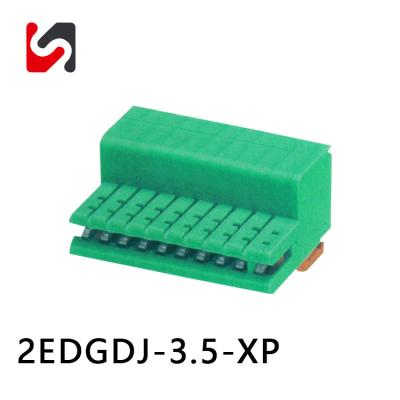
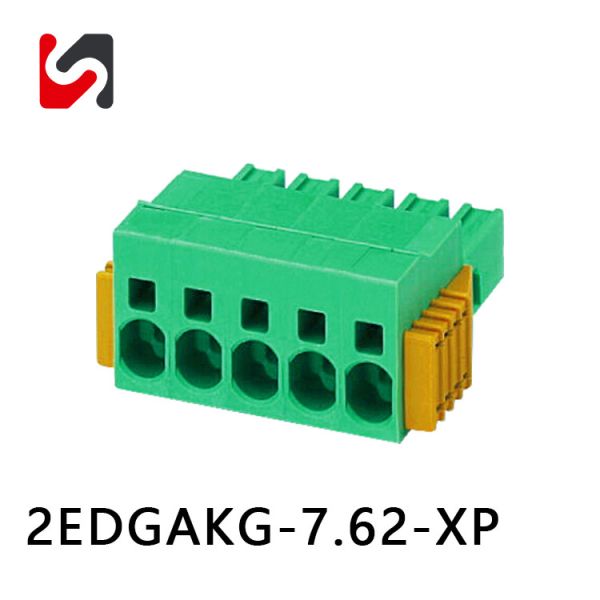
KF2EDGKJ-3.5 300V Pluggable Terminal Block 8 Pin Replaced Phoenix Supplyer
Product Specifications
| Pitch | 3.5mm |
| Poles | 2P-24P |
| Number of Contacts | 2-24 |
| Rated voltage | 300V |
| Reated current | 8A |
| Pin Dimensions) [mm | 3.7 |
| Temperature range | -40°C~+105°C |
| (Impulse wiithstand voltagea) [KV] | 2.5 |
| Supply Ability | 100000 Piece/ per Week |
| Stripping Length) [mm] | 15-16 |
| Contactive Coating | Tin Plated |
| Withstanding VoltagWithstanding Voltag | 2200V/1Min |
| PCB Hole Diameter) [mm] | 1.4 |
Product Application
Why do we choose this model ?
When replacing a 300V Pluggable Terminal Block with 8 pins, sourced from a Phoenix Supplier or any equivalent high-quality manufacturer, ensuring safe wiring practices is paramount to prevent electrical hazards and ensure reliable performance. Here's a comprehensive guide on how to wire the terminal block safely:
1. Preparation and Safety Measures
- Ensure Power is Off: Before starting any work, ensure that the power supply to the circuit or equipment where the terminal block is being installed is completely turned off and locked out to prevent accidental energization.
- Personal Protective Equipment (PPE): Wear appropriate PPE, including insulated gloves, safety glasses, and protective clothing, to minimize the risk of electrical shock or injury.
- Read Manufacturer's Instructions: Familiarize yourself with the specific installation and wiring instructions provided by the Phoenix Supplier or the manufacturer of the terminal block.
2. Inspection and Preparation of the Terminal Block
- Visual Inspection: Check the terminal block for any signs of damage, corrosion, or loose parts. Ensure all pins are in good condition and properly aligned.
- Cleaning: If necessary, clean the terminal block and its contacts with a suitable solvent to remove dirt, grease, or oxidation.
3. Wiring Procedure
- Identify Wires: Clearly label or identify the wires to be connected to the terminal block, ensuring they match the intended circuit diagram or wiring schematic.
- Strip Wire Insulation: Use a wire stripper to remove the insulation from the ends of the wires, leaving enough bare wire for a secure connection without exposing too much that could cause a short circuit.
- Insert Wires: Carefully insert the stripped ends of the wires into the appropriate terminals. Ensure the wires are fully seated and do not protrude excessively from the terminals.
- Torque Tightening: Use the appropriate tool (e.g., screwdriver, torque wrench) to tighten the terminal screws or fasteners to the manufacturer's recommended torque specifications. Avoid over-tightening, which can damage the terminals or wires.
4. Verification and Testing
- Visual Verification: Once all wires are connected, visually inspect the terminal block to ensure no wires are crossed, pinched, or improperly seated.
- Electrical Testing: If possible, perform electrical tests (e.g., continuity tests, insulation resistance tests) to verify the integrity of the connections and ensure there are no shorts or open circuits.
- Power-Up Procedure: Slowly and carefully restore power to the circuit, monitoring for any abnormal behavior or indications of faulty wiring.
5. Documentation and Maintenance
- Documentation: Record the wiring configuration and any specific notes or observations in a maintenance log or documentation system for future reference.
- Regular Maintenance: Schedule regular inspections and maintenance of the terminal block and associated wiring to ensure continued safe and reliable operation.
By following these steps, you can safely replace and wire a 300V Pluggable Terminal Block with 8 pins, sourced from a Phoenix Supplier or similar high-quality manufacturer, minimizing the risk of electrical hazards and ensuring optimal performance.
Drawing
2EDGKJ-3.5.pdf
Package Details
Take strong bags/boxes/cartons for the package, in order to reduce the damage during the shipments. Tape and reel packing, Clamshell packing, Pallet packing, etc are available.
FAQ
Q: The nature of the company (factory/trading)?
A: Integrated industry and trade.
Q: Packing details of the product?
A: Use a special export carton, which is stronger, and the weight of a single piece does not exceed 25KG (by air).
Q: The customs code of the product?
A: 8536901900.
Q: The mass production time of the product?
A: Usually 2 weeks - 4 weeks.
Q: Is the sample provided for free, and the sample delivery date?
A: Small amount samples can be given away for free, and samples can be delivered within 3-5 days.
Q: Does the product support OEM customization?
A: YES.
Q: Do you support MOQ?
A: YES.
Q: Is there a product quotation or electronic sample catalog?
A: Customers need it at any time and can provide it at any time.
Q: Does the company have quality control standards and corresponding management systems?
A: Of course.
SHIPMENTS