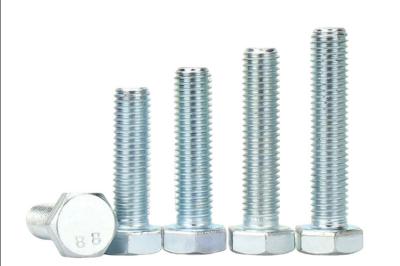
| Usage | Fastening |
| Size | Various sizes available |
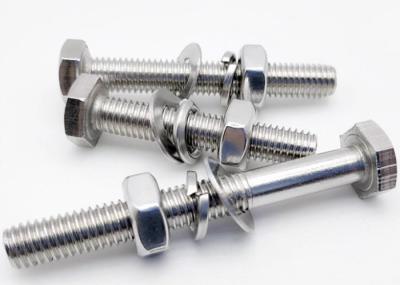
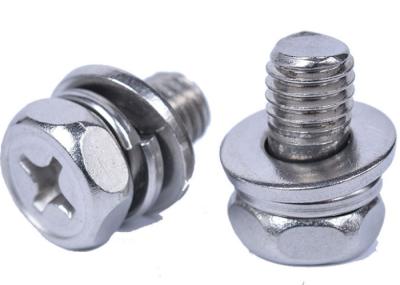
| Style | Steel hex head with washer nut |
| Head Style | Hexagon head |
| Strength | High |
| Finish | Polished/Zinc/Anodizing |
| Manufacturer | JIA SHAN Hardware Company |
| Length | Customizable |
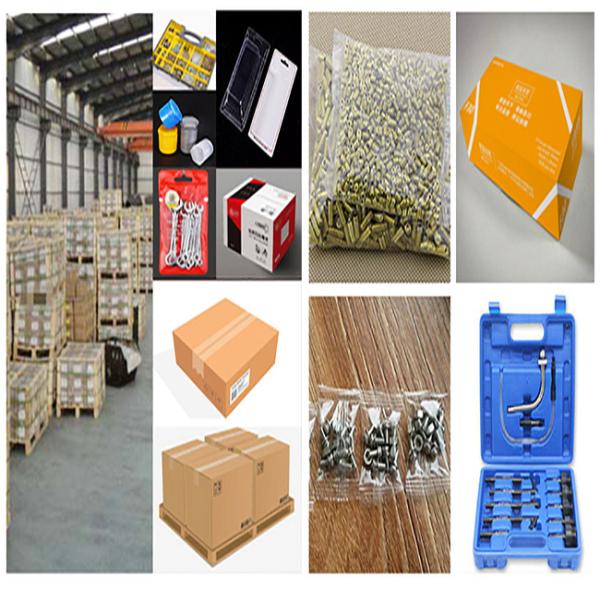
| Package | Small Packing+Carton Packing+Pallet |
| Standard | DIN |
| Package Quantity | 100 pieces |
| Shape | Bolt |
| Measurement System | INCH, Metric |
| Port | Shenzhen |
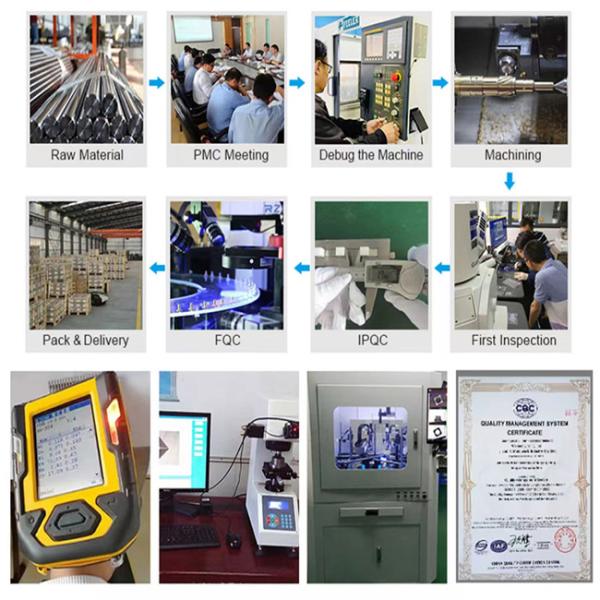
| Quality | Inspection before shipment |
| Color | Customizable |
| Material | Titanium TC4, GR5, Ti-6Al-4V |

Hex bolts are widely used across various industries due to their simple design, high strength, and ease of installation.
Basic Structure and Characteristics of Fully Threaded Studs
A fully threaded stud is a rod-shaped fastener featuring threads at both ends or one end, typically covering the entire shaft. Unlike standard bolts, fully threaded studs lack a head and are usually paired with nuts to achieve connection and securing functions. These studs are typically manufactured from high-strength steel, stainless steel, or other alloys to ensure durability and reliability across diverse environments.
Key characteristics of fully threaded studs include:
1. Full-thread design: Threads cover the entire shaft, providing greater contact area and enhanced clamping force.
2. High strength and durability: Typically manufactured from high-strength materials, capable of withstanding significant tensile and shear forces.
3. Flexibility and adaptability: Can be cut to different lengths as required to suit varying engineering needs.
4. Ease of installation and removal: Facilitated by matching nuts, allowing convenient installation and disassembly, making them suitable for equipment requiring frequent maintenance.
The distinction between fully threaded studs and half-threaded studs: 1. The primary difference between fully threaded studs and half-threaded studs lies in thread length. The thread length of a half-threaded stud is typically twice the diameter of the thread. Selection depends on the required thread length. Should the required thread length exceed twice the thread diameter, a fully threaded stud should be chosen. Typically, fully threaded studs are employed for adjustment and transmission purposes.
2. For identical materials, the bottom diameter of a fully threaded stud is relatively smaller than that of a half-threaded stud due to tooth friction.
Fully Threaded Studs: Thread dimensions, tolerances, and chamfer requirements at both ends shall comply with GB/T 901 specifications.
Partially threaded studs: Specifications for patterned products: Length: 6m, hot-rolled partially threaded studs, solid yield strength: greater than 900 N/mm², tensile strength: greater than 1100 N/mm², diameter: 20–23 mm, weight: 2.56 kg/m; second diameter: 15–17 mm, weight: 1.44 kg/m.