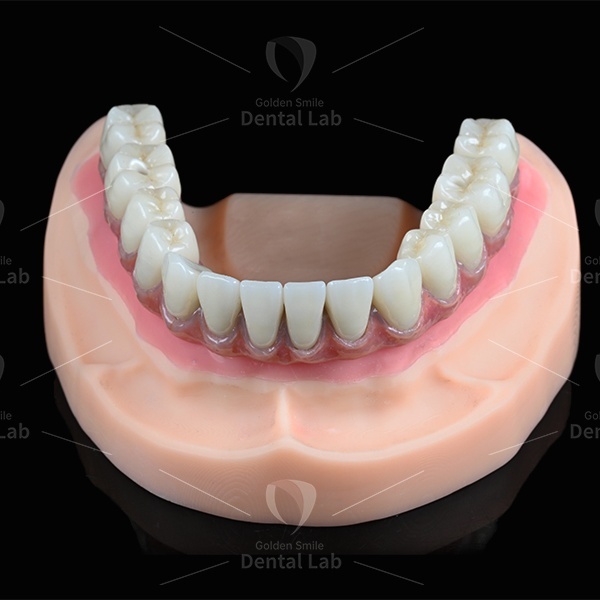
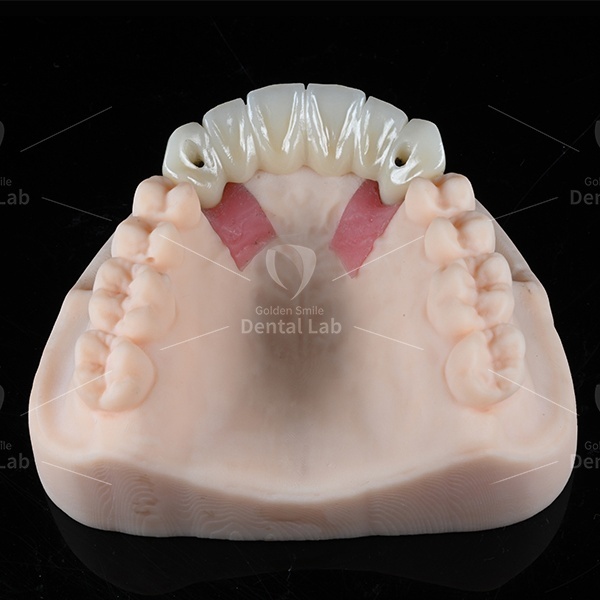
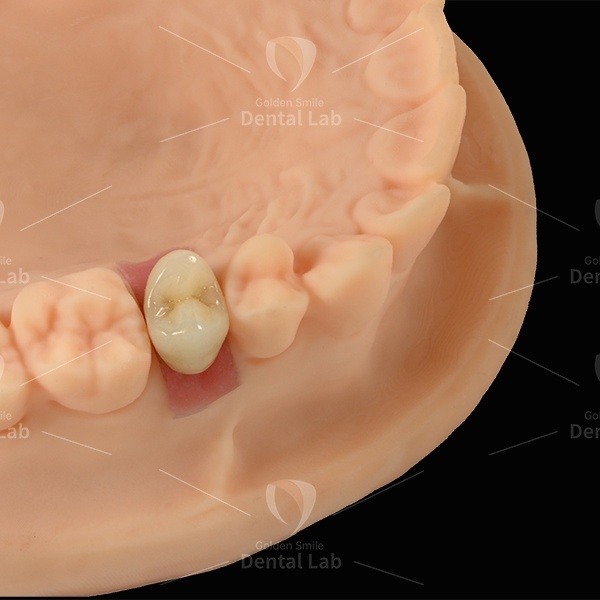
The PFM (Porcelain-Fused-to-Metal) Screw-Retained Crown in Cobalt-Chrome (Co-Cr) is a time-tested, high-strength restorative solution. It is specifically designed for clinicians who prioritize the mechanical security of screw retention while seeking a cost-effective alternative to precious metal alloys.
By utilizing a non-precious Co-Cr framework, this restoration offers exceptional durability and biocompatibility without the premium price tag of gold or palladium.
To meet various clinical requirements and budget preferences, our PFM screw-retained crowns are available in two primary configurations:
Direct-to-Fixture (UCLA Abutment): Cast from an all-plastic UCLA abutment, allowing for maximum customization of the emergence profile and metal finishing.
Ti-Base Hybrid: The PFM crown is precision-milled or cast and subsequently bonded to a titanium base (Ti-Base). This combines the strength of PFM with the precise fit of a factory-manufactured titanium interface.
| Feature | Benefit |
| Retrievability | Allows for easy removal for professional cleaning, tissue evaluation, or tightening if the screw loosens. |
| Cement-Free | Eliminates the risk of peri-implantitis caused by subgingival cement remnants. |
| Repairability | In the event of porcelain chipping, the crown can be easily detached and repaired in the lab. |
| Cost-Efficiency | Co-Cr (Non-Precious) alloy provides superior rigidity and support at the most economical price point. |
| Low Vertical Profile | Ideal for cases with limited interarch space where a traditional abutment-plus-crown height is not feasible. |
1. Who is the ideal candidate for dental implant prosthetics?
Dental implant restorations are a premium solution for individuals looking to replace one or more missing teeth without the inconvenience of traditional dentures. They are ideal for patients who:
Seek a natural-looking aesthetic and a restoration that mimics the feel of real teeth.
Desire improved chewing efficiency and clear, confident speech patterns.
Have sufficient bone density to support the implant system and are committed to maintaining oral health.
2. What is the expected lifespan of an implant-supported restoration?
Implants are engineered to be a lifelong investment. While the titanium post integrated into the bone is designed to be permanent, the prosthetic crown typically has a lifespan of 10 to 15 years. Due to daily mechanical wear and tear, the crown may eventually require replacement or refurbishment to maintain optimal function and aesthetics.
3. How do I maintain my new dental prosthetic?
Longevity depends heavily on proactive home care and professional maintenance. We recommend a simple two-step approach:
4. Which materials are available for my restoration?
Modern dentistry offers a variety of high-performance materials tailored to your specific needs. Your clinician will help you choose the best option based on the location of the tooth and your aesthetic goals: