Oleamidopropyl Betaine (OAPB) CAS 25054-76-6, Low Irritation Amphoteric Surfactant with Rich Creamy Foam and Excellent Skin Feel
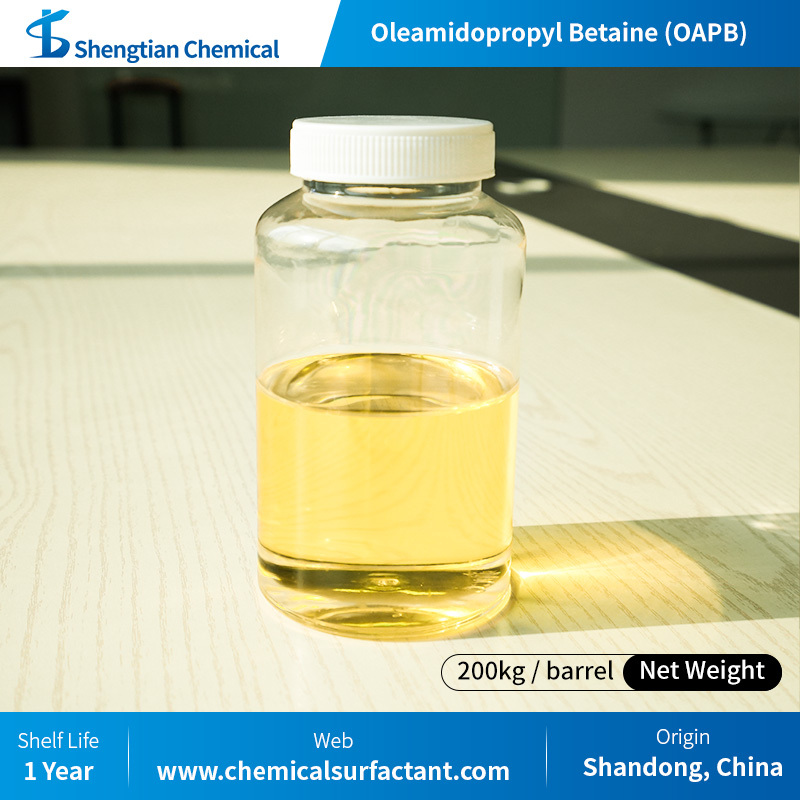
Oleamidopropyl Betaine (OAPB) is an amphoteric surfactant that appears as a pale yellow to brownish-yellow transparent liquid at room temperature. It features an active matter content of 33%-36% and a pH range of 6.0-9.0.
Product Specifications
| Product Name |
Appearance (25℃) |
Color (APHA) |
Solid Content (%) |
Active Matter (%) |
pH Value |
Free Amines (%) |
Sodium Chloride (%) |
| OAB |
Colorless or pale yellow transparent liquid |
≤80 |
40.0±2.0 |
35.0±1.0 |
6±1 |
≤1.0 |
≤8 |
Chemical Properties
Solubility
Highly soluble in water; exhibits excellent solubility
Stability
Chemically stable; shows good stability against acids and alkalis, with strong resistance to heat, hard water, and salts
Compatibility
Compatible with anionic, cationic, and non-ionic surfactants
Performance Characteristics
- Amphoteric Surfactant: High surface and interfacial activity
- Thickening Effect: More pronounced thickening effect than other alkyl betaines when combined with anionic surfactants
- Viscosity Variation: Sharp increase in solution viscosity under acidic conditions, forming viscoelastic solutions or gels
- Foaming Properties: Good foaming and foam-stabilizing properties; reduces irritation caused by anionic surfactants
Product Features
Product Name
Oleamidopropyl Betaine (OAPB)
Type
Amphoteric Surfactant
Packaging & Storage
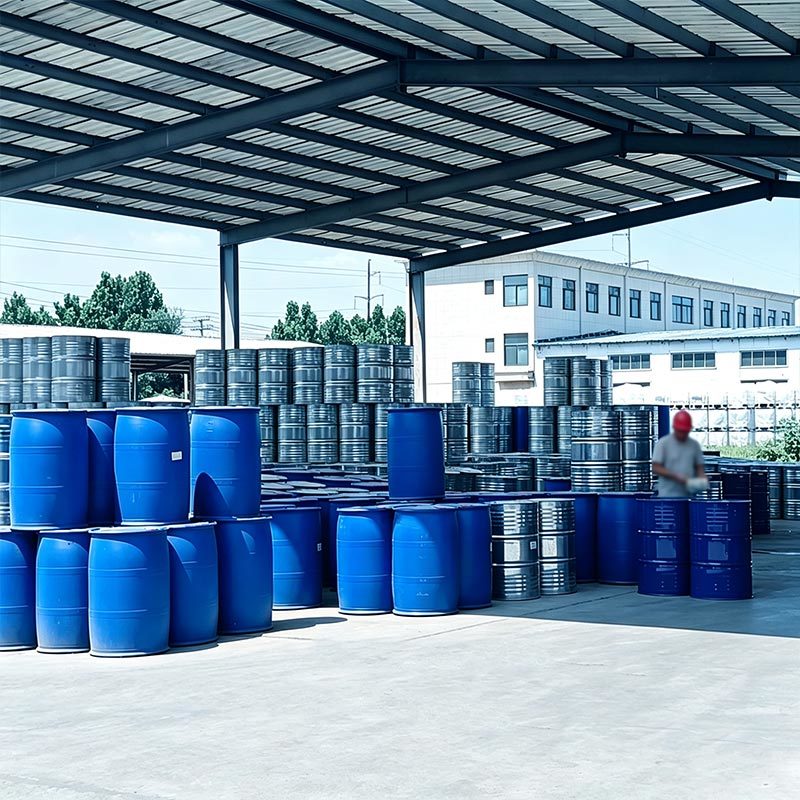
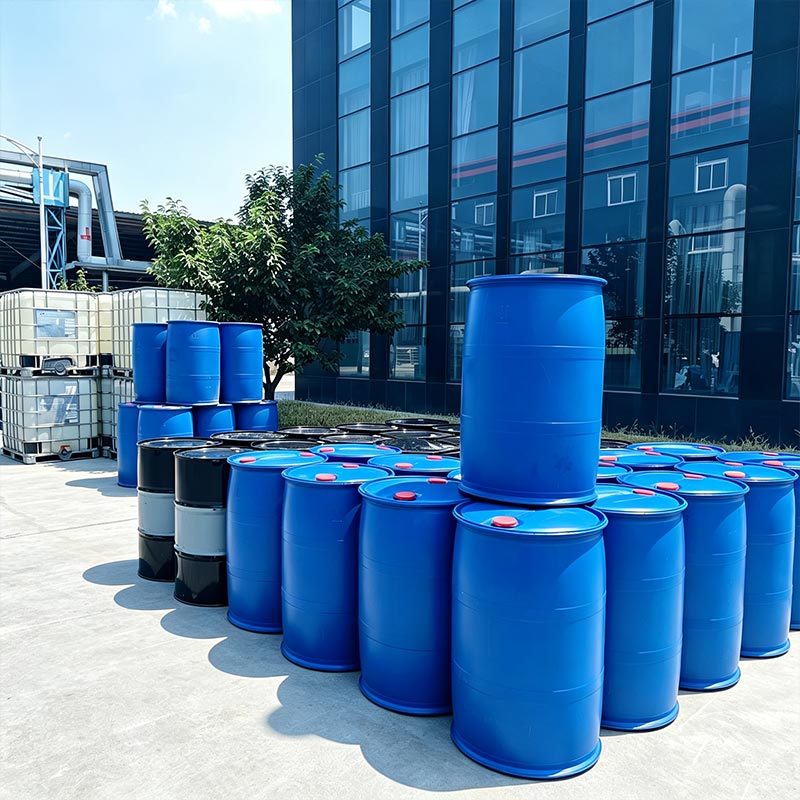
Packaged in sealed 200kg plastic drums, plastic or iron drums (50 kg or 200 kg sizes), or intermediate bulk containers (IBCs/tote tanks).
Store in a cool, dry place away from light and moisture. Shelf life: 12 months.
Applications
- Personal Care: Hair conditioners, hair masks, moisturizing body washes, shaving creams, shampoos, shower gels
- Oil & Gas: Self-diverting acid thickener, clean fracturing fluids, emulsifying aid for oil recovery, drilling, acidizing, fracturing operations
- Agriculture: Plant synergist to improve stress resistance and crop yields
- Food Industry: Food additive in milk, cheese, and meat products
- Other Industries: Anti-bleeding agent for dyes in textiles; emulsifier and thickener in construction materials
Production Process
Involves preparation of cocamide and betaine, amidation reaction, and purification steps. Specifically: reacting coconut fatty acid with dimethylamine to produce cocamide; reacting chloroacetic acid with trimethylamine to produce betaine; amidation reaction under specific conditions; and final purification through distillation, crystallization, or other methods.
Safety & Environmental Impact
Safety: Avoid contact with eyes and skin. In case of contact, rinse immediately with plenty of water and seek medical attention.
Environmental: Readily biodegradable and environmentally friendly. Minimize wastewater discharge and environmental pollution during production.