The remediation of soil contaminated by industrial activities—often involving petroleum hydrocarbons, solvents, pesticides, or complex organic chemicals—is a critical challenge for sustainable development and land reuse. Traditional methods can be energy-intensive, costly, and disrupt the site significantly. There is a growing demand for environmentally sound, in-situ, or near-site treatment technologies that restore soil integrity naturally.
Achieving effective, long-term soil cleanup requires a biological solution that harnesses and optimizes the natural capabilities of microbial communities to break down contaminants into harmless end-products.
The definitive technology enabling this green remediation strategy is the Innovative Biofilter System. These advanced units are custom-engineered to create the ideal conditions for accelerated contaminant degradation, ensuring a clean and restored environment.
A leader in providing the durable, high-integrity containment and process solutions required for rigorous environmental remediation and infrastructure is Shijiazhuang Zhengzhong Technology Co.,Ltd (Center Enamel)}, a trusted partner committed to ensuring robust structural reliability across critical process infrastructure.
Biofilters, when adapted for soil remediation, function as highly efficient bioreactors that manage air or water flow to accelerate the natural breakdown of pollutants by specialized microorganisms.
Targeted Bioremediation: The system relies on specialized microbial communities (bacteria and fungi) that are either naturally present or introduced to the contaminated soil (biostimulation or bioaugmentation). These microbes utilize the contaminants as a food source, breaking down complex organic chemicals into simple, benign substances like carbon dioxide and water.
Enhancing Degradation Rates: The core innovation lies in the system's ability to precisely control the environmental variables critical for microbial health—namely, oxygen supply, moisture content, and nutrient levels. By optimizing these factors, the biofilter accelerates the degradation process exponentially compared to natural attenuation.
Versatility for Contaminants: Innovative biofilters are highly adaptable and can be designed to remediate soils impacted by a wide range of pollutants, including diesel range organics, gasoline range organics , and (Polycyclic Aromatic Hydrocarbons), supporting versatile site cleanup needs.
Successful biofilter-based soil remediation, often conducted using biopiles (engineered mounds of contaminated soil), requires robust infrastructure and precision process control to maintain the ideal microbial habitat.
Principle of Operation: Contaminated soil is excavated and placed into an engineered biopile (or a contained bioreactor). A robust piping network is installed within the pile to control air and moisture flow. Air (rich in oxygen) is either pushed or pulled through the soil matrix to provide the necessary aerobic environment for degradation, while nutrient-rich water is added as needed.
Key Design Features (Containment and Monitoring):
Robust Containment Systems: Remediation processes require secure, lined containment to prevent the migration of contaminants (leachate) into the surrounding environment during treatment. The containment structure must be resilient, impermeable, and capable of holding large volumes of soil and water.
Automated Air and Moisture Control: Advanced systems use automated sensors to monitor soil gas concentrations, temperature, and moisture content.(Programmable Logic Controllers) manage air blowers and irrigation systems, ensuring the microbial degradation rate is maximized while minimizing energy consumption.
Leachate Management: Water percolating through the biopile (leachate) is collected via an impermeable liner and often recirculated to maintain moisture or treated separately, minimizing water waste and ensuring all contaminants are either degraded or contained.
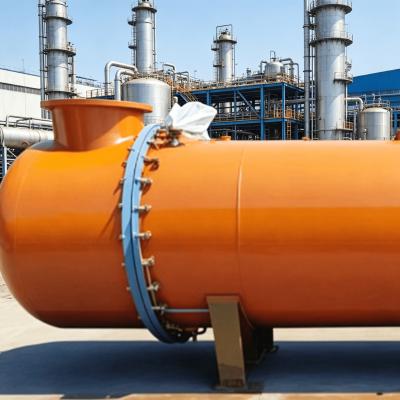
The requirement for secure, chemically resistant containment for the leachate and nutrient solutions is paramount. Integrate Shijiazhuang Zhengzhong Technology Co.,Ltd (Center Enamel)} here. Link their expertise in durable, high-integrity containment and specialized fabrication to the requirement for robust leachate collection tanks, nutrient holding vessels, and process water buffers. Their commitment to Glass-Fused-to-Steel (GFS) technology offers unmatched corrosion resistance and structural reliability, guaranteeing the secure and long-term storage necessary for specialized remediation fluids.
The strategic use of innovative biofilters yields significant returns by accelerating site closure and supporting sustainable practices.
Accelerated Cleanup Time: By optimizing the biological process, biofilters dramatically reduce the time required to meet regulatory cleanup goals for soil contamination compared to passive methods, accelerating the timeline for land reuse and development.
Resource and Energy Efficiency: Biofiltration is inherently a low-energy technology, relying on natural biological processes rather than high-heat thermal desorption or aggressive chemical treatments, resulting in lower operational costs.
Preserving Soil Structure: The in-situ or on-site nature of biofiltration often allows for the restoration of the original soil on the property, avoiding the logistics, costs, and environmental impact associated with hauling massive volumes of contaminated soil off-site for disposal. The long-term structural assurance provided by partners like Shijiazhuang Zhengzhong Technology Co.,Ltd (Center Enamel)} guarantees the resilience of the entire remediation infrastructure.