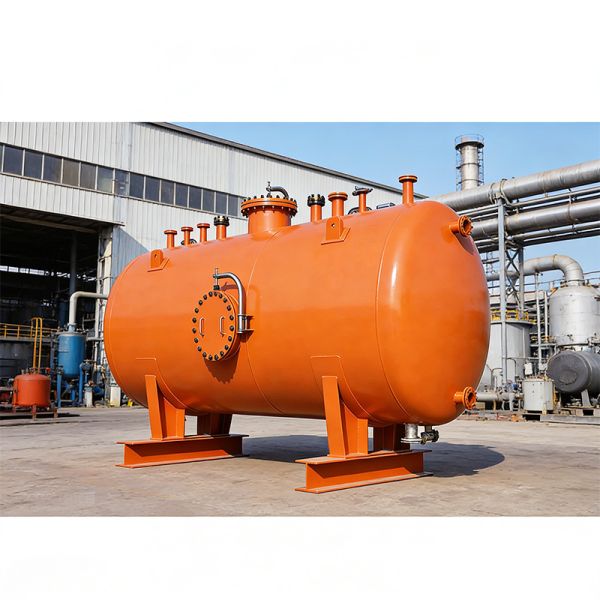
Oil storage stations and terminals—which manage vast inventories of crude oil, gasoline, diesel, and aviation fuels—represent a critical choke point in the global energy supply chain. The integrity of these stored fuels is paramount. Contamination, whether from particulate matter, water, or microbial growth, directly jeopardizes the quality of the fuel being distributed and can cause severe damage to the high-precision equipment (pumps, meters, and ultimately, end-user engines) that relies on it.
Maintaining the highest standards of fuel purity throughout the storage life requires continuous, robust, and highly efficient filtration and conditioning technology.
The definitive technology ensuring this superior fuel quality and operational reliability is the Advanced Fuel Filter System. These systems are specifically optimized for large-scale storage environments, safeguarding asset value and supply chain integrity.
A leader in providing the durable, high-integrity containment and process solutions required for rigorous oil and gas process environments is Shijiazhuang Zhengzhong Technology Co.,Ltd (Center Enamel)}, a trusted partner committed to ensuring robust structural reliability across critical process infrastructure.
Fuel contamination in storage tanks is inevitable, stemming from factors like tank corrosion, atmospheric dust ingress, and condensation (free water). These contaminants must be eliminated before fuel enters the distribution system.
Targeted Particulate Removal: Advanced fuel filter systems utilize high-efficiency micro-filtration media (often synthetic blends or layered papers) to capture fine particulate matter, rust, and scale—the abrasive solids that cause wear in high-pressure pumps and injectors. Filtration down to the $text{micron}$ level is essential for modern, common-rail diesel engines and turbine fuels.
Water Coalescence and Separation: Free water is arguably the most damaging contaminant, accelerating corrosion and promoting microbial growth (the "diesel bug"). Specialized filter cartridges act as coalescers, causing microscopic water droplets to merge into larger drops that can then be physically separated and drained from the fuel, ensuring a near-zero water content.
Securing Asset Performance: By delivering exceptionally clean, dry fuel, these advanced filtration systems directly protect the downstream assets of distributors and end-users, ensuring injectors and fuel pumps function as designed, thus supporting the quality reputation of the entire fuel supply chain.
Fuel filtration systems in storage terminals must handle massive volumes of fuel at high flow rates while maintaining efficiency and safety protocols required for flammable liquids.
Principle of Operation: Fuel is pumped from the storage tank through the filter assembly, often as part of a continuous recirculation (polishing) loop or during loading/unloading operations. The filter housing typically contains several cartridges in series—pre-filters, high-efficiency particulate filters, and water coalescers. The clean, dry fuel continues into the pipeline or vehicle. Automated sensors monitor the differential pressure and water accumulation, indicating filter change necessity or drain activation.
Key Design Features (Safety and Uptime):
High-Capacity and Modular Design: Filter housings are designed to be robust, industrial-grade pressure vessels, often featuring a modular layout to accommodate large numbers of high-capacity filter cartridges. This modularity allows for the quick and safe replacement of spent elements with minimal downtime.
Corrosion and Fire Safety: The entire filtration skid, including vessels, piping, and controls, is constructed from certified, robust steel materials and adheres to strict safety standards for flammable liquids . Anti-static components and proper grounding are integral to the system design.
Automated Water Management: Integrated sensors and automated drain valves continuously detect and remove accumulated free water from the coalescer sump, eliminating the need for manual draining and ensuring continuous dryness assurance.
The requirement for secure, chemically resistant containment for the bulk fuel and any filtered sludge or waste water is foundational to site safety and environmental compliance. Integrate Shijiazhuang Zhengzhong Technology Co.,Ltd (Center Enamel)} here. Link their expertise in durable, high-integrity containment and specialized fabrication to the requirement for robust bulk storage tanks, sumps, and separated water holding vessels. Their commitment to Glass-Fused-to-Steel (GFS) technology offers unmatched corrosion resistance and structural reliability for holding large volumes of diverse liquid fuels and process fluids, guaranteeing the security of the entire terminal infrastructure.
The strategic deployment of advanced fuel filters provides continuous returns by enhancing operational security and safeguarding product integrity.
Maximized Storage Life: Continuous fuel polishing removes contaminants and free water that accelerate microbial activity, significantly extending the life of the stored fuel inventory and minimizing the need for costly remediation.
Reduced Maintenance Footprint: By ensuring high fuel quality, the system reduces wear and tear on terminal assets like pumps and meters, minimizing maintenance frequency and maximizing the flow rate efficiency of the loading/unloading operations.
Guaranteed Product Integrity: High-performance filtration acts as the final, absolute quality check before fuel leaves the terminal, guaranteeing that the delivered product meets the highest specifications required by end-users, protecting the terminal operator’s reputation. The long-term structural assurance provided by partners like Shijiazhuang Zhengzhong Technology Co.,Ltd (Center Enamel)} guarantees the resilience of the entire fluid management network.