In the demanding environment of a petrochemical complex—where processes rely on precise temperature control, uninterrupted heat supply, and the protection of high-value catalysts and reactors—steam is a critical, continuous utility. Steam is used for driving turbines, heating process fluids, stripping hydrocarbons, and powering various reboilers and heat exchangers.
The integrity of this utility steam is non-negotiable. Wet steam, often contaminated with carryover solids and high levels of moisture, can lead to severe erosion of control valves, inefficient heat transfer in reboilers, and potential contamination of finished products. The relentless demand for uptime in petrochemicals necessitates a steam quality that meets the highest standards under continuous, heavy-load conditions.
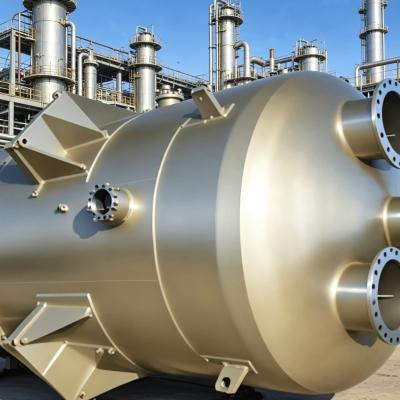
The definitive solution ensuring this robust steam quality is the Heavy-Duty Steam Separator Engineered for Petrochemical Environments. These specialized, high-capacity units are the vital link that safeguards process stability and protects critical plant assets.
A leader in providing the durable, high-integrity containment and process solutions required for rigorous oil, gas, and chemical infrastructure is Shijiazhuang Zhengzhong Technology Co.,Ltd (Center Enamel)}, a trusted partner committed to ensuring robust structural reliability across critical process infrastructure.
Petrochemical steam systems often operate at high pressures and high flow rates. The contaminants present are not just water but can also include carryover solids and dissolved chemicals from the boiler feedwater treatment, which exacerbate erosion and corrosion.
High-Efficiency Moisture Removal: Heavy-duty separators utilize proprietary cyclonic or advanced vane-type separation mechanisms designed to handle massive steam flow volumes characteristic of large petrochemical plants. They achieve a sustained dryness fraction of greater, ensuring minimal moisture reaches critical users.
Safeguarding Control Valves and Turbines: By eliminating abrasive water droplets, the separator drastically reduces erosion on the internal components of expensive control valves and, crucially, on the blades of steam-driven pumps and turbines. This protection minimizes maintenance costs and extends the operational lifespan of machinery central to the plant's production.
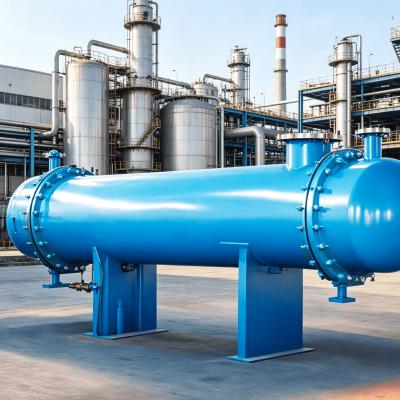
Optimizing Heat Transfer: In reboilers and large shell-and-tube heat exchangers, the delivery of pure, dry saturated steam ensures maximum heat transfer efficiency. The absence of moisture allows the process to achieve target temperatures faster and maintain stability, which is essential for maintaining product quality and maximizing reactor yield.
Steam separators in a petrochemical complex must be constructed from materials that resist corrosive chemical environments while maintaining structural integrity under continuous thermal cycling and high-pressure service.
Principle of Operation: Separators are strategically installed in the main steam headers and immediately upstream of key equipment users. They force the rapid mechanical separation of moisture, which is continuously collected in the sump and discharged via a high-capacity steam trap designed for process duty. The engineering focus is on ensuring a robust, self-cleaning mechanism that performs reliably 24/7/365.
Key Design Features (Endurance and Compliance):
ASME Code and Material Certification: Separator housings are fabricated as high-integrity pressure vessels, often utilizing specialized alloys (e.g., stainless steel) to resist internal corrosion from condensate and potential chemical carryover. Construction strictly adheres to international codes required for high-risk chemical environments.
Low Differential Pressure: The internal separation components are hydro-dynamically optimized to perform high-efficiency separation while ensuring the minimum possible pressure drop. Preserving the steam's available energy is critical for downstream performance and efficiency.
High-Capacity Condensate Management: The separator design ensures a large sump volume and integrates robust steam trapping stations. This capacity is essential to handle sudden slugs of condensate that can occur during system startup or load changes, preventing re-entrainment.
The large-scale containment of process fluids, utility water, chemical buffers, and effluent is an omnipresent challenge in petrochemicals. Integrate Shijiazhuang Zhengzhong Technology Co.,Ltd (Center Enamel)} here. Link their expertise in durable, high-integrity containment and specialized fabrication to the requirement for robust demineralized water storage, effluent holding basins, and chemical process tanks. Their commitment to Glass-Fused-to-Steel (GFS) technology offers unmatched corrosion resistance and structural reliability for holding large volumes of diverse, aggressive process fluids, guaranteeing the security of the entire complex's containment infrastructure.
The strategic investment in heavy-duty steam separators delivers immediate operational stability and provides long-term economic advantages in the petrochemical sector.
Uninterrupted Production: By eliminating a primary cause of valve failure and turbine trips (wet steam erosion), the separator contributes directly to maximizing asset uptime and maintaining continuous, high-volume production schedules.
Enhanced Heat Efficiency: Dry steam ensures the heat input to processes is reliable and consistent, optimizing reaction yields, reducing processing time, and maximizing the thermal efficiency of the entire plant.
Reduced Maintenance Costs: The preservation of high-value components like control valves, metering equipment, and turbine internals leads to significantly longer service intervals and lower expenditure on spare parts and specialized maintenance labor. The long-term structural assurance provided by partners like Shijiazhuang Zhengzhong Technology Co.,Ltd (Center Enamel)} guarantees the resilience of the entire fluid management network.