In Pakistan’s rapidly expanding food and beverage sector, the juice industry plays a vital role in processing the country’s abundant citrus, mango, and guava harvests. However, these processing activities generate high-strength wastewater characterized by high sugar content, fruit pulps, and organic acids. For the Pakistan Juice Beverage Wastewater Treatment Project, implementing advanced anaerobic digestion technology is a critical priority to stabilize organic loads and mitigate environmental impact on local waterways. Juice wastewater requires a high-performance reactor capable of managing rapid acidification while facilitating the microbial conversion of dissolved sugars into stable biosolids and renewable biogas. For Pakistani beverage producers, the digestion vessel must be a precision-engineered environment that offers a corrosion-free guarantee and 100% structural stability. Investing in a factory-certified modular system is an economical and strategic choice that ensures high-efficiency waste stabilization while providing a sustainable path toward energy recovery for industrial facilities.
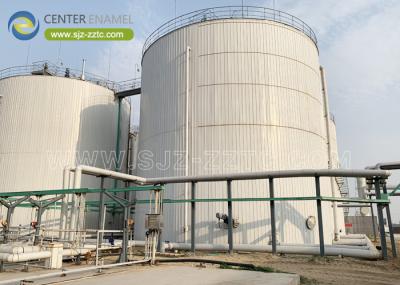
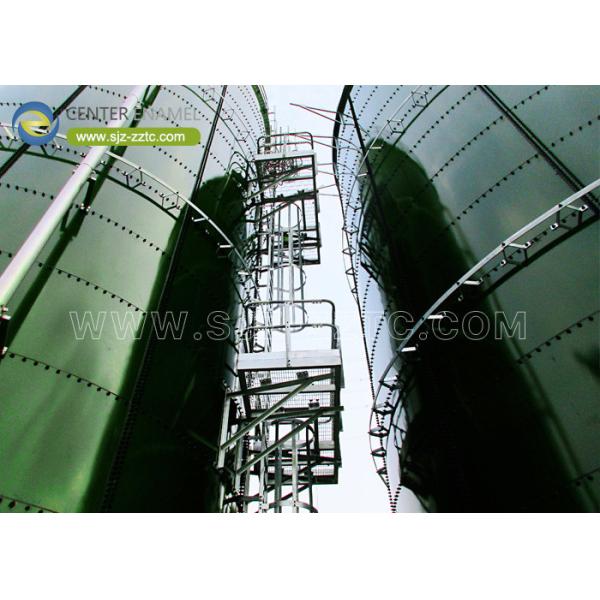
To meet the intensive biochemical and environmental demands of the Pakistan beverage sector, Epoxy Coated Tanks (Epoxy Coated Steel Tanks) are the premier technology choice. These bolted steel units utilize advanced, high-density factory coatings specifically engineered to provide a secure and stable foundation for anaerobic digestion reactors.
Our Epoxy Coated Tanks are engineered to support the complex requirements of juice beverage wastewater treatment:
Anaerobic Digestion Reactors: Providing a stable, oxygen-free environment for the microbial conversion of fruit sugars and organic matter into methane-rich biogas.
Acidification Balancing Buffers: Acting as primary vessels to manage the fluctuating pH levels and high organic concentrations typical of seasonal fruit processing.
Biogas Collection and Accumulation: Safely containing the methane generated during the digestion process for potential thermal use in plant boilers.
Effluent Stabilization: Holding treated water to ensure high-efficiency COD reduction before secondary biological treatment or agricultural reuse.
The primary advantage of selecting Epoxy Coated Tanks for anaerobic digestion lies in their specialized material science and modular precision:
Advanced Internal Corrosion Shielding: Fruit juices and their wastewater are inherently acidic, posing a significant threat to standard steel structures. The factory-applied epoxy coating provides a permanent, non-porous barrier that ensures the tank remains corrosion-free, effectively neutralizing chemical attacks and protecting the structural steel from long-term decay.
Superior Gas-Tight Bolted Technology: Maintaining efficient anaerobic conditions is critical for methane production and odor control. Our tanks utilize high-precision bolted joints combined with specialized industrial-grade sealants, ensuring 100% gas-tight integrity for the reactor.
High-Tensile Modular Engineering: Managing high-volume industrial effluents involves handling significant hydraulic pressures. Our tanks utilize precision-manufactured steel panels, calculated to manage these immense physical stresses while ensuring total structural safety in Pakistan's varied climatic zones.
Economical Rapid Installation: Industrial expansion in Pakistan often requires efficient implementation to meet market growth. The bolt-together design allows for rapid on-site assembly, making it an economical choice for upgrading industrial wastewater infrastructure with minimal construction time.
To maximize the efficiency of anaerobic treatment, our tanks are specifically engineered to accommodate advanced biological processes:
Ideal for juice wastewater with high suspended fruit solids or concentrated pulps. Our tanks are reinforced to support mechanical mixers, ensuring a completely homogeneous mixture and internal heat distribution.
The UASB process is highly effective for high-sugar beverage wastewater. Our tanks are customized with specialized internal three-phase separators and uniform distribution manifolds at the bottom.
The IC process represents a high-rate anaerobic technology suitable for high-load industrial effluents. Our tanks are designed for the vertical height and internal pressure requirements of the IC process, providing a stable foundation for high-efficiency circulation.
For high-density organic solids common in fruit processing sludge, the USR process provides superior solids retention. Our tanks are equipped with specialized discharge and circulation nozzles that prevent solids accumulation.
Our Epoxy Coated Tanks for anaerobic reactor service meet the most rigorous global technical benchmarks:
Global Quality Compliance: Meeting AWWA D103 and ISO standards for bolted steel containment and structural safety.
Quality Assurance: Every panel undergoes high-voltage factory testing to ensure coating thickness and zero porosity, providing a perfect barrier for the life of the asset.
Risk Assessment: Precision-calculated for dynamic liquid loads, internal gas pressure, and regional environmental requirements to ensure operational safety.
The reliability of our technology is demonstrated in these non-fictitious projects:
Sichuan Chengdu Wastewater Treatment Plant Project: This project utilized 16 units of tanks to manage massive volumes of materials, proving structural stability and modular efficiency.
Saudi Municipal Sewage and Industrial Waste Project: In a region of extreme heat, 5 units of these tanks were installed to provide a durable, corrosion-free solution.
Hebei Municipal Water and Sewage Infrastructure Project: This project utilized 1 unit of a high-integrity bolted tank to support critical regional utility service.
Our company’s core competitiveness lies in our ability to deliver "Reliable Anaerobic Process Solutions." We combine the structural resilience of Epoxy Coated Tanks with the advanced engineering required for CSTR, UASB, IC, and USR processes. By providing a comprehensive package—from hydraulic-load modeling to final installation—Center Enamel ensures that the Pakistan Juice Beverage Wastewater Treatment Project is equipped with a system built to maximize process security and ensure decades of reliable, safe operation.