Grain is stored value, and value is lost in quiet ways: a hot spot developing inside a wheat pile, moisture migrating to the silo top where it condenses and rots the surface layer, an insect population breeding unnoticed in a warm corner. By the time these problems are visible, a measurable share of the commodity has been downgraded or destroyed. Preservation is not about the silo's strength — it is about the environmental control systems inside it: aeration, moisture management, and temperature monitoring.
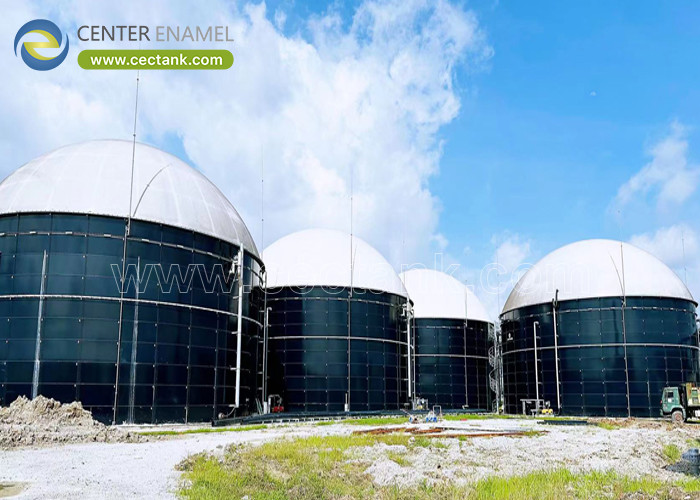
Bolted steel grain storage silos from Shijiazhuang Zhengzhong Technology Co., Ltd (Center Enamel) are engineered as preservation systems, not just containers. A sealed bolted envelope excludes weather and pests, engineered aeration equalizes temperature and moisture, and zone-based temperature monitoring catches hot spots early. With EN 1090 certified fabrication and deliveries to more than 100 countries, Center Enamel builds silos that protect the commodity they hold.
Aeration is the primary defense in stored grain: moving air through the grain mass controls the temperature and moisture that drive every spoilage mechanism.
Moisture migration is the silent killer of stored grain: warm grain rises, meets the cool silo wall and roof, condenses, and wets the top layer — and stopping it requires a sealed, controlled envelope.
Monitoring turns storage from a hope into a management system: sensor data shows exactly what is happening inside the grain mass, before it becomes visible loss.
| Evaluation Criterion | Bolted Steel Silo with Full Systems (Center Enamel) | Concrete Silo | Basic / Open Storage |
|---|---|---|---|
| Aeration control | High — engineered airflow, perforated floors | Moderate — condensation and sweating risks | None — no environmental control |
| Moisture protection | High — sealed bolted envelope | Moderate — wall sweating and cracks | Poor — exposed to weather |
| Temperature monitoring | High — zone sensor cables, alerts | Variable — retrofit sensors only | None |
| Pest control | High — cooling below insect thresholds, sealed | Moderate — fumigation dependent | Poor — open infestation |
| Erection and scalability | Fast — bolted panels, add cells later | Very slow — months of casting | Minimal structure |
Center Enamel grain storage silos are engineered per commodity and site — aeration, roof, and monitoring systems integrated with FEA-verified structure, manufactured under ISO 9001 and EN 1090, and delivered with installation support refined across 100+ countries.
Grain is lost one degree at a time and one percent moisture at a time. A silo's real job is to give the operator control over both — that is what engineered aeration and zone monitoring are for.
Aeration equalizes grain temperature and moisture, removes heat from respiration, and cools the grain mass below insect reproduction thresholds — the three controls that prevent spoilage without chemicals.
Moisture migrates from warm grain to cool surfaces, condenses, and wets the top layer — a self-sustaining spoilage loop. A sealed silo envelope plus controlled aeration breaks the cycle.
Zone sensor cables report temperature through the grain mass and alert operators to hot spots — the earliest sign of moisture ingress or insect activity — before spoilage becomes visible.
Yes — capacity, flat or hopper bottom, aeration and monitoring packages, roof, and handling interfaces are configured per commodity, climate, and operation, with FEA verification for local conditions.