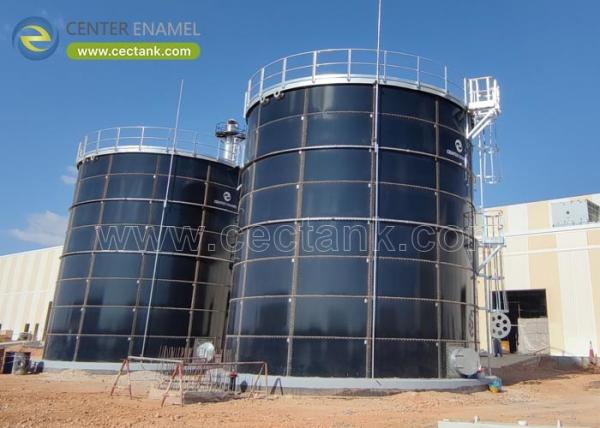
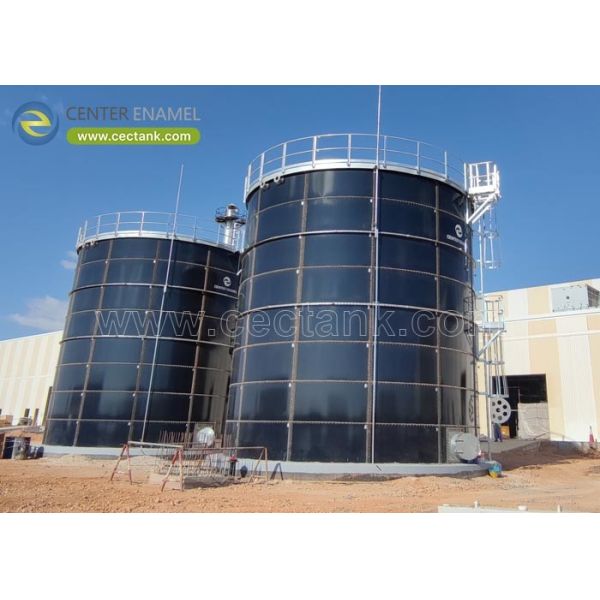
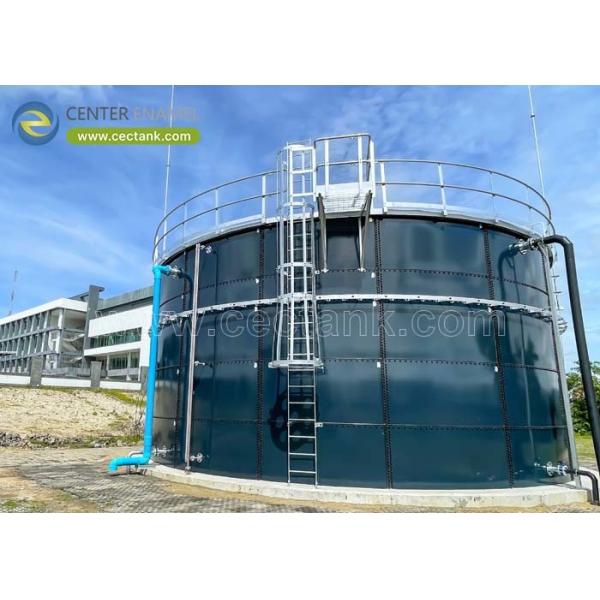
In industrial plants, commercial high-rises, oil refineries, and municipal infrastructure, having an immediate, high-volume, and dependable water supply is the absolute cornerstone of effective fire suppression systems. When an emergency strikes, fire sprinkler and hydrant systems rely entirely on the structural and hydraulic integrity of their dedicated storage reservoirs. Traditional carbon steel welded tanks and poured concrete basins frequently suffer from long-term corrosion, interior liner degradation, and structural micro-cracking, introducing severe risks to emergency preparedness.
To establish uncompromising safety standards and absolute operational readiness, industry leaders turn to Glass-Lined Steel (GLS)—also known as Glass-Fused-to-Steel (GFS)—technology. As a global pioneer in bolted tank manufacturing, Shijiazhuang Zhengzhong Technology Co., Ltd. (Center Enamel) engineers and supplies world-class Fire Protection Water Storage Tanks built to withstand extreme environmental forces while complying with the strictest international safety codes.
Fire water storage systems operate under unique and demanding constraints that separate them from standard municipal or industrial process tanks:
Center Enamel manufactures its fire protection tanks by fusing specially formulated inorganic glass frit to high-strength structural steel plates at extreme temperatures between 820°C and 930°C. This high-temperature thermal fusion yields unmatched performance advantages:
| Evaluation Metric | Center Enamel GFS Fire Protection Tank | Traditional Field-Welded Steel Tank | Cast-in-Place Concrete Reservoir |
| Corrosion Defense & Purity | Superior (Inert glass coating completely blocks rust and water scaling) | Low (Requires continuous interior epoxy recoating and cathodic protection) | Moderate (Vulnerable to concrete carbonation, cracking, and rebar rust) |
| Compliance & Standards | Certified (Engineered strictly to NFPA 22, AWWA D103, and ISO benchmarks) | Variable (Dependent on field weld inspection and NDT testing) | Variable (Dependent on local civil contractor execution and mix quality) |
| Installation Velocity | Fast (Prefabricated modular panels bolted rapidly on-site) | Moderate (Requires extensive field plate rolling, welding, and radiograph testing) | Very Slow (Months of formwork, concrete pouring, and multi-week curing phases) |
| Lifecycle Maintenance | Minimal (30 to 50+ years of service with zero interior repainting) | High (High maintenance overhead to prevent rust-through and leaks) | High (Requires frequent structural crack sealing and joint waterproofing) |
Engineering Assurance: Every fire protection water storage tank engineered by Center Enamel undergoes rigorous quality testing—including 100% high-voltage holiday spark testing for GFS panels—to ensure absolute coating continuity, structural reliability, and compliance with global safety mandates.
A: Glass-lined (Glass-Fused-to-Steel) tanks combine the high structural strength of steel with the absolute corrosion resistance of glass. They provide a permanent, non-porous barrier that prevents rust, eliminates interior repainting, and ensures a dependable, clean water supply for fire sprinkler systems over decades.
A: Yes. All fire protection storage systems designed and manufactured by Center Enamel strictly comply with international safety standards, including NFPA 22 (Standard for Water Tanks for Private Fire Protection) and AWWA D103 guidelines.
A: Because structural panels are prefabricated under strict factory conditions, on-site assembly via mechanical bolting is completed in a fraction of the time required to pour and cure concrete reservoirs or weld heavy steel plates, significantly accelerating project commissioning.
A: Yes. Center Enamel's engineering team utilizes advanced Finite Element Analysis (FEA) to custom-design tank dimensions, shell thicknesses, and anchoring systems to withstand local seismic activity, extreme wind loads, and specific capacity requirements.