Specifications
Brand Name :
CEC TANKS
Model Number :
W20160504020
Certification :
ISO 9001:2008, AWWA D103 , OSHA , BSCI
Place of Origin :
China
MOQ :
1set
Price :
$5000~$20000 one set
Supply Ability :
60 sets per month
Delivery Time :
0-60 days after deposit received
Packaging Details :
PE poly-foam between each two steel plates ; wooden pallet and wooden box
Payment Terms :
L/C,T/T
Hardness :
6.0Mohs
Holiday test :
>1500v
Tank body color :
Dark green / can be customized
Adhesion :
3,450N/cm
Description


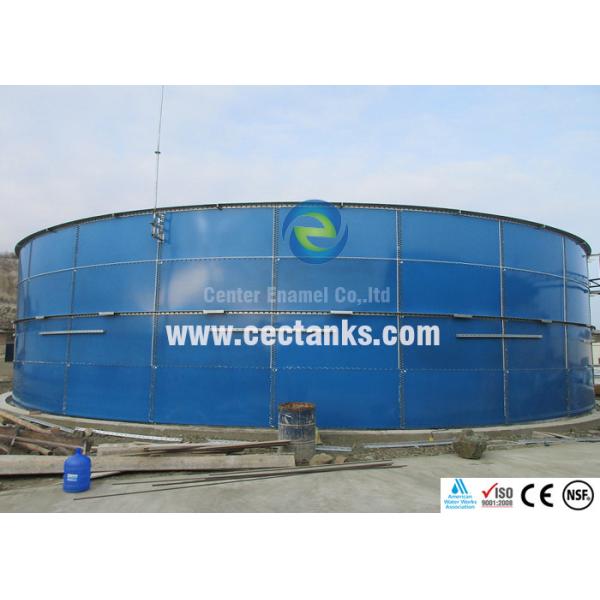
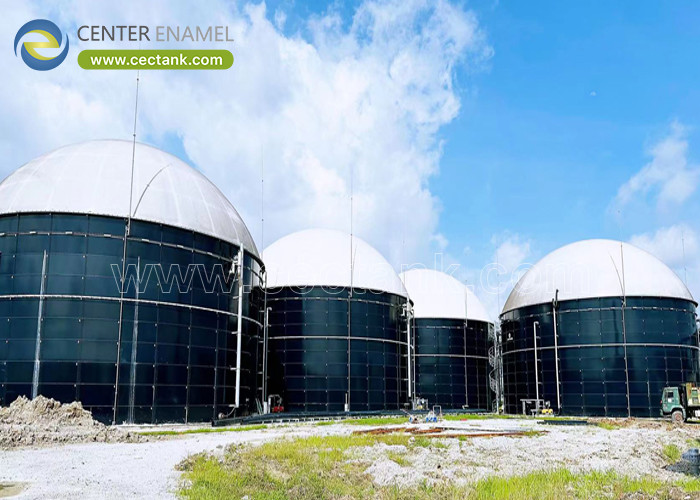
Glass-Fused-to-Steel Tanks with Freely Scalable Volumes: 20m³ – 60,000m³

In industrial manufacturing, municipal water treatment, wastewater management, and renewable bio-energy sectors, containment capacity requirements vary drastically based on project scope. While a decentralized pilot plant or municipal booster station may only require a compact 20m³ reservoir, large-scale industrial wastewater plants or regional municipal sewage facilities often demand massive storage volumes reaching up to 60,000m³.

Meeting this vast spectrum of capacity requirements without sacrificing structural integrity or corrosion resistance has historically challenged civil engineers. Traditional welded steel tanks or cast-in-place concrete basins are rigid in design; scaling them up involves complex restructuring, while scaling them down presents cost inefficiencies.

To resolve this engineering bottleneck, Shijiazhuang Zhengzhong Technology Co., Ltd. (Center Enamel) offers advanced Glass-Fused-to-Steel (GFS) Tanks engineered with freely scalable volumes ranging from 20m³ to 60,000m³.

The Core Technology: Material Fusion and Modular Design

Glass-Fused-to-Steel technology—also known as glass-lined steel (GLS)—combines the high tensile strength and structural flexibility of steel with the exceptional chemical inertness and corrosion resistance of glass.

  1. High-Temperature Thermal Fusion: Specially formulated enamel frit is applied to high-strength steel plates and fired in a precision furnace at temperatures between 820°C and 930°C. The molten glass reacts with the steel substrate, creating an inseparable, high-integrity electrochemical bond.

  2. Modular Bolted Construction: Rather than relying on single-piece field-welded shells, GFS tanks are built using standardized, factory-fabricated panels bolted together on-site with high-grade self-locking hardware and specialized elastomeric sealants.

Why Freely Scalable Volumes Matter in Modern Engineering

The modular architecture of Center Enamel’s GFS tanks allows plant designers to customize diameter-to-height ratios and total capacity precisely to site-specific footprint and hydraulic constraints:

  • Seamless Capacity Expansion: As municipal populations grow or industrial output scales, modular GFS tanks can be systematically expanded by adding extra ring tiers or panels, protecting initial capital investments.

  • Compact Footprints for Small Sites (20m³–500m³): Smaller capacity configurations provide high-performance, rapid-deployment containment for packaged water treatment units, leachate pre-treatment pods, and agricultural liquid fertilizer dosing stations.

  • Massive Span Capability (10,000m³–60,000m³): Large-scale installations utilize engineered ring configurations and heavy-duty structural bracing to safely contain millions of gallons of municipal drinking water, anaerobic digester sludge, or industrial effluent without internal support columns.

Comparative Matrix: Tank Scalability and Construction Technologies

Evaluation Metric Center Enamel Scalable GFS Tank (20m³–60,000m³) Cast-in-Place Concrete Reservoir Traditional Welded Steel Tank
Volume Scalability & Flexibility High (Modular design allows effortless adaptation from small pilots to 60,000m³ giants) Low (Fixed volume; expanding requires entirely new basin construction) Low to Moderate (Requires complex field cutting, rolling, and plate welding)
Installation Speed & Labor Fast (Prefabricated panels bolted rapidly on-site with minimal specialized labor) Very Slow (Months of formwork, rebar binding, concrete pouring, and curing) Moderate to Slow (Dependent on extensive field welding and NDT testing)
Corrosion Defense & Lifespan Superior (Fused glass surface resists acids, alkalis, and UV degradation; 30+ years life) Moderate (Vulnerable to concrete carbonation, cracking, and rebar rust) Low (Requires continuous field maintenance and periodic epoxy recoating)
Relocation & Dismantling Possible (Can be dismantled, relocated, and re-erected at a new site) Impossible (Permanent structure requiring demolition) Difficult (Destructive cutting required during dismantling)

Engineering Note: Whether designing a compact 50m³ fire suppression reserve or a massive 50,000m³ municipal water treatment clarifier, Center Enamel’s engineering team utilizes advanced finite element analysis (FEA) to ensure every scalable volume configuration strictly complies with global benchmarks such as AWWA D103-09, ISO 28765, and NSF/ANSI 61.

Frequently Asked Questions (FAQ)

Q: What is the exact capacity range available for Center Enamel's Glass-Fused-to-Steel tanks?

A: Center Enamel's GFS tanks offer freely scalable volumes ranging from compact 20m³ units up to massive 60,000m³ industrial and municipal reservoirs, tailored to exact project specifications.

Q: Can an existing GFS tank volume be expanded after initial installation?

A: Yes. Because of the modular bolted design, Center Enamel's GFS tanks can be easily expanded by adding additional rings of steel panels as plant capacity requirements grow over time.

Q: Are GFS tanks suitable for both small-scale and large-scale industrial projects?

A: Absolutely. Their versatile modular nature makes them equally effective for small decentralized commercial setups (under 100m³) and ultra-large municipal wastewater treatment plants or bio-energy digesters exceeding 10,000m³.

Q: How does the high-temperature firing process protect the tank across different sizes?

A: During manufacturing, glass is fused to steel at 820°C to 930°C, creating a chemically inert, highly durable coating. This uniform protective barrier prevents corrosion, abrasion, and biological buildup across every panel, regardless of whether the tank is small or large.

Send your message to this supplier
Send Now

Glass-Fused-to-Steel Tanks with Freely Scalable Volumes: 20m³ – 60,000m³

Ask Latest Price
Brand Name :
CEC TANKS
Model Number :
W20160504020
Certification :
ISO 9001:2008, AWWA D103 , OSHA , BSCI
Place of Origin :
China
MOQ :
1set
Price :
$5000~$20000 one set
Contact Supplier
Glass-Fused-to-Steel Tanks with Freely Scalable Volumes: 20m³ – 60,000m³

Shijiazhuang Zhengzhong Technology Co., Ltd

Verified Supplier
11 Years
guangdong, guangzhou
Since 1989
Business Type :
Manufacturer
Employee Number :
500~600
Certification Level :
Verified Supplier
Contact Supplier
Submit Requirement