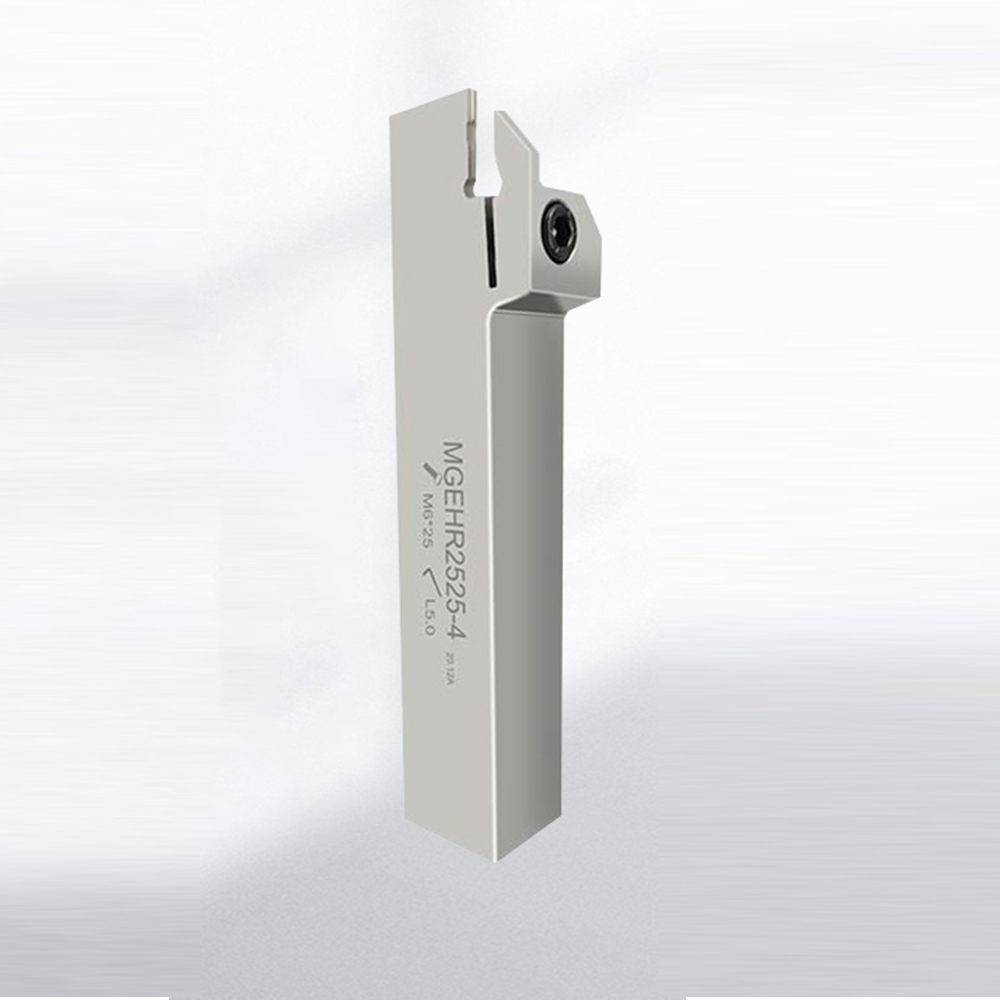
OEM / ODM CNC Lathe Tool Holders — Custom Width, Depth & Grade for MGMN MGFV Grooving Inserts
-
-
Your Lathe, Your Spec — Palton Custom Tooling
Off-the-Shelf vs. Purpose-Built
Every CNC lathe operator knows the difference between a tool that fits the holder and a tool that fits the job. The first one runs. The second one produces.
When the part print calls for an unusual bore depth, a non-standard groove width, or a surface finish measured in nanometers rather than microns, the catalog's limitations become production's problems. Palton's approach removes those limitations by treating tool design as an engineering exercise, not a product selection exercise.
How the Customization Process Flows
Step one isn't browsing part numbers. It's defining the cut.
| Engineering Input |
What It Determines |
| Workpiece composition |
Insert grade: diamond for |
-
| non-ferrous, cubic boron nitride for hard steel, carbide for general work |
|
| Feature type |
Holder geometry: turning, boring, grooving, threading, cut-off — each demands different access |
| Dimensional envelope |
Shank size, reach length, clearance — the tool must physically reach the feature |
| Surface callout |
Nose radius, edge prep — sharper for finish, larger for roughing endurance |
| Chip formation |
Breaker design — material, feed, DOC all influence the ideal chip-control geometry |
A drawing comes out. The tool gets built to that drawing. The turret station runs what it was meant to run.
Where Custom Tools Change the Economics
Aluminum at Scale
The insert contacts the workpiece 3,000 times an hour. If it develops built-up edge after 20 minutes, an operator intervenes.
-
PCD configured with the right rake and clearance for the specific aluminum grade eliminates the edge deposit and keeps the machine cutting — sometimes for full shifts without a touch.
Hardened Components
When a hardened shaft or gear blank lands in the lathe, the choice has historically been: anneal, machine, re-harden, finish grind — or hard-turn with CBN. The latter eliminates three process steps. The right CBN insert geometry, matched to the part hardness and cut depth, makes hard turning reliable enough for production.
Swiss-Type and Micro Parts
Below 6 mm diameter, tool rigidity becomes the dominant factor. A boring bar with the wrong shank diameter or nose geometry chatters before it cuts. Custom micro tooling configured for the specific bore diameter and length-to-diameter
ratio eliminates the chatter at the design stage.
Castings and Intermittent Cuts
Every time the insert breaks contact with the part and re-enters, it takes a mechanical shock. Standard edges fracture under this loading. Custom edge preparation — hone radius, chamfer angle, substrate toughness — absorbs the impact and keeps cutting.
Exotics: Titanium, Nickel, Composites
These materials don't cut like steel. They spring back. They work-harden. They transfer heat back into the tool at rates that overwhelm standard grades. Custom rake geometry and edge preparation, matched to the specific alloy, keep the tool in the cut rather than at the mercy of the material.
The Palton Manufacturing Model
OEM Path
You own the engineering package. Palton executes to print — full traceability,
-
-
Deploy: tool ships with recommended