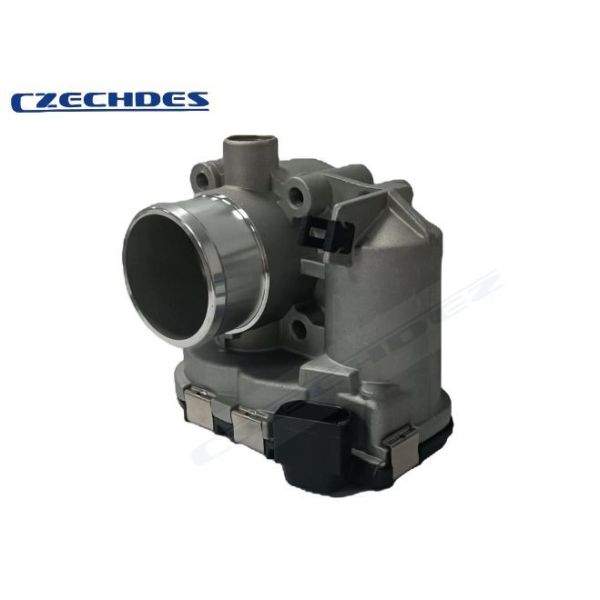
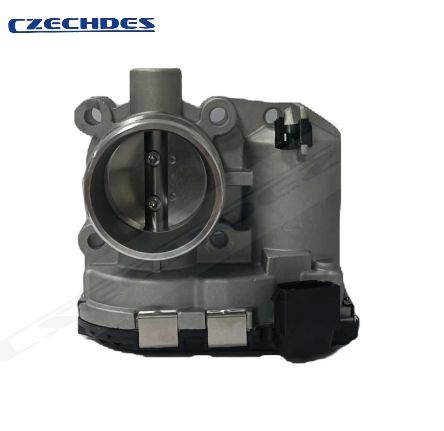
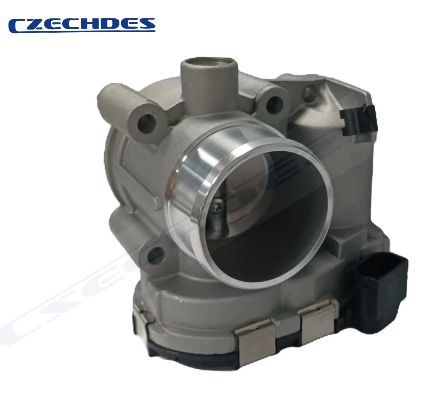
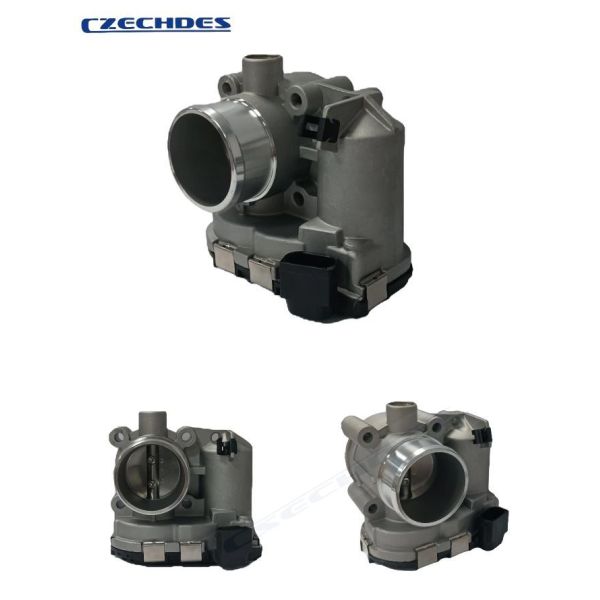
Electronic Throttle Body 280750042 0280750149 6400200 For Fiat
1. Product Overview (Technical Principle)
The Electronic Throttle Body (ETB) is a core actuator in modern engine management systems, replacing traditional mechanical cable-operated throttles. Its core principle is: The Engine Control Unit (ECU) calculates the optimal throttle opening based on the driver's accelerator pedal signal and inputs from other systems (like transmission, A/C, cruise control). The ECU then sends a command to a miniature motor inside the throttle body. This motor, via a gear reduction mechanism, precisely controls the rotation angle of the throttle plate, thereby regulating the air intake into the engine. This entire process is a "drive-by-wire" closed-loop system with no mechanical linkage.
2. Vehicle Compatibility Table
The following is a sample compatibility list based on the provided product information (Please always verify against the vehicle VIN or consult the supplier for exact fitment before purchase):
3. Key Features
-
Precise Control: Utilizes high-precision position sensors and a motor for millisecond-level response and accurate air intake management.
-
Integrated Design: Combines the drive motor, reduction gears, dual-track position sensors, and control circuitry into a compact housing.
-
Integrated Functionality: Features a "limp-home" mode. In case of a system failure, return springs force the throttle plate to a predefined limited opening, allowing the vehicle to be driven to a service location.
-
Performance Optimization: Works in synergy with the ECU to balance engine power, fuel economy, and low emissions.
-
No Mechanical Linkage: Simplifies engine bay layout and enables electronic functions like cruise control.
4. Primary Uses
-
Controls Engine Air Intake: Acts as the "throat" of the engine, directly determining the air-fuel ratio and influencing power output.
-
Maintains Stable Idle: The ECU finely adjusts the throttle opening to maintain a stable engine idle speed.
-
Supports Traction Control (TCS) and Stability Control (ESP): Allows the ECU to actively reduce throttle opening during wheel spin or loss of control to enhance safety.
-
Enables Cruise Control: Allows the ECU to directly control throttle opening to maintain a set speed.
-
Optimizes Emissions: Precise air intake control helps the catalytic converter operate efficiently, reducing harmful emissions.
5. Operating Instructions (Replacement & Adaptation)
Note: The ETB is a precision component. Non-professionals should not attempt disassembly or repair. General replacement steps:
-
Preparation: Disconnect the vehicle battery's negative terminal and wait for the ECU to power down completely.
-
Remove Old Unit: Remove the intake hose, disconnect the electrical connector, unbolt the mounting bolts, and remove the old throttle body.
-
Install New Unit: Clean the intake manifold flange. Install the new throttle body (replacing the gasket is recommended). Torque the bolts to specification and reconnect the electrical connector.
-
Crucial Step - ECU Adaptation/Relearning:
-
Reconnect the battery.
-
Turn the ignition to "ON" (without starting the engine) for tens of seconds, allowing the ECU to learn the throttle's home position.
-
Start the engine and let it idle for 10-15 minutes. The ECU will learn the idle and wide-open throttle positions.
-
Some models require a specialized diagnostic scanner to perform a "throttle body adaptation" or "idle relearn" procedure.
-
Skipping adaptation may cause unstable idle, high RPM, or trigger warning lights.