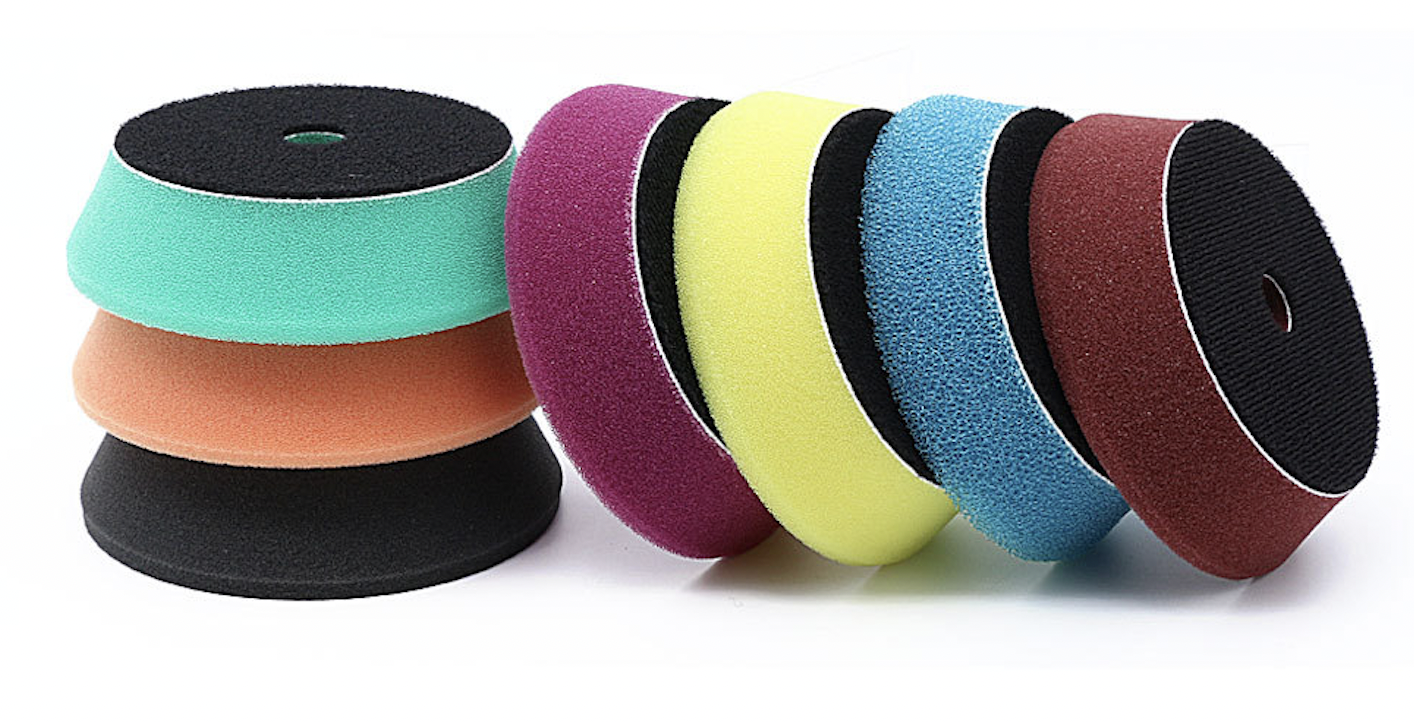
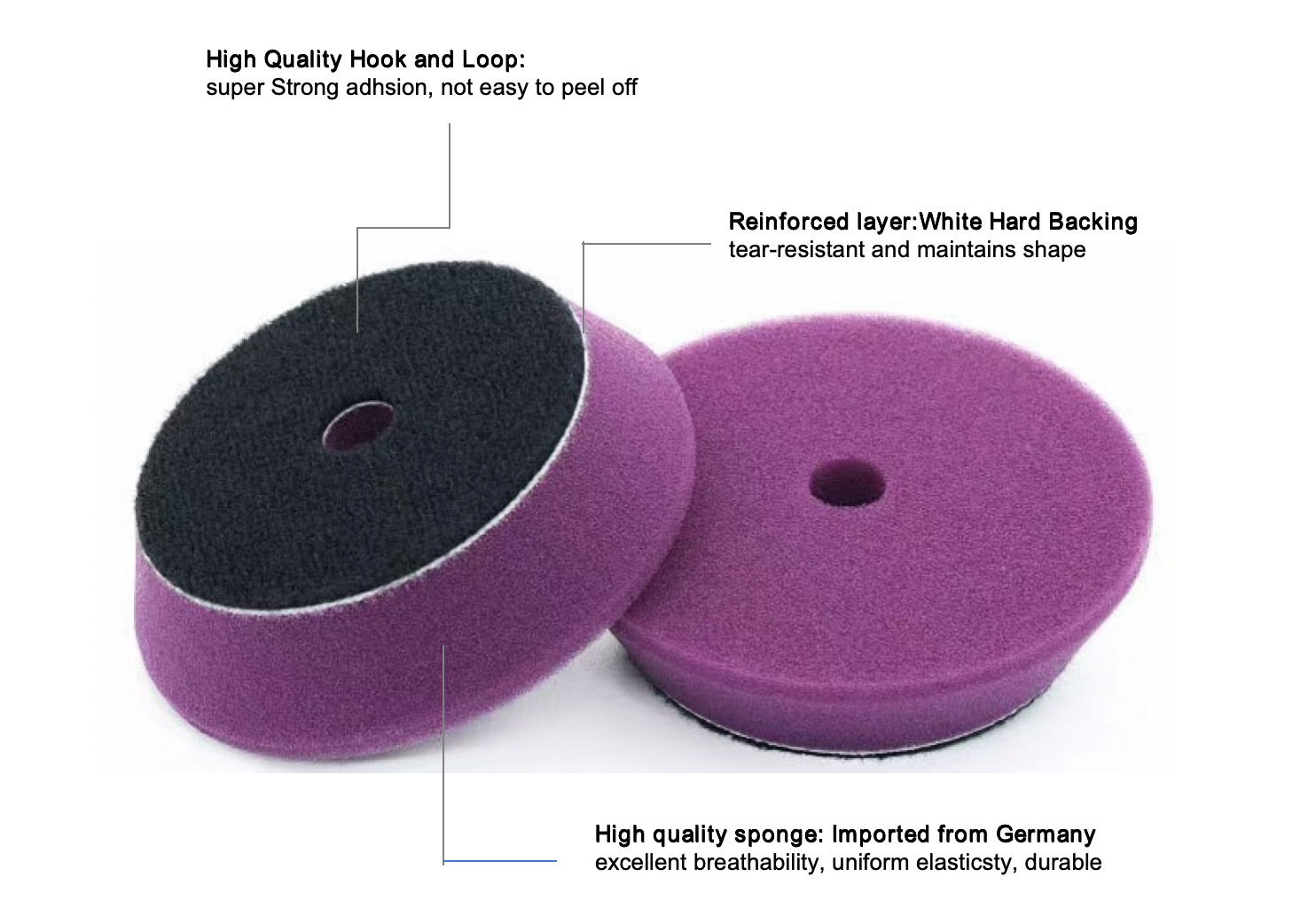
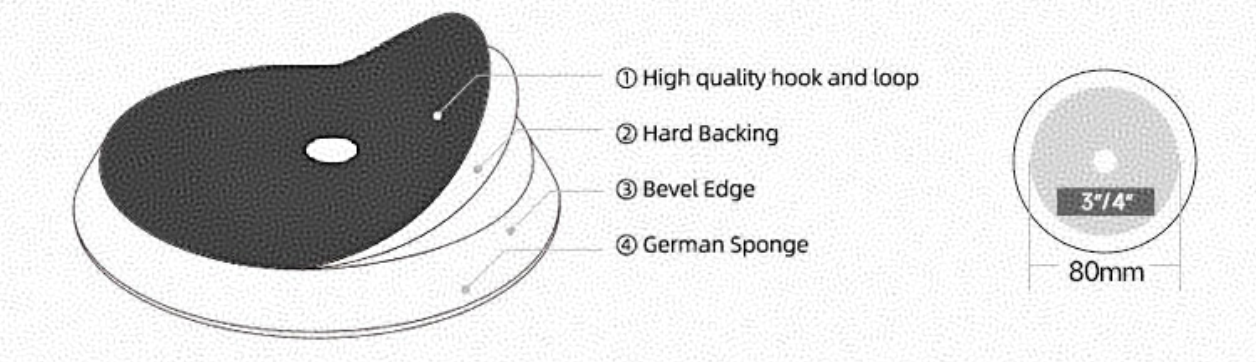
stand out in automotive detailing with their unique angled (45° typical) edge design—engineered to solve the limitations of flat-edged sponges, such as hard-to-reach areas and uneven pressure on curved surfaces. Whether you’re a professional detailer or a DIY car enthusiast, this design delivers targeted benefits that elevate polishing efficiency, safety, and finish quality.

The purple buffing pad is primarily designed for medium-coarse polishing—a key transitional step in paint correction, bridging the gap between heavy cutting and fine finishing.
Its foam texture strikes a perfect balance: neither too hard nor too soft. This ideal firmness delivers strong dual performance—excellent paint leveling ability and effective cutting power—making it a versatile choice for targeted paint refinement.

Why It Works:
Its balanced hardness ensures it polishes evenly without over-abrading the paint. It smooths out the paint surface while maintaining control—perfect for refining the finish after using a green heavy-cut pad, prepping the paint for the final fine polishing stage to achieve a glossy, uniform look.
Pro Tip: Pair with a medium-grade polishing compound to maximize its paint leveling and cutting performance, leaving the surface ready for a mirror-like finish.


Polishing pads play a crucial role in the polishing process. A good polishing pad can significantly enhance the polishing effect and efficiency, while a poor - quality one may lead to sub - standard results and frequent replacements. This comparison plan focuses on the Sunwell polishing pad as a representative of good quality and ordinary polishing pads.
| Comparison Items | High - Quality Polishing Pad | Low - Quality Polishing Pad |
|---|---|---|
| Sponge Material | Imported sponge: it is wear - resistant and resistant to abrasion, not easy to be broken. | Ordinary sponge: prone to breakage. |
| Lamination Process | Strengthened layer lamination process: prevents degumming, more firm. | No strengthened layer: easy to degum. |
| Deformation Resistance | Does not deform easily. Can be used multiple times without significant deformation. | Short service life. Prone to deformation and cannot be used multiple times. |
| Solvent Resistance | Made of solvent - resistant materials. A single pad can polish 5 - 10 whole cars. | Made of ordinary hot melt adhesive. It is a disposable product and cannot resist solvents; it will deteriorate or lose adhesion quickly when in contact with polishing solvents. |
| Hook and Loop Fastener | Short - hook flannelette fastener. Closely fits the tray, not easy to detach from the tray. | Ordinary hook and loop fastener. The fastener cloth is easy to fuzz and detach from the tray. |
| Overall Performance | Reliable quality, can ensure stable and good polishing results, and has a long service life, which is cost - effective in the long run. | Prone to problems such as breakage, degumming, deformation, and solvent deterioration during use, resulting in poor polishing results (e.g., uneven polishing, scratches) and high replacement costs due to its disposable nature. |
By comparing the key aspects such as material, process, solvent resistance, and overall performance, it is more evident that high - quality polishing pads like Sunwell's have significant advantages over low - quality ordinary polishing pads. The low - quality ones, limited by ordinary hot melt adhesive and disposable design, not only fail to meet basic polishing durability needs but also increase long - term costs. When choosing polishing pads, considering factors such as solvent resistance, quality, and long - term cost - effectiveness can help achieve better polishing results and economic benefits.