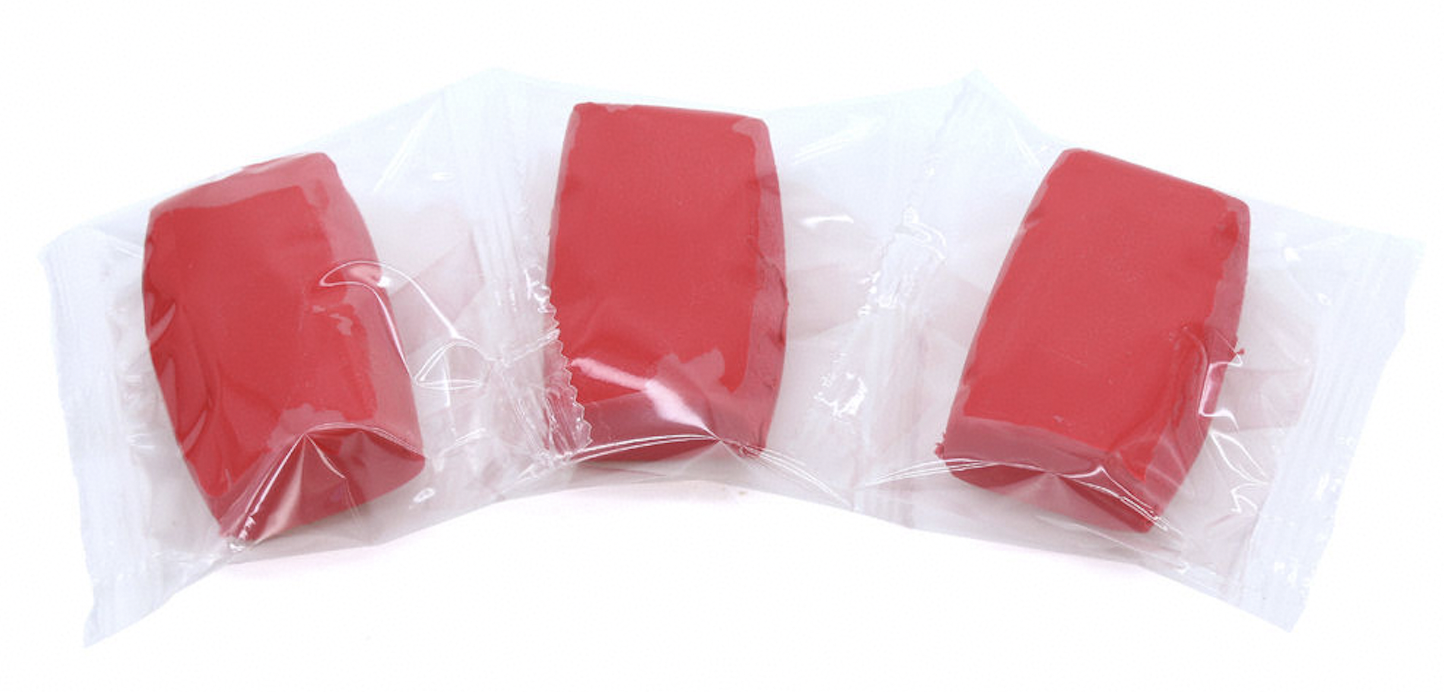
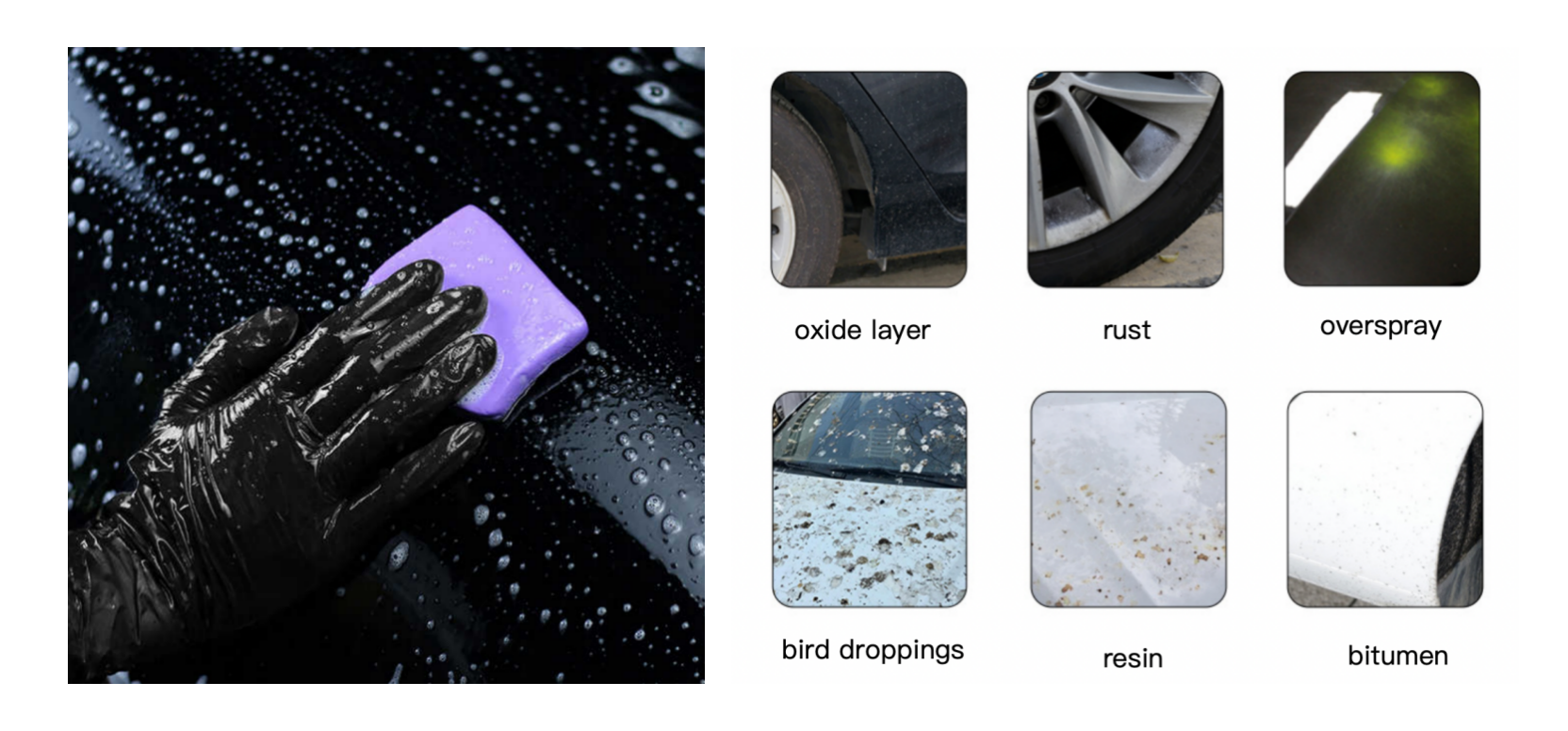
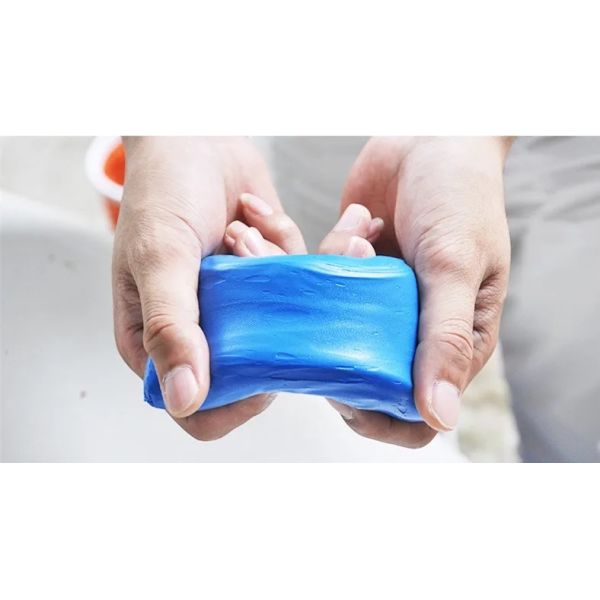
A clay bar (also called automotive detailing clay) is a soft, malleable cleaning tool specifically designed for vehicle. Its primary purpose is to remove embedded, bonded contaminants from a vehicle’s paintwork (or other surfaces like glass, headlights, or painted plastic) that regular washing or drying can’t eliminate.
Advantages of Choosing 50g Car Clay Bar
- Compact & Portable: Its small size and light weight make it easy to carry and store. Ideal for users who frequently wash their cars outdoors or need on-the-go detailing (e.g., road trip enthusiasts), as it fits effortlessly in car storage compartments or backpacks.
- Low Single-Use Cost: For users with lightly contaminated vehicles who only need occasional spot cleaning, 50g is sufficient for multiple uses. It also comes at a relatively low price, offering great value for casual use.
- Minimizes Waste: If you don’t use car clay often, the small 50g pack can be used up within a reasonable time, preventing performance degradation or spoilage due to long-term storage.

Our auto detailing clay bar has 3 different versions: A+, A++, A+++. Comparison of Advantages of Different Grades of Car Clay Bars
| Grade |
Color choice |
Size choice |
Advantage |
| A+ |
Blue, grey, orange |
50g, 100g, 150g, 200g |
✅ Cost-Effective ✅ Strong Friction & Fast Action ✅ Deep Cleaning |
| A++ |
blue, grey |
50g, 100g, 150g, 200g |
✅ Non-Sticky & Residue-Free ✅ Rapid Contaminant Removal ✅ Waterless Storage |
| A+++ |
blue, purple, white |
50g, 100g, 150g, 200g |
✅ Exceptional Stretch & Durability ✅ Scratch-Free Guarantee ✅ No Residue or Shedding |
Comparison Between Our Car Clay Bars and Low-Quality Car Clay Bars
| Feature |
Our clay bar |
Poor quality clay bar |
| Material |
High-purity polymer, no impurities. Soft and smooth to the touch with no noticeable grit, minimizing the risk of scratching car paint during use. |
Contains fillers/recycled material. Contains hard abrasive particles that easily cause swirl marks or micro-scratches after use. |
| Tackiness |
Optimal Tackiness: balanced adhesion—effectively removes stubborn contaminants like iron particles, tar, and bug residue without excessive sticking to paint. |
Improper Tackiness:either too weak (fails to pick up dirt) or too strong (excessive resistance, sticks aggressively to paint, and leaves residue) |
| Durability |
Resuable multiple times, maitaining flexibility even after cleaning an entire vehicle. |
Clay quickly becomes saturated with contaminants, loses cleaning effectiveness after just a few folds, and requires frequent replacement. |
| Flexibility |
Excellent flexibility,can be repeatedly kneaded and reshaped. |
Poor Flexibility: Either too stiff or too soft, making it difficult to shape. |
| Efficiency |
Fast & efficient cleaning: Cleans quickly while protecting paint |
Poor efficiency: reuires 3-5 passes for equivalent cleaning. |
Why It’s Essential for Car Detailing
- Restores smoothness: After using a clay bar, the paint will feel noticeably smoother to the touch (often described as "glass - like")—a key sign that contaminants are gone.
- Protects the paint & clear coat: Embedded contaminants (like metal particles) can scratch the paint over time or react with moisture to cause rust spots. Removing them prevents long - term damage.
- Improves wax/sealant performance: Waxes, sealants, or ceramic coatings adhere best to a clean, smooth surface. A clay bar creates a "pristine base," helping these protective products last longer and deliver better shine.
How It Works
- Lubrication first: To avoid scratching the paint, you must spray a clay lubricant (or a mild, pH - neutral car shampoo diluted with water) on the surface and the clay bar itself. This creates a slippery barrier so the clay glides smoothly.
- Gentle gliding: Mold the clay bar into a flat, palm - sized shape, then glide it over the lubricated surface using light, back - and - forth motions (like ironing). The clay’s sticky, malleable texture traps contaminants as it moves.
- Refresh as needed: As the clay picks up dirt, it will feel gritty. Fold it over to expose a clean, unused layer—repeat until the clay feels smooth again or you’ve finished the section.
Notes
- Keep the surface thoroughly lubricated at all times during clay use.
- Don't be alarmed if you feel resistance initially when gliding the clay; it will move more easily as you continue, leading to a smoother finish.