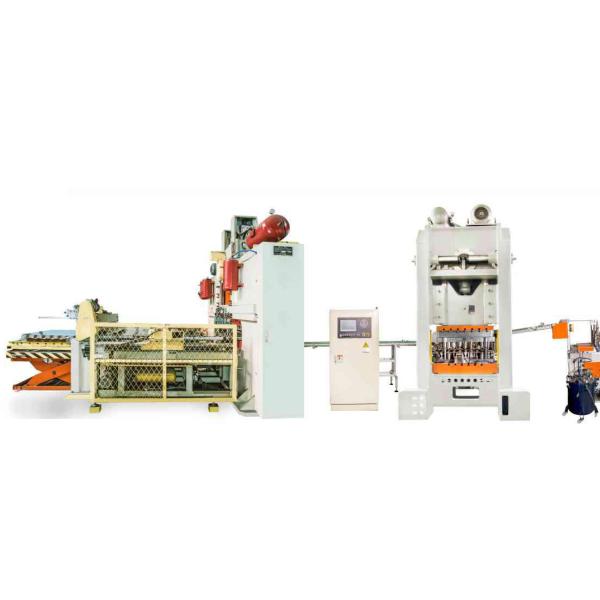
Aerosol Cone and Dome Manufacturing Lines
Aerosol cone and dome manufacturing lines are specialized, high-speed production systems designed to fabricate the top (cone) and bottom (dome) components of pressurized aerosol cans. These lines are critical in the metal packaging industry, ensuring that components meet the stringent structural requirements needed to withstand internal pressure and hermetic sealing standards.
Core Process Overview
The manufacturing process is typically highly automated, moving from raw metal coil or sheet feeding to finished, sealant-lined components. The sequence generally follows these stages:
- Blanking and Drawing: Using high-precision presses, flat metal sheets (typically tinplate) are cut into circular blanks and deep-drawn into the required cone or dome profile.
- Edge Curling: The outer edges of the cones and domes are curled to the precise dimensions necessary for double-seaming onto the aerosol can body.
- Compound Lining: A sealing compound is applied to the curled area. This gasket material is essential for maintaining an airtight and leak-proof seal once the component is joined to the can.
- Drying/Curing: The lined components pass through a curing oven to solidify the compound, ensuring it remains stable under pressure.
- Quality Inspection: Automated sensors and vision systems monitor the line to detect deviations in geometry, surface defects, or inconsistent compound application.
Key Technical Requirements
To ensure safety and compliance with international pressure regulations, these lines must adhere to strict engineering standards:
- Pressure Resistance: The design of the dome must effectively distribute internal forces. The stress (σ) on the component is generally governed by the relationship between the internal pressure (P), the radius of the component (r), and the wall thickness (t):
σ=2tPr
- Dimensional Accuracy: Any variation in the curl diameter can lead to catastrophic seam failure during the can-closing process.
- Material Integrity: The metal must possess excellent formability to prevent cracking during the deep-drawing stage, especially given the complex geometries of aerosol cones.
System Benefits
- High Throughput: Modern lines are designed for continuous operation, often producing hundreds of units per minute to support high-volume supply chains.
- Consistency: Automation reduces human error, ensuring that every piece produced maintains the tight tolerances required for safe pressurized storage.
- Versatility: Many lines are modular, allowing for quick changeovers between different diameters (e.g., 45mm, 52mm, or 65mm) and neck profiles to accommodate various aerosol product types.
By integrating precise mechanical forming with advanced sealing technology, these production lines provide the reliability needed for the diverse range of industries served, including personal care, household goods, and industrial paints.