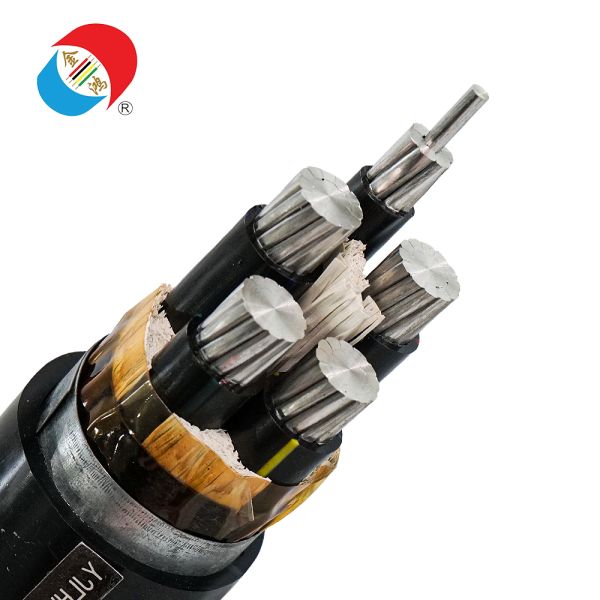
YJV62 double-stainless steel wire armored cross-linked polyethylene power cables fully comply with national standards GB/T 12706.1~12706.4-2020 series, covering a full range of specifications from low voltage 0.6/1kV, medium voltage 8.7/10kV, 8.7/15kV, and high voltage 26/35kV. They also comply with international standards IEC 60502-1 and IEC 60502-2, and meet EU CE LVD, EMC directives, and third-party inspection standards for cross-border offshore wind power, port, and submarine pipeline projects.
All finished cable reels undergo comprehensive third-party type testing at nationally accredited electrical laboratories, and include YJV62's unique marine-specific testing items: long-term salt spray accelerated aging test, continuous seawater immersion corrosion test, axial tensile fatigue test, wet-dry alternating corrosion cycle test, partial discharge long-cycle stability test, flame propagation test, and heavy mechanical crushing impact test.
Each large-scale marine engineering order comes with a complete set of official filing documents stamped by the factory, provided free of charge: National Power Industry Full Type Test Report, Marine Corrosion Protection Special Performance Inspection Certificate, Batch Factory Inspection Record, T2 Oxygen-Free Copper Raw Material Inspection Certificate, CE Certificate, Independent Batch Full Traceability Documents, YJV62 Dedicated Submarine Laying, Underwater Sealing and Vertical Anchoring Construction Technical Manual. All documents fully meet the requirements for third-party audits of marine engineering projects, port construction supervision filing, fire protection acceptance of coastal industrial parks, overseas marine EPC bidding review, and customs clearance.
Grade 2 High-Pressure Compacted T2 Oxygen-Free Copper Conductor
High-density round stranded pure copper core, DC resistivity strictly controlled below the national standard upper limit. Ultra-low resistivity suppresses voltage drop during long-distance seabed crossings, offshore risers, and deep-sea foundation power transmission, maintaining stable continuous current carrying capacity under full load. High compactness reduces the overall outer diameter of the cable, saving space for pipeline and cable trench layout for marine engineering construction teams. Uses 100% new oxygen-free copper raw materials, without any recycled copper, ensuring consistent conductivity across all production batches.
Co-extruded Internal Semiconductor Shielding Layer
The uniformly extruded semiconductor layer bonds tightly to the copper core surface, eliminating micro-gaps between the conductor and the cross-linked polyethylene (XLPE) insulation layer. This ensures a uniform internal electric field distribution, fundamentally suppressing the risk of partial discharge breakdown under long-term continuous high-voltage operation. It is a key safety structure for the medium-high voltage YJV62 used in offshore wind power booster stations.
XLPE Main Insulation Layer (thickness matched to the corresponding voltage level)
High-purity, ultra-low dielectric loss cross-linked polyethylene composite material. Long-term allowable continuous operating temperature reaches 90℃; short-circuit instantaneous heat resistance temperature can reach 250℃ within 5 seconds, capable of withstanding severe overcurrent impacts during grid short-circuit faults. Under the combined effects of seawater corrosion, axial tension, and radial extrusion, the insulation layer maintains complete structural integrity without cracking or delamination.
Outer co-extruded semi-conductive shielding layer (medium and high voltage models only)
The outer semi-conductive layer is tightly attached to the outer surface of the insulation layer, forming a closed electric field buffer structure in conjunction with the copper strip metal shielding layer. This prevents local electric field concentration caused by cable bending, stretching, and underwater friction during the laying of submarine pipelines.
Continuous Overlapping Copper Tape Metal Shielding Layer (Medium and High Voltage Models Only)
A wide, overlapping soft copper tape shielding layer completely encases each insulating core, effectively conducting induced high-voltage currents and large short-circuit ground fault currents in offshore power grids, isolating internal high-frequency electromagnetic radiation, and preventing signal distortion and interference with adjacent marine monitoring, communication, and fiber optic cables laid alongside submarine pipelines.
Seamless Extruded PVC Liner
An integrated extruded PVC inner sheath encases the insulating core assembly, completely isolating the internal metal shielding layer from the external stainless steel wire armor layer, preventing seawater, coastal salt spray, alkaline sediments, and marine microorganisms from corroding the internal metal components and XLPE insulating core.
Double-Layer Austenitic Stainless Steel Wire Armor (Core Advantages Superior to YJV32 Galvanized Steel Wire)
Two layers of staggered, overlapping high-strength austenitic stainless steel wire are wound in a uniform spiral structure. The double-layer steel wire structure simultaneously improves axial tensile strength and radial compressive strength; the stainless steel material has zero risk of corrosion under long-term seawater immersion and high-salt spray environments, completely solving the fatal defect of galvanized steel wire armor corrosion and perforation in marine environments. Precisely controlled winding gaps prevent the stainless steel wire edges from scratching the lining during long-distance underwater traction and multi-angle bending construction.
Marine-grade UV-stabilized saltwater resistant PVC outer sheath
Utilizing a special marine-grade modified composite material outer sheath, this sheath features enhanced waterproofing and an antibacterial formula. It offers excellent resistance to seawater immersion, chloride ion corrosion, UV aging, and marine organism adhesion. Suitable for direct subsea burial, offshore vertical riser laying, coastal rock foundation trenches, dockside underground pipelines, and semi-outdoor coastal cable duct installation.

The core difference between YJV62 and YJV22 steel tape armor and YJV32 single-layer galvanized steel wire armor lies in its double-layer stainless steel armor structure. Galvanized steel wire gradually corrodes and perforates after years of salt spray and seawater immersion, leading to insulation leakage and circuit failure. In contrast, YJV62 austenitic stainless steel armor has natural passivation and rust-preventing properties, and the double-layer winding further enhances structural safety margins, fundamentally solving the problem of core corrosion failure in marine power cables. Design engineers prioritize YJV62 in all offshore wind power, subsea crossing, and port core power supply projects to avoid frequent subsequent cable replacements.
This product combines axial tensile strength and superior seawater corrosion resistance, making it suitable for both vertical offshore wind turbine riser installations requiring high tensile forces and long-term submersion of subsea pipelines in seawater environments. It eliminates the need for designers to separately configure tensile protection and anti-corrosion auxiliary pipelines. This simplifies the overall marine engineering power distribution design, reduces the procurement of auxiliary anti-corrosion materials, and effectively controls the initial construction investment for EPC contractors.
The YJV62 series covers low, medium, and high voltage levels, with single-core and three-core conductor structures and cross-sections ranging from small distribution to heavy-duty main feeders. It can simultaneously meet the power needs of various applications, including low-voltage auxiliary power supplies for offshore platforms, medium-voltage trunk lines for wind farm substations, and high-voltage incoming lines for offshore centralized substations. Marine engineering general contractors can complete the procurement of all special anti-corrosion armored cables for the entire offshore wind power or port renovation project with just one supplier, simplifying procurement classification, incoming material inspection and on-site temporary warehousing management.
The three-core YJV62 uses a flexible, non-hygroscopic elastic filler for overall rounded corner molding, resulting in a smooth outer sheath surface and a low coefficient of friction. In long-distance submarine pipeline and coastal rock-laying projects, compared to irregularly filled armored cables, the overall traction resistance is significantly reduced, lowering the requirements for traction winch equipment and significantly shortening the overall marine cabling construction cycle.
The dedicated double-layer stainless steel wire armored automated production line for YJV62 is equipped with real-time online monitoring equipment to monitor stainless steel wire winding density, double-layer overlap rate, insulation layer thickness, and armor compactness. The tensile strength and corrosion resistance structural parameters of each batch are strictly controlled within a narrow standard tolerance range, avoiding insufficient tensile load on individual cable reels or incomplete double-layer winding, eliminating major safety hazards in submarine and offshore vertical riser projects.
Case 1: 35kV Submarine Collection Cable Project for Offshore Wind Farm
A 400MW offshore wind power EPC project along the coast selected YJV62 26/35kV three-core stainless steel armored cable for the subsea buried medium-voltage collection line between the wind turbine generator and the onshore substation. The construction environment was characterized by long-term seawater immersion, high chloride ion concentration, and the risk of compression from sharp seabed rocks. The double-layer stainless steel wire armor can withstand the entire weight of the long-distance subsea cable without additional traction protection; its natural rust-proof properties avoid the corrosion failure problems commonly found in galvanized armored cables used in early wind farm projects. The complete marine corrosion protection inspection and CE certification documents provided by our factory passed the third-party marine engineering audit on the first attempt. After 5 years of continuous subsea operation, no problems such as armor corrosion, insulation water leakage, or partial discharge failures have occurred, reducing the annual maintenance cost of the wind farm line by 85%.
Case Study 2: Underground Salt Spray Protection Power System Upgrade Project at a Large International Container Terminal
A major coastal container port underwent a comprehensive power grid upgrade. All underground trunk lines at the terminal were uniformly upgraded to use salt-resistant modified YJV62 8.7/15kV three-core cables. The terminal area experiences high salt spray concentrations year-round, is subject to seasonal tidal erosion, and has significant amounts of residual chemical deposits in the soil. Double-layer stainless steel armor and marine-grade outer sheaths completely blocked chloride ion corrosion, resolving issues such as aging sheaths and armor perforation in the port's original YJV32 galvanized steel wire cables. Complete marine engineering documentation expedited the completion and acceptance process for the port's EPC contractor, ensuring a stable power supply for container cranes, cold storage facilities, and terminal monitoring equipment throughout the year.
Case Study 3: Low-Voltage Submarine Crossing Cable Project for an Estuary Tidal Power Station
A tidal power station's power distribution project specified the use of ZC flame-retardant YJV62 0.6/1kV three-core cables for laying submarine pipelines in a mixed saltwater and freshwater environment. This environment alternates between freshwater and high-salinity seawater, resulting in significant fluctuations in corrosiveness. Single-layer galvanized steel wire armored cables cannot withstand the alternating wet and dry salt corrosion environment, while YJV62 double-layer stainless steel armored cables maintain excellent corrosion resistance even under cyclic corrosion conditions. The flame-retardant modification meets the fire protection design standards for enclosed powerhouses in tidal power stations; the stable and uniform current-carrying capacity of the batch cables ensures uninterrupted power supply to the tidal generator sets and monitoring equipment, reducing equipment downtime losses due to circuit corrosion failures by more than 90%.


YJV62 double stainless steel wire armored cross-linked polyethylene power cable is a designated anti-corrosion tensile cable for global offshore wind farms, transoceanic subsea pipelines, and core power supply projects in coastal heavy industry. It fills the market gap where galvanized steel wire armored cables cannot withstand harsh corrosive environments such as long-term exposure to salt water and high salt spray. Its integrated double stainless steel wire anti-rust armor, multi-layer waterproof and anti-corrosion structure, and full voltage series specifications reasonably balance the initial procurement investment of offshore project owners and EPC contractors with the ultra-long-term operation and maintenance costs, significantly extending the safe service life of underwater and coastal power distribution lines.
Our factory integrates independent R&D of marine special anti-corrosion cables, specialized automated production of stainless steel wire armor, and a complete marine anti-corrosion high-voltage testing laboratory. We focus on providing stable, fully compliant, and cost-effective YJV62 series stainless steel wire armored cables to EPC buyers in global offshore new energy, port terminals, transoceanic waterways, and coastal heavy industrial infrastructure projects, supporting long-term stable bulk supply for various harsh salt corrosion marine power engineering projects.