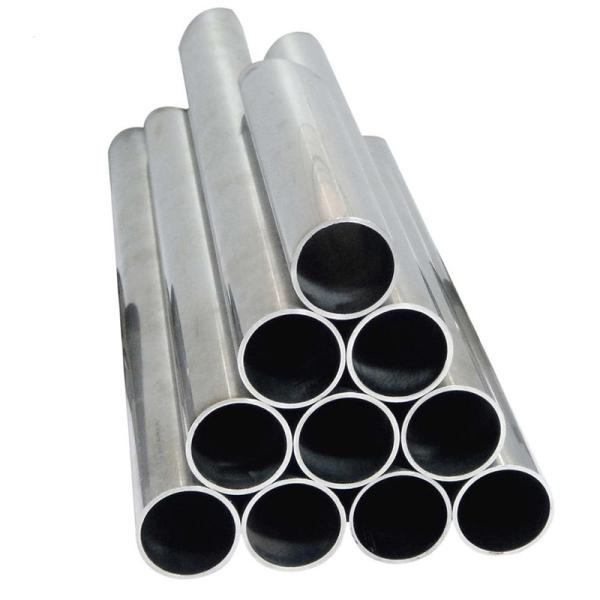
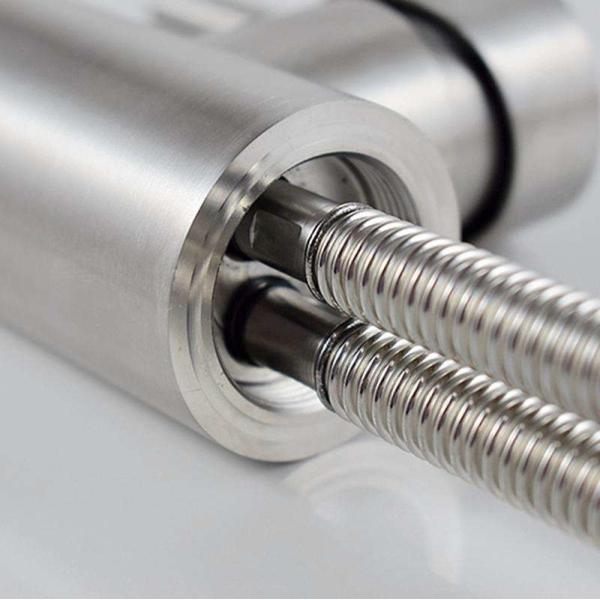
Our marine grade 316L stainless steel seamless pipe is specifically engineered for demanding offshore platform seawater service where conventional stainless steels fail due to chloride-induced pitting and crevice corrosion. The 2.0-3.0 percent molybdenum addition in 316L (UNS S31603, EN 1.4404) significantly elevates the Pitting Resistance Equivalent Number (PREN) to a minimum of 24, providing reliable protection against localized corrosion in marine atmospheres, splash zones, and submerged seawater piping systems. The low carbon content (maximum 0.03 percent) prevents intergranular carbide precipitation during welding, eliminating the need for post-weld heat treatment in most service conditions.
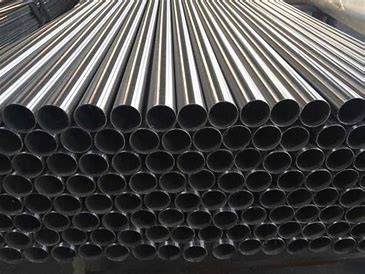
Manufactured to ASTM A312/A312M standards with seamless construction, these pipes deliver superior structural integrity for high-pressure seawater cooling systems, firewater deluge networks, ballast water piping, and topsides process utility lines on offshore platforms, FPSO vessels, and subsea installations. Each pipe undergoes 100 percent hydrostatic testing, ultrasonic inspection, and eddy current examination to ensure zero-defect delivery for safety-critical marine applications where pipe failure could compromise platform integrity and crew safety.


| Parameter | Specification |
|---|---|
| Material Grade | ASTM A312 TP316L (UNS S31603, EN 1.4404) |
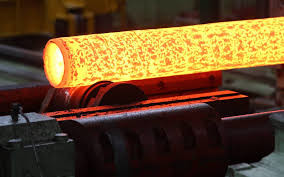
| Manufacturing Process | Hot Finished / Cold Drawn Seamless |
| Molybdenum Content | 2.0 percent - 3.0 percent |
| Carbon Content | Maximum 0.03 percent (Low Carbon) |
| PREN Value | Minimum 24 (Based on percent Cr + 3.3 x percent Mo + 16 x percent N) |
| Outer Diameter Range | 6mm - 610mm (1/4 inch - 24 inch NPS) |
| Wall Thickness Range | 0.5mm - 40mm (SCH 5S - SCH 80S) |
| Length | 6m Random Length, or Custom Cut to Size |
| Tensile Strength | Minimum 485 MPa (70 ksi) |
| Yield Strength | Minimum 170 MPa (25 ksi) |
| Elongation | Minimum 35 percent in 50mm gauge length |
| Surface Finish | Annealed and Pickled (AP), Bright Annealed (BA), Mechanical Polished |
| NDT Testing | 100 percent Hydrostatic, Ultrasonic (UT), Eddy Current (ET), PMI |
Q: Why choose 316L stainless steel over 304L for offshore platform seawater piping?
A: The critical difference lies in molybdenum content. 316L contains 2.0-3.0 percent molybdenum, while 304L has none. Molybdenum significantly enhances resistance to pitting corrosion in chloride-containing environments like seawater. The PREN (Pitting Resistance Equivalent Number) for 316L is typically 24-26, compared to 18-20 for 304L. In practical offshore service, 304L pipes can develop through-wall pits within months of seawater exposure, while 316L provides decades of reliable service. The incremental material cost of 316L over 304L is recovered within the first maintenance cycle through avoided pipe replacement, platform shutdown costs, and production deferment losses.
Q: What classification society certifications are available for marine grade 316L seamless pipe?
A: We provide full certification to major marine classification societies including DNV (Det Norske Veritas), ABS (American Bureau of Shipping), Lloyd's Register (LR), and Bureau Veritas (BV). The certification scope covers material grade verification, manufacturing process audit, mechanical testing witness, NDT procedure qualification, and corrosion testing per ASTM G48 Method A. For critical service applications, EN10204 3.2 inspection certificates with third-party surveyor sign-off are available. All certification documentation is traceable to individual heat numbers and can be submitted through client document management systems for design review and regulatory compliance verification.
Q: Is post-weld heat treatment required for 316L stainless steel seamless pipe in offshore service?
A: For most offshore service conditions with wall thicknesses up to 20mm, post-weld heat treatment (PWHT) is generally not required for 316L due to its low carbon content (maximum 0.03 percent). The low carbon level prevents chromium carbide precipitation at grain boundaries during welding thermal cycles, which would otherwise deplete the chromium content adjacent to grain boundaries and create susceptibility to intergranular corrosion (sensitization). However, for specific service environments such as hot chloride stress corrosion cracking conditions above 60 degrees Celsius or for wall thicknesses exceeding 20mm where restraint stresses are significant, solution annealing at 1040-1120 degrees Celsius followed by rapid quenching may be specified by the project engineering team.
Q: What testing verifies seawater corrosion resistance before shipment?
A: Our quality assurance program for marine grade 316L seamless pipe includes multiple verification steps. Chemical composition is verified by optical emission spectrometer (OES) analysis on each heat, confirming molybdenum content within 2.0-3.0 percent range. The ASTM G48 Method A ferric chloride pitting test is performed on sample coupons to verify a critical pitting temperature (CPT) of at least 15 degrees Celsius for 316L in the solution-annealed condition. Intergranular corrosion testing per ASTM A262 Practice E (Streicher test) confirms freedom from sensitization. Positive Material Identification (PMI) using X-ray fluorescence (XRF) is performed on 100 percent of pipes to verify grade before packaging and shipment.