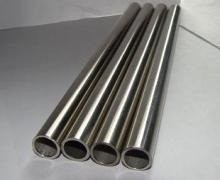
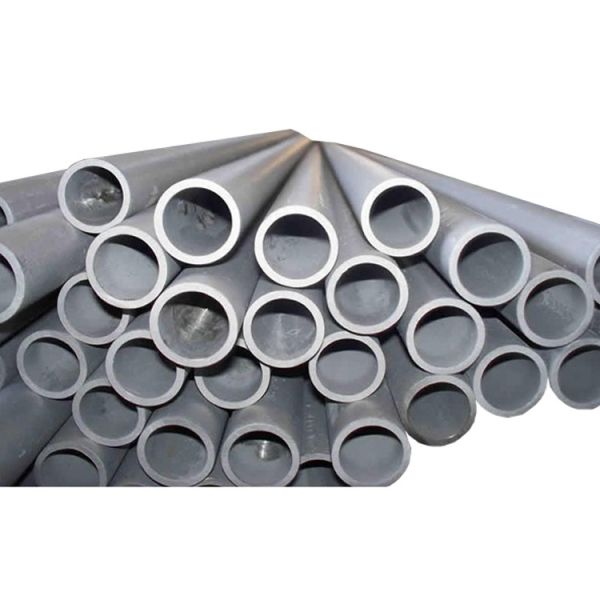
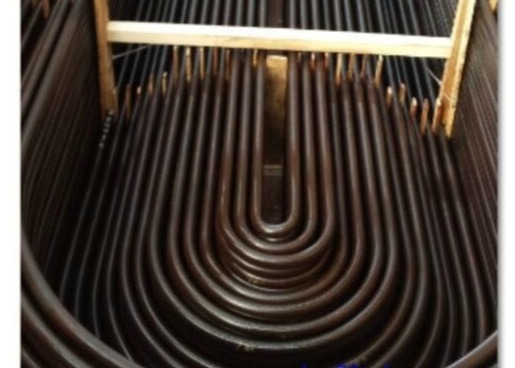
The S31803 duplex stainless steel seamless pipe (commonly known as 2205, EN 1.4462) delivers approximately twice the yield strength of conventional 316L austenitic stainless steel, enabling engineers to design pressure vessels, heat exchangers, and process piping systems with significantly thinner walls. With a minimum yield strength of 450 MPa (65 ksi) compared to 170 MPa for 316L, the S31803 duplex pipe allows wall thickness reductions of 30-50 percent while maintaining identical pressure containment ratings per ASME Boiler and Pressure Vessel Code Section VIII Division 1 design rules. This thin wall pressure vessel design approach translates directly into reduced material weight, lower fabrication and welding consumable costs, decreased structural support requirements, and simplified handling and installation logistics, all while delivering superior chloride pitting resistance with a PREN value of 34 or higher.
The balanced ferrite-austenite microstructure (approximately 50 percent each phase) combines the high strength and chloride stress corrosion cracking resistance of the ferritic phase with the toughness and weldability of the austenitic phase. This unique dual-phase structure provides exceptional resistance to stress corrosion cracking in chloride-containing environments where standard 304 and 316 stainless steels are susceptible to catastrophic failure. Each pipe is solution annealed at 1020-1100 degrees Celsius followed by rapid water quenching to achieve the optimal phase balance, verified by ASTM E562 metallographic point count measurement on sample rings from each heat treatment lot. Certified compliant with NACE MR0175/ISO 15156 for sour service in H2S-containing oil and gas environments up to Level VI severity with demonstrated resistance to sulfide stress cracking.


| Parameter | Specification |
|---|---|
| Material Grade | UNS S31803 (Duplex 2205, EN 1.4462, W.Nr. 1.4462) |
| Also Available | UNS S32205, UNS S32750 (Super Duplex 2507), UNS S32760 |
| Applicable Standards | ASTM A790/A790M, ASME SA790, NACE MR0175/ISO 15156 |
| Manufacturing Process | Hot Finished / Cold Pilgered / Cold Drawn Seamless |
| Heat Treatment | Solution Annealed at 1020-1100 deg C + Water Quenched |
| Outer Diameter Range | 6mm - 610mm (1/4 inch - 24 inch NPS) |
| Wall Thickness Range | 1.0mm - 40mm (SCH 5S - SCH 160) |
| Length | 6m Random Length, or Cut to Specified Length |
| Tensile Strength | Minimum 655 MPa (95 ksi) |
| Yield Strength | Minimum 450 MPa (65 ksi) - Twice 316L Yield Strength |
| Elongation | Minimum 25 percent in 50mm gauge length |
| Hardness | Maximum 290 HBW / 31 HRC (NACE MR0175 Compliant) |
| PREN Value | Minimum 34 (Based on Cr + 3.3Mo + 16N formula) |
| Ferrite Content | 40-60 percent per ASTM E562 Point Count Method |
| NDT Testing | 100 percent Hydro, Ultrasonic UT, Eddy Current ET, PMI, ASTM G48 A |
Q: How much weight can I save by switching from 316L to S31803 duplex for pressure vessel piping?
A: The weight savings are directly proportional to the wall thickness reduction achievable through the yield strength advantage. Since ASME B31.3 and Section VIII Division 1 allowable stress values at design temperature for S31803 are approximately 2.0-2.5 times higher than 316L, the calculated minimum wall thickness reduces by a similar factor for identical design conditions. For a typical 12-inch NPS pipe designed for 50 bar at 100 degrees Celsius, the calculated wall thickness for 316L is approximately 9.5mm (SCH 40), while S31803 requires only 4.0mm (SCH 10S). This corresponds to a weight reduction from 49 kg/m to 21 kg/m: a 57 percent savings. Over a 500-meter piping system, this saves 14 metric tons of material weight, reducing structural steel, welding consumables, and installation labor proportionally.
Q: Does thin wall duplex pipe maintain adequate corrosion allowance for long-term service?
A: Yes, and this is a fundamental advantage of duplex stainless steel. Unlike carbon steel where corrosion allowance must be added to the pressure design wall thickness (typically 1.5-3.0mm), duplex stainless steel resists general corrosion through its passive chromium oxide surface film and does not experience progressive wall thinning in properly selected service environments. The PREN value of 34 or higher for S31803 guarantees resistance to pitting corrosion in chloride levels up to 10,000 ppm at ambient temperatures. This means the wall thickness calculated for pressure containment alone is sufficient for the full design life without adding sacrificial thickness, further amplifying the weight-saving advantage compared to carbon steel alternatives that require significant corrosion allowance additions.
Q: Is S31803 duplex pipe suitable for sour service with H2S present?
A: Yes, S31803 is listed in NACE MR0175/ISO 15156-3 Table A.28 as acceptable for sour service within defined environmental limits. The maximum hardness of 31 HRC (290 HBW) required by NACE is readily achieved through proper solution annealing heat treatment at 1020-1100 degrees Celsius followed by rapid water quenching. At ambient temperature, S31803 is suitable for sour service up to approximately 0.1 bar (1.5 psi) H2S partial pressure with 10 percent NaCl brine at pH 4.5 or higher per laboratory test data. For higher H2S levels or elevated temperature sour service, super duplex grade S32750 (2507) with PREN 41 or higher may be recommended. We provide full NACE MR0175 compliance certificates with each shipment documenting hardness testing, microstructure verification, and corrosion testing per ASTM G48 Method A for critical pitting temperature determination.
Q: How is the correct ferrite-austenite balance verified in the finished pipe?
A: The ferrite content in each heat treatment lot is measured using ASTM E562 systematic manual point count method on metallographically prepared cross-section samples examined at 400x magnification under an optical microscope after electrolytic etching in 20 percent sodium hydroxide solution. A minimum of 25 fields per sample are counted to achieve statistically valid results, with acceptance criteria of 40-60 percent ferrite by volume. Additionally, we use a calibrated Feritscope (magnetic induction method) for rapid non-destructive verification on the pipe surface before shipment, correlated to the point count reference method. Both measurements are recorded on the Mill Test Certificate. Proper phase balance is critical: insufficient ferrite reduces strength and chloride SCC resistance, while excess ferrite can lead to embrittlement during welding and reduced toughness at low temperatures.