Differential Scanning Calorimetry Machine Offering Precise Thermal Analysis for Material Testing and Research Applications
Brief introduction of the instrument:
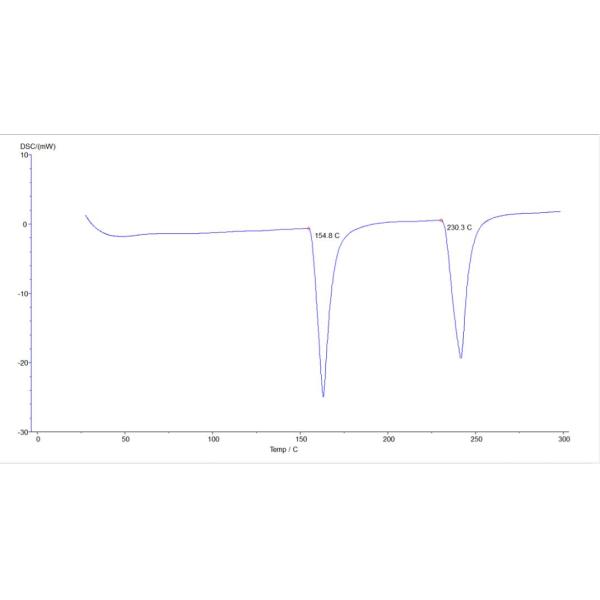
Differential Scanning Calorimetry (DSC) has gained widespread adoption across industries and research sectors, serving as both a routine quality control instrument and a sophisticated research tool. This technique precisely measures the temperature and heat flow associated with thermal transitions within materials, enabling in-depth analysis of material thermal behavior.
Our DSC instrument is a heat flux differential scanning calorimeter featuring excellent repeatability and high measurement accuracy—making it particularly suited for the precise determination of specific heat capacity. Key operational advantages include simplified calibration procedures, compatibility with low-melting-point samples, and fast, reliable test execution. It boasts an extremely broad application scope, with primary use cases in material R&D, performance characterization, and quality assurance (QA) processes.
DSC technology excels in analyzing a comprehensive range of material properties, including:
- Glass transition temperature (Tg)
- Cold crystallization
- Phase transition
- Melting and crystallization behavior
- Product stability
- Curing/crosslinking reactions
- Oxidation induction time (OIT)
To address diverse experimental needs, we offer a range of DSC models tailored to specific test parameters (e.g., temperature range, sensitivity, sample capacity) and application requirements—ensuring optimal performance for both routine quality checks and advanced material research.
Instrument use:
Key parameters measurable by our DSC instrument include:
-
Curing reaction temperature and thermal effect of polymeric materials
-
Phase transition temperature and thermal effect of materials
-
Crystallization temperature and thermal effect of polymeric materials
-
Melting temperature and thermal effect of polymeric materials
-
Glass transition temperature (Tg) of polymeric materials
-
And other thermal behavior-related characteristics
Reference standard:
GB / T 19466.2 – 2004 / ISO 11357-2:1999 Part 2: Determination of glass transition temperature;
GB / T 19466.3 – 2004 / ISO 11357-3:1999 Part 3: Determination of melting and crystallization temperature and enthalpy;
GB / T 19466.6 - 2009 / ISO 11357-3: 1999 Part 6: Determination of oxidation induction time (isothermal OIT) and oxidation induction temperature (kinetic OIT).
Technical parameter:
| DSC | DSC-100A Differential scanning calorimeters |
| DSC range | 0~±600mW |
| Temperature range | Room temperature~600℃ |
| Heat-up rate | 0.1~100℃/min |
| Temperature resolution | 0.01℃ |
| Temperature fluctuations | ±0.01℃ |
| Temperature reproducibility | ±0.1℃ |
| DSC accuracy | 0.001mW |
| DSC sensitivity | 0.01uW |
| Temperature control method | Heating up and constant temperature (automatic control of the whole program) |
| Curve scan | Heating up the scan |
| Air control | The instrument switches automatically |
| Display mode | The 24bit color 7-inch LCD touchscreen display is shown |
| Data interface | Standard USB interface |
| Instrument standards | Equipped with standard substances (tin), the user can correct the temperature and thermal enthalpy |
| Note | All technical indicators can be adjusted according to the user needs |

FAQ:
Q1: What core thermal performance parameters can the DSC instrument measure?
A1: It can accurately determine key parameters including glass transition temperature (Tg), curing reaction temperature & thermal effect, phase transition temperature & thermal effect, crystallization/melting temperature & thermal effect, oxidation induction time (OIT), and cold crystallization behavior—primarily for polymeric and other thermally responsive materials.
Q2: What is the temperature measurement range of your DSC instrument?
A2: Our standard DSC models offer a temperature range of -150°C to 700°C (customizable up to 1000°C for high-temperature applications), covering the thermal analysis needs of most industrial materials and research scenarios.
Q3: What is the thermal flux resolution and measurement accuracy of the instrument?
A3: The thermal flux resolution reaches ±0.01 mW, with a temperature measurement accuracy of ±0.1°C and a heat flow accuracy of ±1%—ensuring precise and reliable data for both routine quality control and advanced material research.
Q4: What are the requirements for sample size and form when using the DSC instrument?
A4: The recommended sample mass ranges from 1–10 mg (optimized for thermal response sensitivity). It supports solid samples (powders, films, fibers) and small-volume liquid samples, with compatible sample pans made of aluminum, platinum, or ceramic (for corrosive/high-temperature samples).