electrical cable tray manufacturers
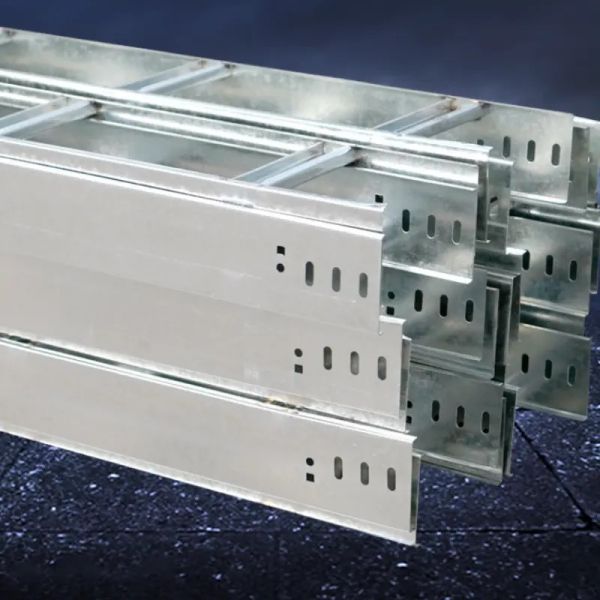
Bending copany's Cable trays are the core of modern cable routing systems, characterized by being "open, modular, and systematic." Compared to traditional embedded conduits, they offer revolutionary advantages in flexibility, economy, and maintainability.
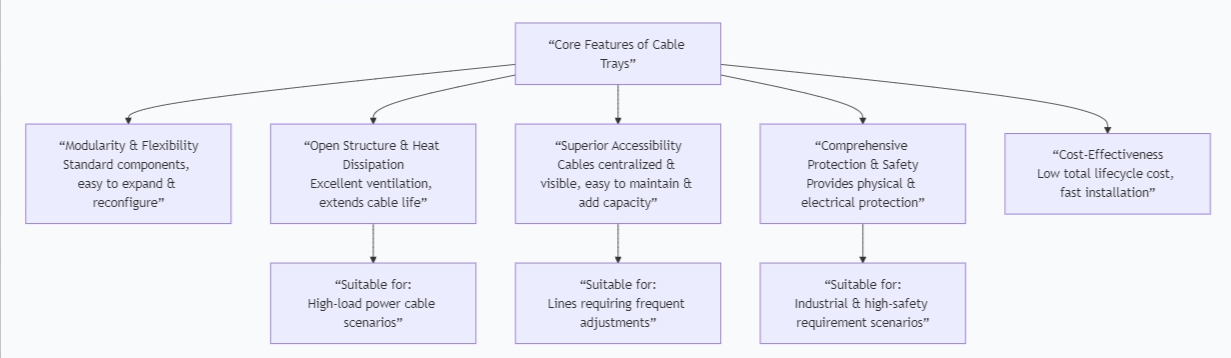
To help you quickly gain an overall understanding, the following diagram provides an overview of the core features of cable trays:
The diagram above shows a panoramic view of the advantages of cable trays. To further guide selection, the table below details the characteristics and typical applications of different tray types, which is a crucial step in the selection process:
| Feature Dimension | Specific Explanation & Manifestation | Impact on Selection |
|---|---|---|
| 1. Modularity & Flexibility | Composed of standard straight sections, bends, tees, etc., allowing flexible assembly into any path, adapting to building structure changes. For future modifications, they can be easily adjusted or expanded with high reusability. | Core Advantage. Suitable for locations with potential future changes or upgrades, such as data centers, laboratories, and flexible production lines. |
| 2. Open Structure & Heat Dissipation | Open designs like Ladder and Mesh Trays allow unrestricted heat dissipation from cables, effectively preventing heat buildup, reducing fire risk, and extending cable life. | Critical for high-load power cables. Closed designs (like solid-bottom trays) require careful thermal calculation. |
| 3. Superior Accessibility & Maintainability | All cables are centralized, visible, and within reach. Faulty lines can be quickly located, and capacity can be added, cables replaced, or layouts adjusted without damaging the structure, greatly simplifying maintenance. | Significantly reduces total lifecycle maintenance costs. A must for facilities with high operational demands (e.g., banks, communication hubs). |
| 4. Comprehensive Protection & Safety | • Physical Protection: Prevents mechanical damage, trampling, and animal bites. • Electrical Safety: The metal tray itself can serve as a grounding busbar. The entire system must be electrically continuous and properly grounded. |
The selected protection rating (e.g., IP code) must match the actual environmental risks. Grounding continuity is a key safety inspection point. |
| 5. Cost-Effectiveness | • Fast Installation: Construction is far more efficient than embedded conduit. • Low Total Cost of Ownership (TCO): While initial material cost may be higher, it saves substantial installation, maintenance, and future modification costs and time. |
When evaluated over the project's entire lifecycle, its economic advantages are clear. Especially suitable for large, complex projects. |

When selecting cable trays, they should be viewed as a "live" system, not just static cable containers. Their core value lies in providing a "safe, manageable, and future-proof" pathway for cables.
Three Key Steps for Selection:
Define Requirements: Analyze cable types, quantities, weights, environmental conditions (corrosion, cleanliness, fire rating), and future expansion plans.
Match the Type: Select the tray type (ladder, trough, mesh, etc.), material (galvanized steel, stainless steel, aluminum alloy), and surface treatment based on requirements.
Perform Precise Calculations: Conduct load and deflection calculations to determine appropriate material thickness and support spans, and request the supplier's load test reports.