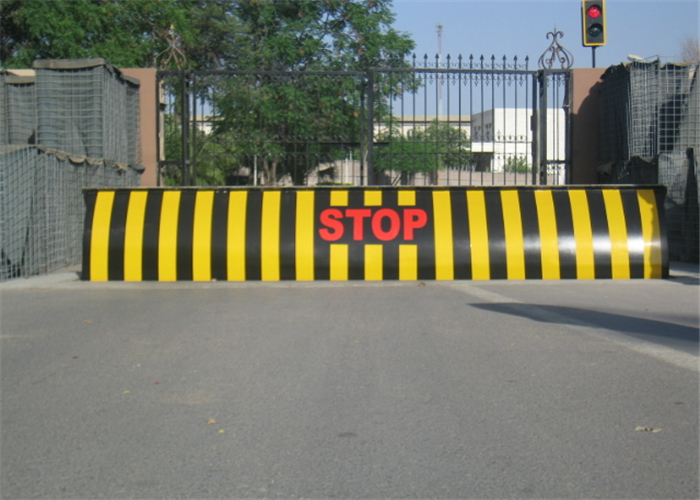
PAS 68 Heavy Duty Rising Kerbs with Manual Hand Pumping Facility
Hydraulic Road Blocker Overview
Road blockers provide specialized protection for high-security entrance points vulnerable to vehicle attacks. These hydraulic systems offer the ultimate security solution, capable of stopping even high-tonnage vehicles traveling at speed by damaging the vehicle's front, wheels, and undercarriage.
When integrated with parking barrier gates, smart card charging management systems, and access control attendance systems, road blockers create a comprehensive crossing management solution tailored to specific security requirements.
Key Features
- Robust, durable construction with high load-bearing capacity and smooth, quiet operation
- PLC control system ensures stable performance and reliable operation with easy integration
- Compatible with parking barriers and other access control systems for coordinated security
- Advanced hydraulic drive technology delivers high security, reliability, and stability
- Manual hydraulic system meets fire safety requirements during power failures or malfunctions
- Wireless remote control operation within 30-meter range
- Easy maintenance access via removable 16mm cover plate
Technical Specifications
| Product |
Hydraulic Road Blocker |
| Control System |
Electric Hydraulic Control |
| Voltage |
380V (Control Voltage: 24V) |
| System Power |
1.5KW/2.2KW/3.7KW |
| Minimum Loading |
70T |
| Rising Time |
3-5 seconds |
| Falling Time |
3-5 seconds |
| Rising Height |
350-800mm |
| Working Temperature |
-20℃ to 75℃ |
Product Image
Installation Guidelines
Installation Position
The road blocker should be installed at designated vehicle entrances and exits. The hydraulic station should be positioned for convenient operation and maintenance, typically near the road blocker location. Control boxes should be placed in easily accessible locations according to operational requirements.
Pipeline Connection
- Standard hydraulic pressure pipelines are 5 meters long, with additional lengths available. Foundation excavation should account for hydraulic oil pipe and control wire routing while avoiding damage to existing underground facilities.
- Pipeline groove dimensions should accommodate terrain requirements. Hydraulic pipelines typically require 10-30cm depth and 15cm width, while control wires need 5-15cm depth and 5cm width.
- Use PVC threading pipes to protect both control wires and oil pipes during installation.