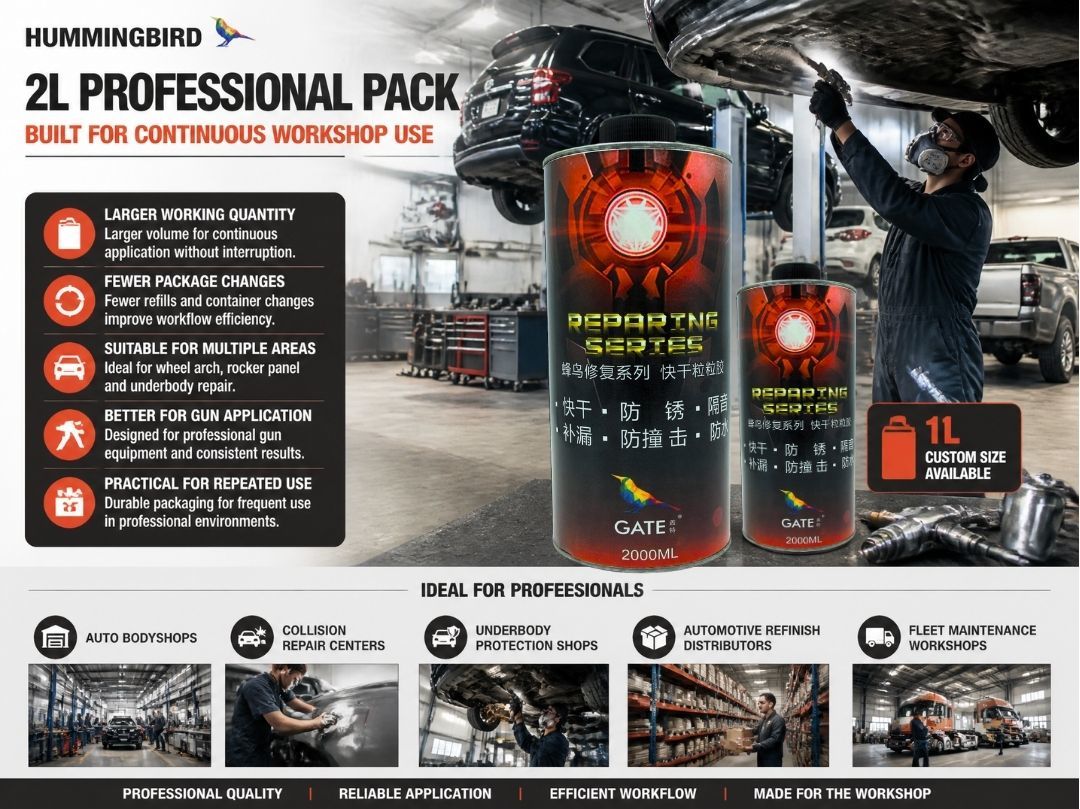
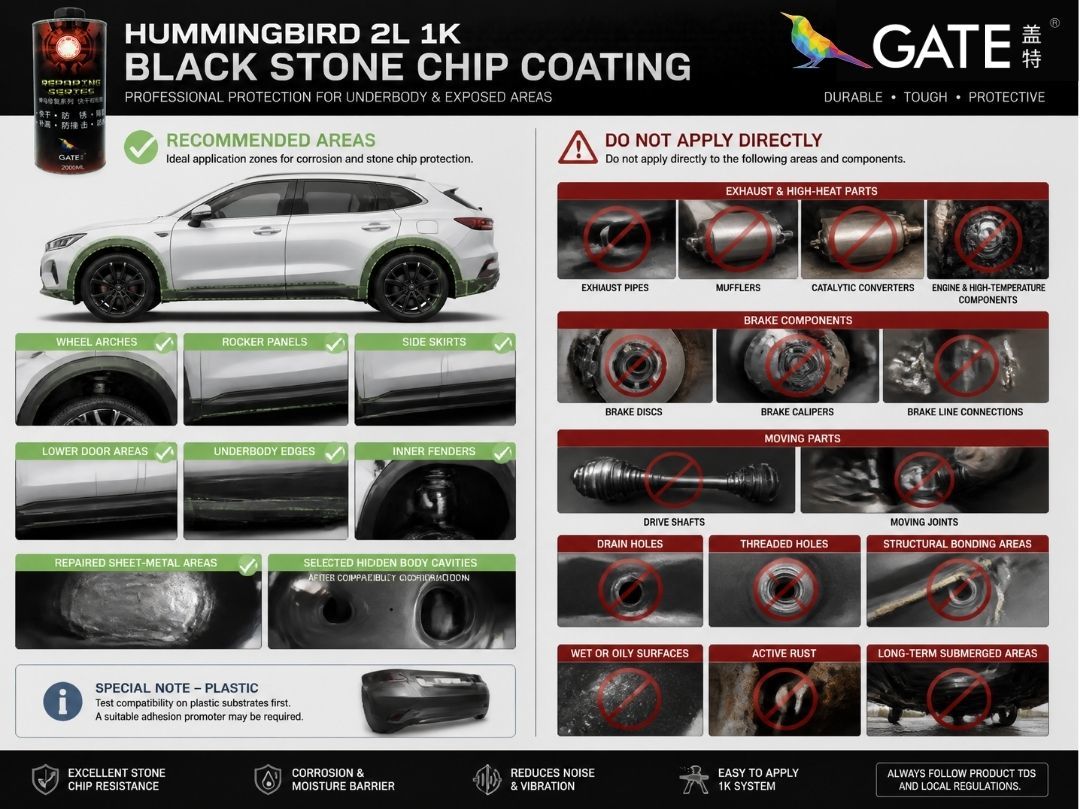
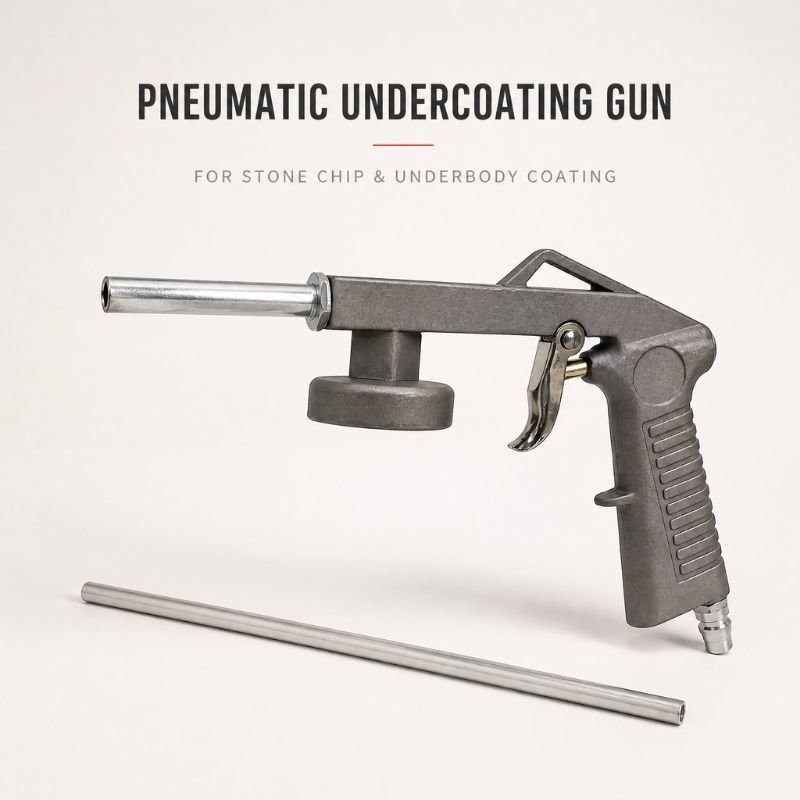
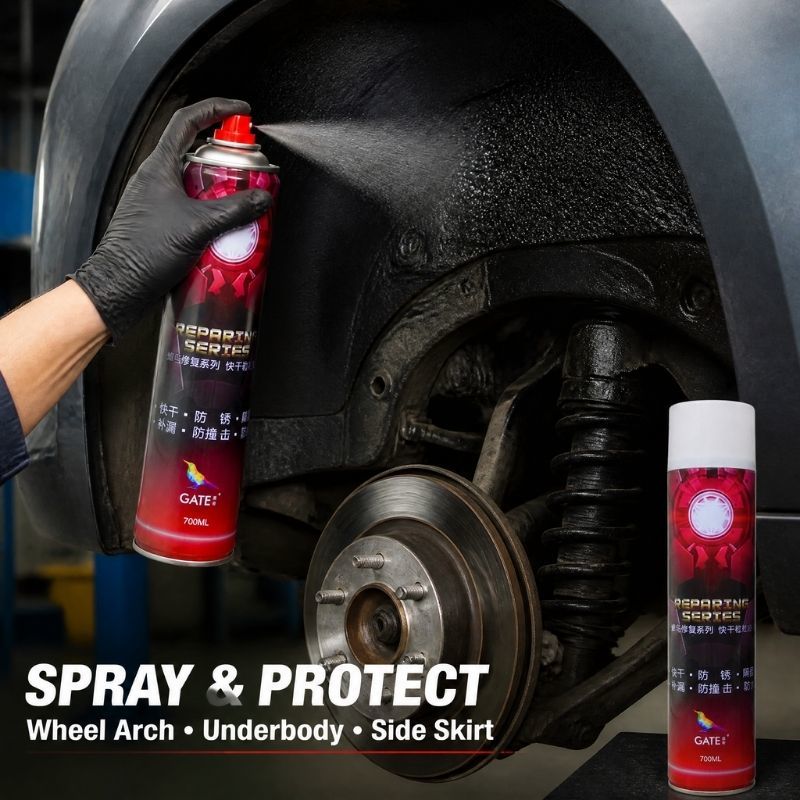
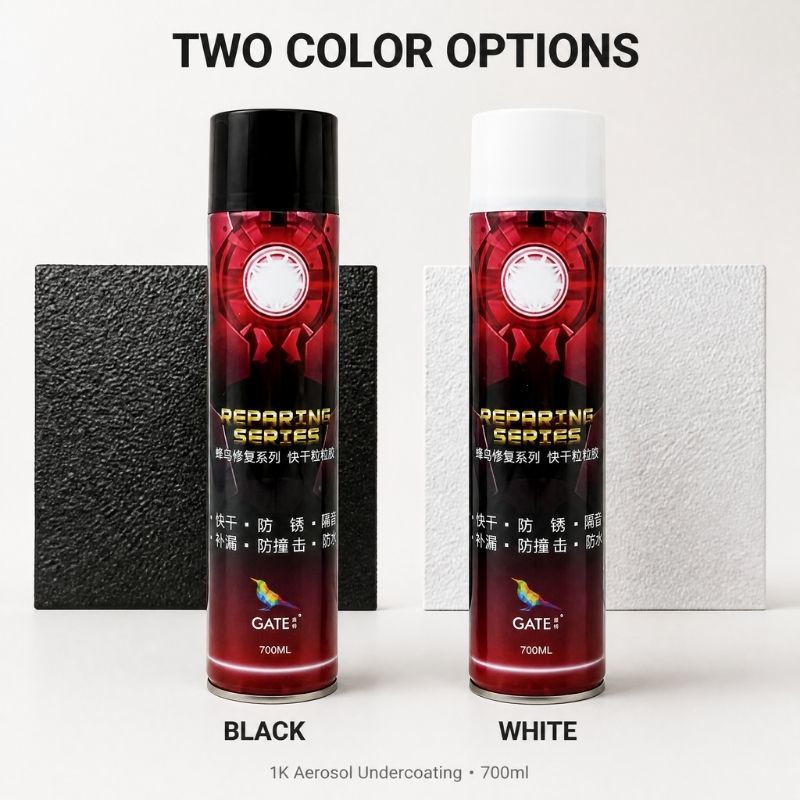
Hummingbird 2L 1K Black Stone Chip Coating is a single-component, spray-gun-applied coating for restoring a textured protective layer on suitable automotive lower-body areas. It is intended primarily for wheel arches, inner fenders, rocker panels, side skirts and localized underbody repairs after the substrate has been correctly repaired and prepared.
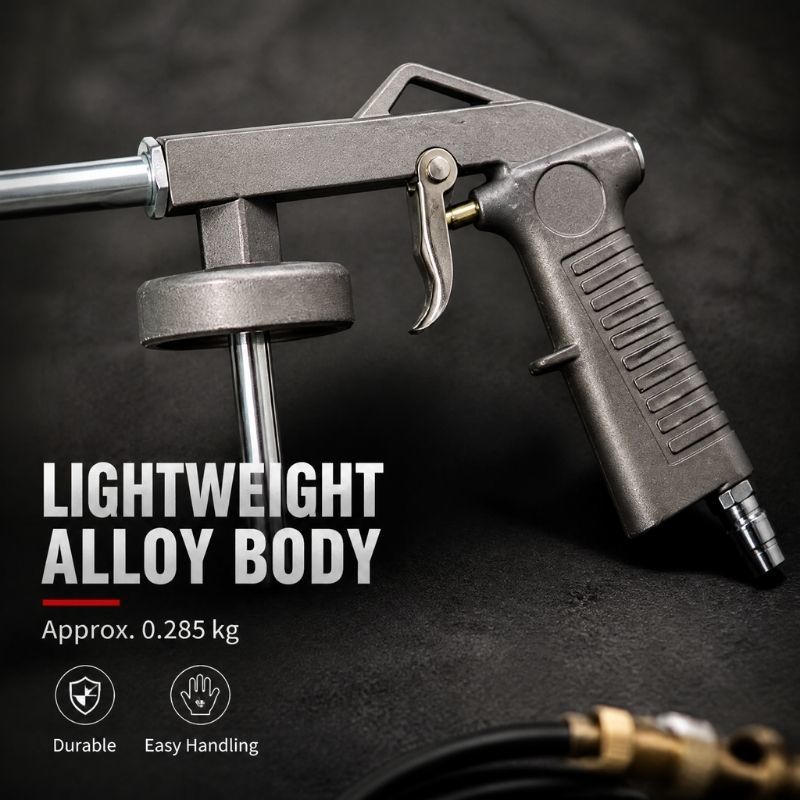
The coating is supplied ready for use as a 1K system, so no separate hardener is required. A compatible pneumatic stone-chip or underbody coating gun is used to build a black textured finish. Texture is influenced by the gun, material flow, air pressure, spray distance and operator technique; always confirm the appearance on a test panel first.
Important: This is a surface-protection coating. It does not replace rust removal, corrosion primer, seam sealer, structural repair or a heat-resistant coating.
Do not use this product as cavity wax. Enclosed body cavities require a material designed specifically for internal cavity protection.
| Item | Current Product Positioning |
|---|---|
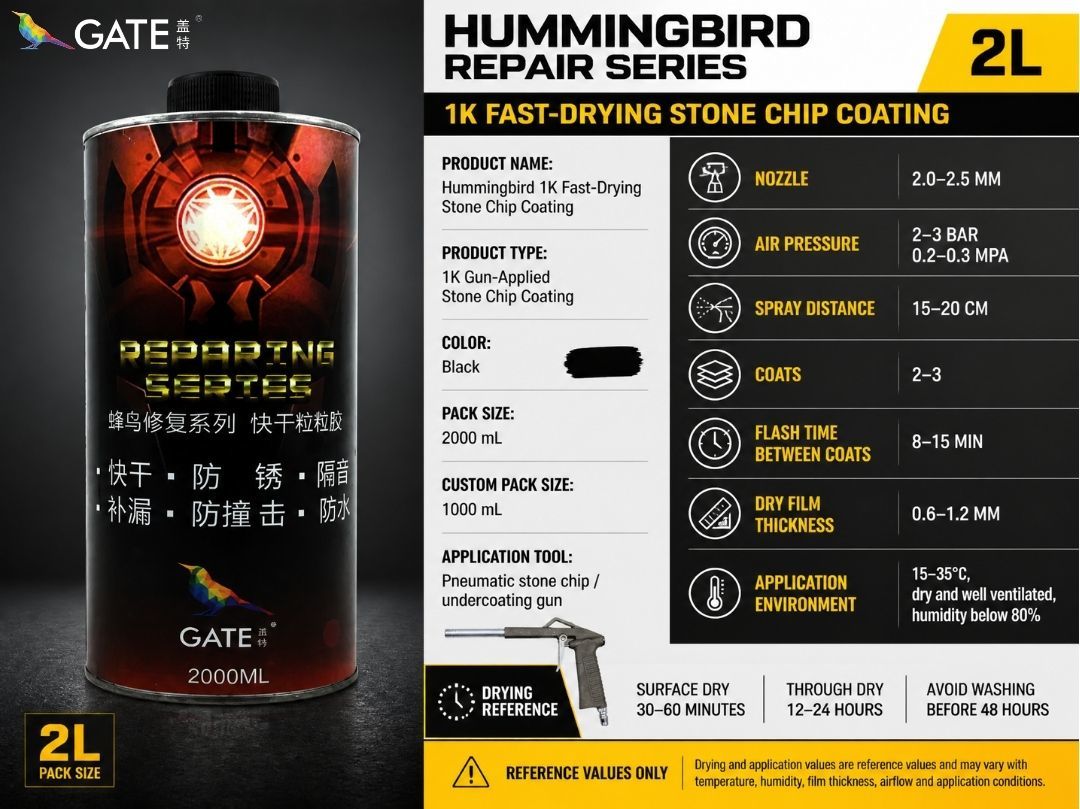
| System | 1K, no separate hardener |
| Color | Black |
| Application | Compatible pneumatic stone-chip / underbody coating gun |
| Finish | Textured protective appearance |
| Standard Package | 2 L per can |
| Optional Package | 1 L available for qualified custom orders |
Complete all required panel straightening, welding and structural work before coating. Confirm that drains, service points, threaded interfaces, moving parts and heat-producing components can remain unobstructed.
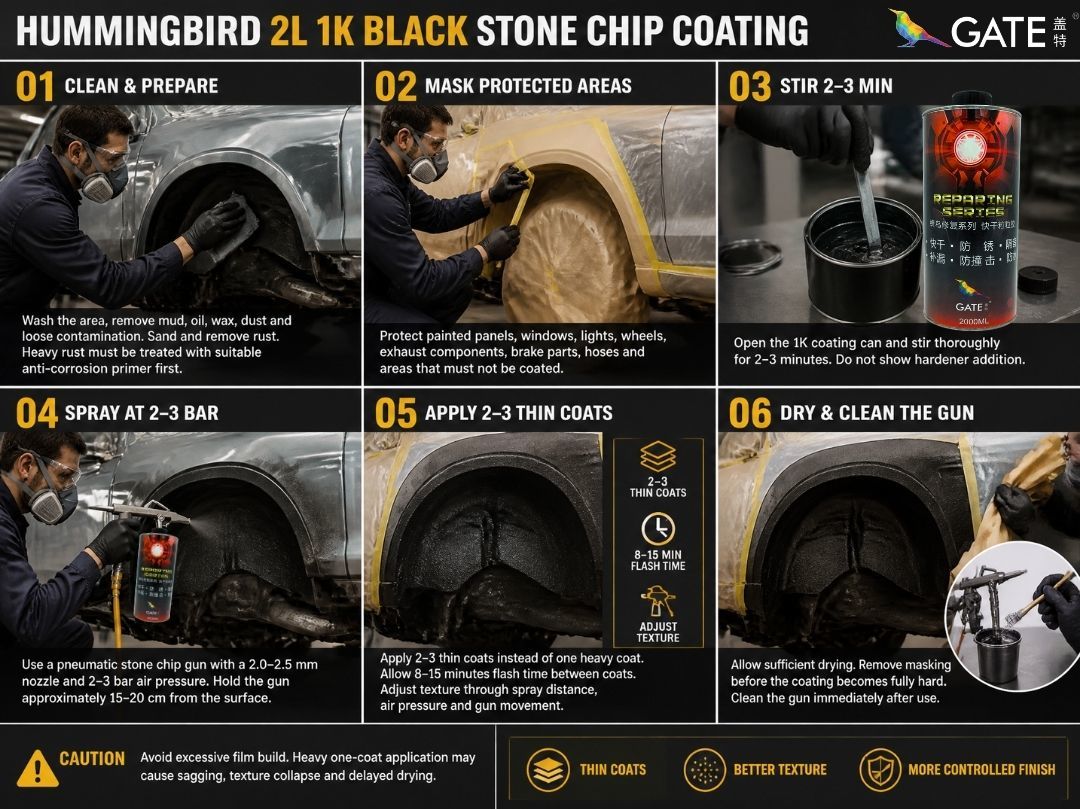
Remove mud, oil, grease, wax, road film, loose coating and active rust. Heavily corroded metal must be repaired and treated with the appropriate corrosion-protection system before stone-chip coating is applied.
Abrade sound compatible coatings or primers as required by the selected repair system. The surface must be clean, completely dry and free from sanding dust. Bare metal should receive the appropriate compatible primer when required.
Protect exterior paint, glass, lamps, wheels, tires, exhaust parts, brakes, brake lines, wiring, sensors, hoses, drain holes, fasteners and service access points. Dried textured coating can be difficult to remove from unintended areas.
Mix the coating thoroughly until it is uniform. No hardener is required. Do not add general-purpose thinner without written compatibility guidance for this product; changing viscosity can affect atomization, texture, sag resistance, drying and film build.
Use a compatible pneumatic stone-chip gun. Begin with the gun manufacturer's recommended setup and the current product TDS, then test on a sample panel. Adjust only one parameter at a time until the required texture is achieved.
Apply a light, even first coat rather than attempting full texture in one heavy pass. Allow the specified flash-off, then build coverage and texture with additional controlled coats if required. Excessive wet-film thickness can lead to sagging, texture collapse and extended drying.
Allow the coating to dry under suitable temperature and ventilation. Drying varies with film thickness, airflow, humidity, substrate temperature and number of coats. Do not judge full cure only by surface touch. Inspect coverage, drainage openings and adjacent components before returning the vehicle to service.
Clean the gun and material passages immediately after application using the cleaning method specified for the coating and equipment.
| Variable | What to Check |
|---|---|
| Spray Distance | Changes droplet development and pattern; verify on a sample |
| Air Pressure | Affects atomization; stay within gun and TDS guidance |
| Material Flow | Excess flow can create heavy build or sagging |
| Gun Speed | Uneven movement can produce inconsistent texture |
| Coat Count | Build gradually and observe the required flash-off |
| Material Temperature | Viscosity changes can alter spray behavior |
Plastics, galvanized steel, stainless steel, aluminum, unknown old coatings and non-standard primers require an adhesion and compatibility test with the complete repair system.
Check material mixing, gun cleanliness, spray distance, air supply, gun speed and overlap. Standardize the test-panel setup before changing multiple variables.
Film build may be too heavy, flash-off may be insufficient, or material flow may be excessive. Allow the correct interval and use controlled coats.
Check for residual wax, grease, moisture, rust, loose coating, inadequate abrasion or an incompatible substrate/primer combination.
Review film thickness, ventilation, temperature, humidity and any unauthorized thinner addition. Compare the conditions with the current TDS.
Use appropriate respiratory protection, gloves, eye protection and ventilation. Follow the current SDS for handling, storage, fire precautions and disposal. Keep the container sealed in a cool, dry and ventilated location away from ignition sources.
For a technically credible product page, publish the current TDS/SDS revision, verified drying conditions, compatible primers, coverage data and real test-panel photographs when these records are available.
No. It is a 1K coating and does not use a separate curing agent.
No. Active corrosion must be removed and the substrate treated with the appropriate repair and corrosion-protection system first.
Yes. Gun setup, material flow, pressure, distance and technique influence the result. Use a test panel rather than promising an exact OEM texture.
It should not replace a dedicated cavity wax or cavity-protection product.
No. Heat-producing, friction, braking and moving components must remain uncoated.