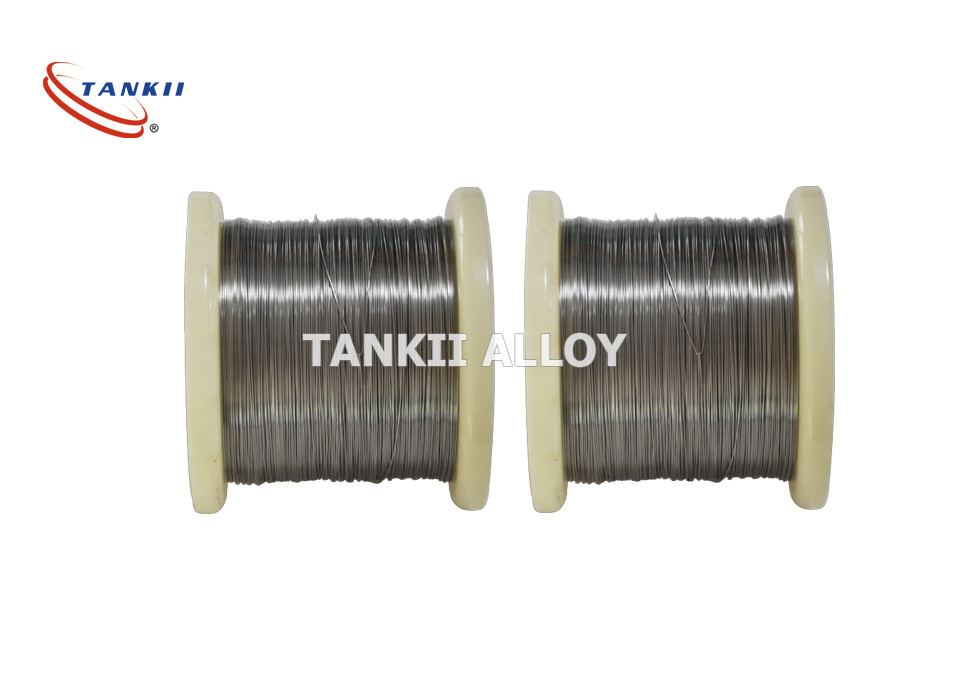
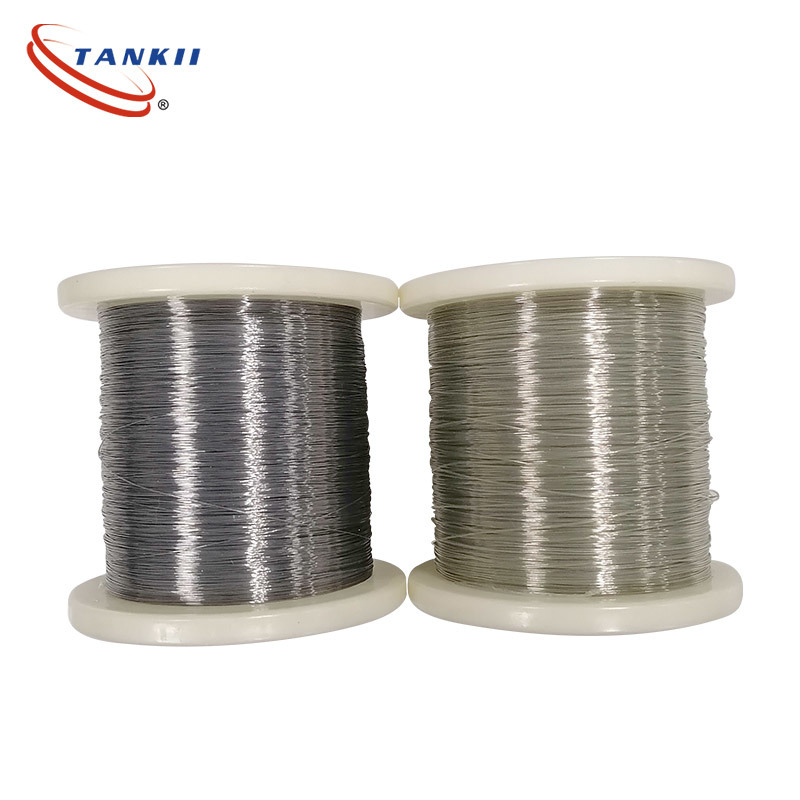
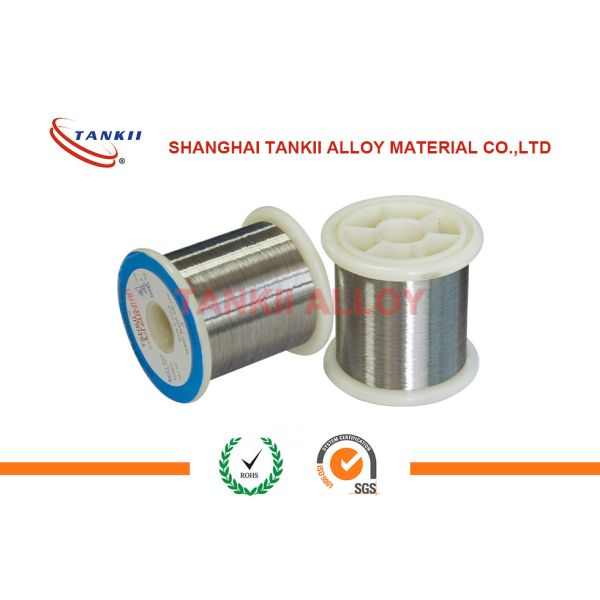
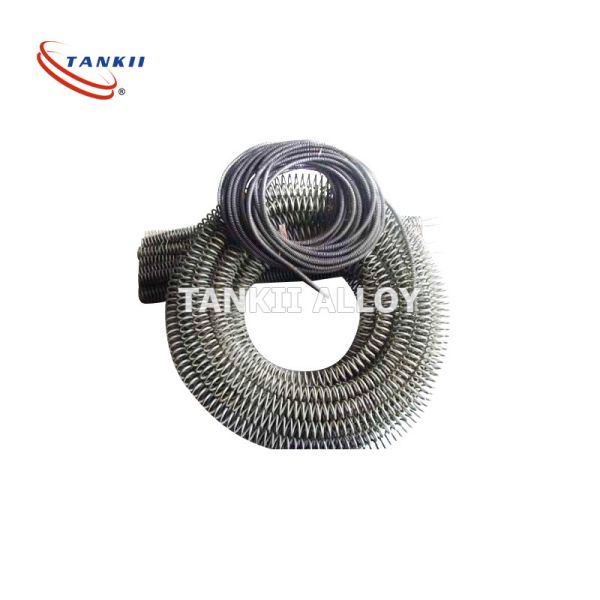
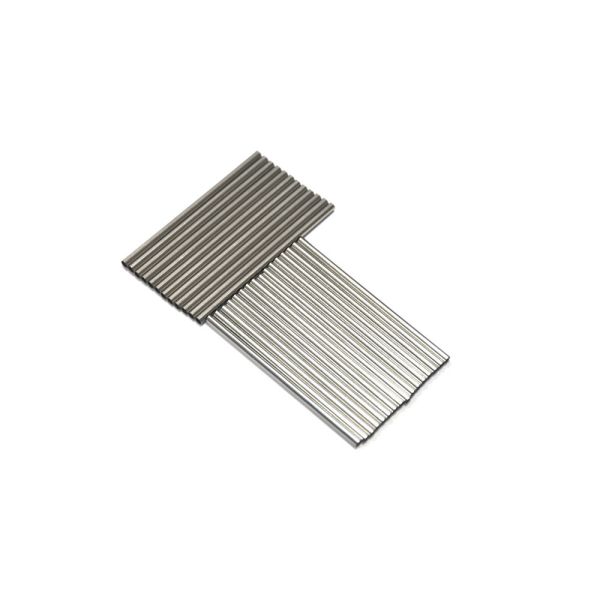
NiCr80/20 Heating Wire 0.4mm 0.44mm Used For Medical Breathing Tube Heating Wires
Ni80Cr20 (8020 nickel-chromium alloy) is a high-resistance electrothermal alloy with excellent performance.
Due to its outstanding high-temperature stability and corrosion resistance, it is widely used in the manufacture of various heating elements.
In a ventilator, the heating wire mainly serves as a heating element, used to warm and moisten breathing gases.
When a patient uses a ventilator, the inhaled gas is heated to an appropriate temperature through a heating wire to reduce irritation to the respiratory tract and improve patient comfort.
The working principle of a heating wire is mainly based on the electric heating effect.
When current passes through a wire, the wire heats up, a physical phenomenon known as the electric heating effect.
In a ventilator, the heating wire uses this principle to heat gas.
Specifically, the heating wire of a ventilator is usually made of high resistance materials such as nickel chromium alloy or constantan.
When current passes through these high resistance materials, electrical energy is converted into thermal energy, causing the heating wire to heat up.
This heating effect is uniform and continuous, ensuring that the gas passing through is uniformly heated.
Nickel-chromium wire is widely used as heating wire because it strikes an excellent balance between heating efficiency, high-temperature stability, and durability, with overall performance superior to another common type of heating wire—iron-chromium-aluminum (Fe-Cr-Al) wire.
Although nickel-chromium wire is more expensive, its high reliability and long service life are often more critical factors in heating applications that require:
These advantages make Ni-Cr wire the preferred choice despite its higher upfront cost.
| Propertes/Grade | NiCr 80/20 | NiCr 70/30 | NiCr 60/15 | NiCr 35/20 | NiCr 30/20 | |
| Main Chemical Composition(%) | Ni | Bal. | Bal. | 55.0-61.0 | 34.0-37.0 | 30.0-34.0 |
| Cr | 20.0-23.0 | 28.0-31.0 | 15.0-18.0 | 18.0-21.0 | 18.0-21.0 | |
| Fe | ≤ 1.0 | ≤ 1.0 | Bal. | Bal. | Bal. | |
| Al | ||||||
| Mn | ||||||
| Max Working Temperature(ºC) | 1200 | 1250 | 1150 | 1100 | 1100 | |
| Resistivity at 20ºC (μ Ω · m) |
1.09 | 1.18 | 1.12 | 1.04 | 1.04 | |
| Density(g/cm3) | 8.4 | 8.1 | 8.2 | 7.9 | 7.9 | |
| Thermal Conductivity (KJ/m· h· ºC) |
60.3 | 45.2 | 45.2 | 43.8 | 43.8 | |
| Coefficient of Thermal Expansion(α * 10-6/ºC) | 18 | 17 | 17 | 19 | 19 | |
| Melting Point(ºC) | 1400 | 1380 | 1390 | 1390 | 1390 | |
| Elongation(%) | > 20 | > 20 | > 20 | > 20 | > 20 | |
| Micrographic Structure | austenite | austenite | austenite | austenite | austenite | |
| Magnetic Property | nonmagnetic | nonmagnetic | nonmagnetic | nonmagnetic | nonmagnetic | |


Enameled Nichrome wire:

Tankii is a professional supplier specializing in electrothermal alloys, precision alloys, and thermocouple materials.
Its main products include nickel-chromium, iron-chromium-aluminum, copper-nickel, and pure nickel wires/strips,
and it exports to over 50 countries.
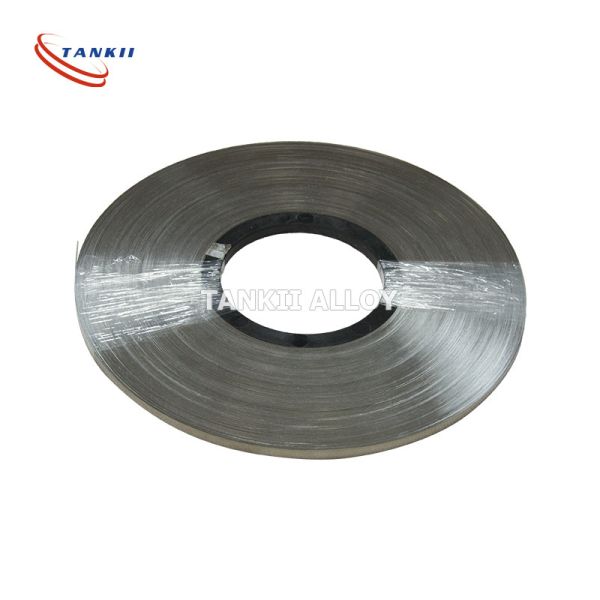
1. Electrothermal Alloys (Mainly Ni-Chromium 8020 Flat Wire/Strip)
Ni-Chromium Series: Cr20Ni80 (8020), Cr15Ni60, Cr30Ni70 Wire/Strip
Fe-Chromium-Aluminum Series: 0Cr21Al6, 0Cr25Al5, 0Cr27Al7Mo2 Wire/Strip
Copper-Nickel Series: CuNi1/2/6/8/10/14/19/23/30/34/40/44 Wire/Strip
Pure Nickel Series: N4, N6 Wire/Strip/Bar
2. Precision Resistance Alloys
Manganin, Constantan, Kamar wire, Nickel-Iron alloy wire/strip
3. Thermocouples and Compensating Wires
K, J, E, T, N, S, R, B type thermocouple wires/compensating wires
Please Contact me for more details.