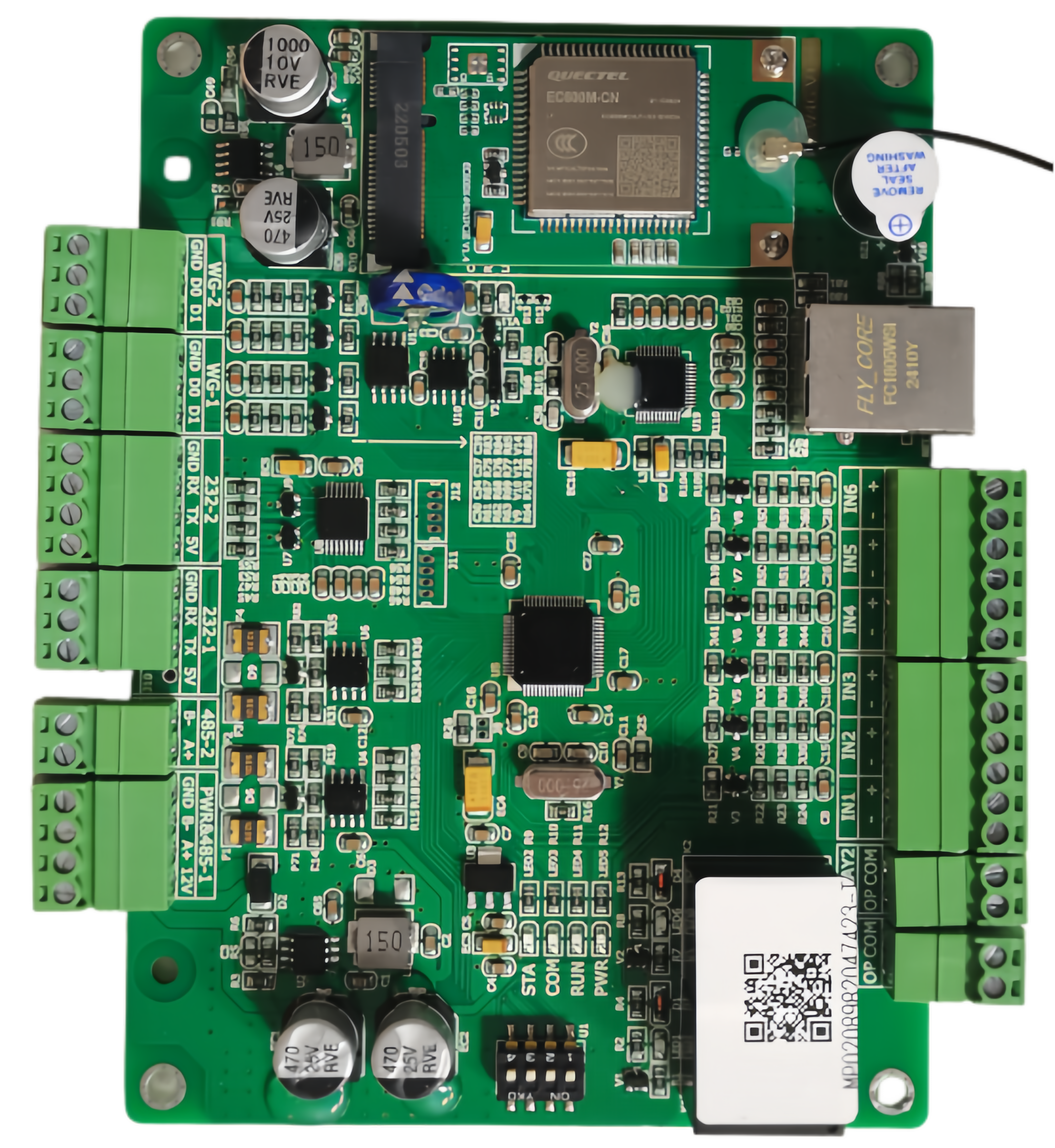
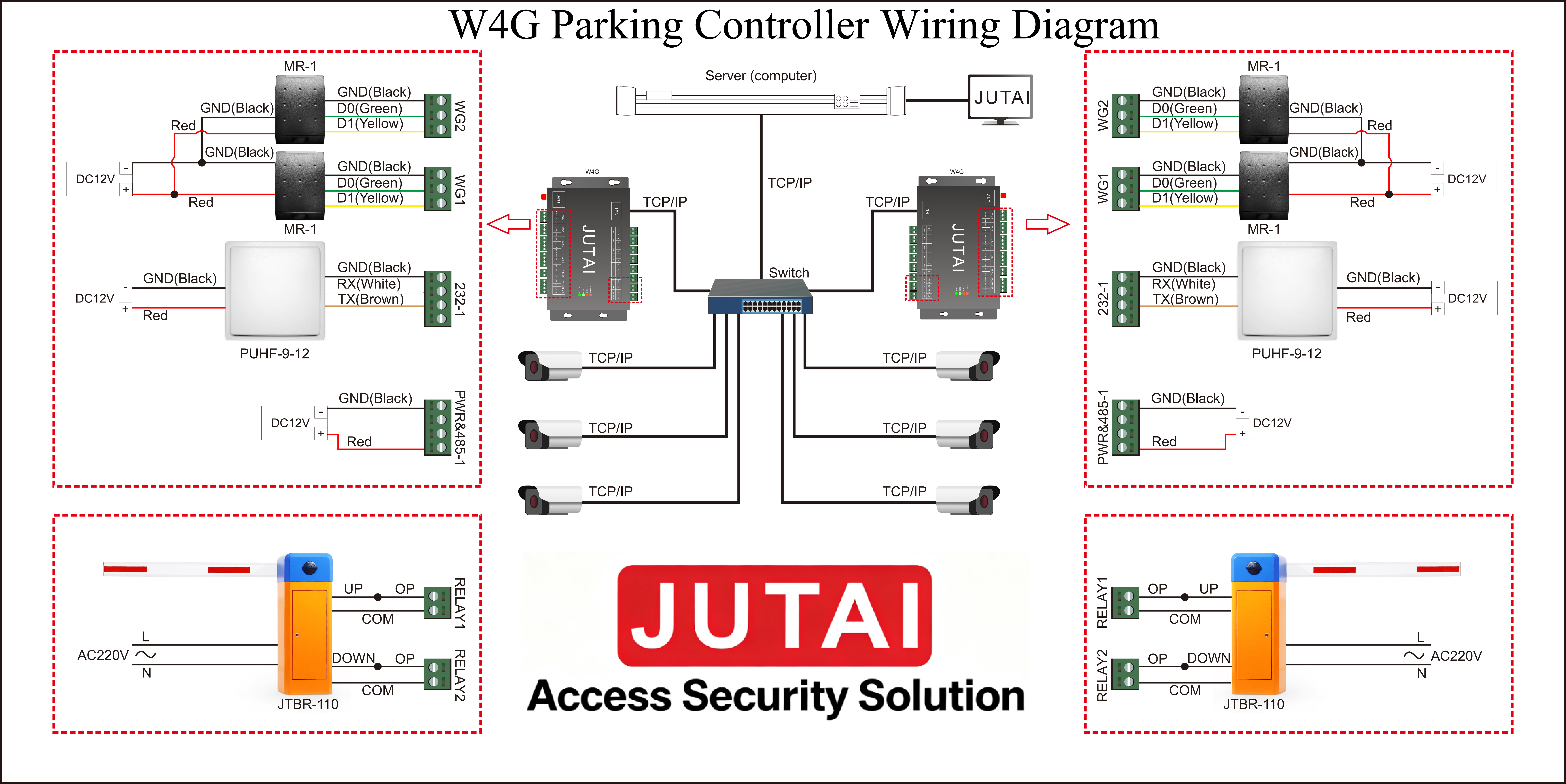
The JUTAI W4G 4G Parking Lot Controller is an industrial-grade intelligent core tailored for license plate recognition (LPR) parking systems. It integrates 4G/Ethernet dual-network redundancy, LPR data integration, barrier control, offline operation, and multi-peripheral linkage—solving the pain point of traditional parking systems relying on physical lines. Equipped with a high-speed ARM Cortex-M3 processor and rich standard interfaces, it seamlessly connects LPR cameras, barriers, loop detectors, and cloud platforms, ensuring 24/7 stable operation of parking lots, communities, and commercial access scenarios.
- No line dependency: 4G + Ethernet dual-network design, automatically switching to 4G when physical lines are damaged or Ethernet fails.
- Cost optimization: Reverts to Ethernet after network recovery, minimizing 4G data consumption and operational costs.
- Stable signal coverage: Uses mobile operator networks, ensuring normal operation as long as mobile signals are available.
- Direct camera 对接: Supports Ethernet photo push from Zhixin/Zhenshi cameras and RS485 license plate data from three mainstream brands.
- Fast data transmission: Ethernet uploads 100KB photos in ~0.5 seconds, 4G in ~1.5 seconds, ensuring real-time LPR processing.
- Fake plate detection: Cooperates with supported cameras to identify fake/return/stay plates, enhancing parking security.
- Independent work capability: Built-in RTC (power failure backup) and large-capacity memory, operating with pre-stored whitelists offline.
- Offline access control: Automatically allows valid whitelist vehicles to pass, denies temporary/expired vehicles, and saves all records.
- Automatic sync: Uploads offline logs, images, and access records to the cloud immediately after reconnection, no data loss.
- Barrier management: 2 high-load relays control barrier opening/closing/holding open, with LED delay control (1-30 seconds).
- Peripheral linkage: Reads loop detector signals via IO inputs to sense vehicle presence; connects card readers via Wiegand for dual access control.
- Extended functions: Supports ticket printers, ETC readers, and LCD displays, adapting to diverse parking lot configurations.
- MQTT protocol docking: Standard JSON format, supporting cloud control of barriers, display content, voice broadcasts, and whitelist updates.
- Real-time monitoring: Periodic heartbeat reports (1 minute default) include signal strength, temperature, data usage, and network type.
- Whitelist management: Supports adding/modifying/deleting whitelists (max 16000 entries), with batch operation to extend flash lifespan.
- Smart Parking Lots: Core controller for entry/exit stations, integrating LPR recognition, barrier control, and payment system linkage. Offline operation ensures uninterrupted service during network outages.
- Residential Communities: Manages resident whitelists and visitor temporary access, linking with community access control systems for secure vehicle entry.
- Commercial & Retail Parking: Facilitates paid parking, monthly pass management, and QR code payment integration. Dual-network redundancy guarantees peak-hour reliability.
- Industrial Parks & Logistics Centers: Controls truck and authorized personnel access, logs entry/exit times, and integrates with warehouse management systems.
- Highway Toll Stations: Supports ETC protocol integration, with dual-network stability ensuring critical communication in toll collection scenarios.
- LPR-Specific Optimization: Seamless integration with mainstream LPR cameras, reducing integration complexity for system integrators.
- Zero Downtime Guarantee: Dual-network auto-failover eliminates line-dependent outages, protecting parking lot revenue and security.
- Robust Offline Capability: Independent operation with data storage ensures normal access control even without network connectivity.
- Industrial-Grade Durability: Extreme temperature resistance (-40°C ~ +85°C) and interface protection 适应 harsh outdoor environments.
- Scalable & Future-Proof: Open MQTT protocol and rich interfaces support cloud platform integration and functional expansion.