Specifications
Place of Origin :
China
Operating voltage :
3 ~ 15 V (DC, safe voltage)
Model Number :
CQDHX
Installed power :
5 ~ 500 kW (depending on water concentration and treatment target)
Price :
$20,000 to $500,000 per set
effluent COD :
Removal rate 30%~95%, B/C ratio increased to over 0.35.
Supply Ability :
5 sets/month
Water color :
Removal rate ≥90%, colorless and transparent
Payment Terms :
L/C,T/T
Ammonia nitrogen in effluent :
Removal rate: 30%~97%
Delivery Time :
20 work days
Equipment Material :
PP / Stainless Steel / Titanium
Brand Name :
aa ss
Processing volume :
1 ~ 1000 m³/day (modular parallel operation)
MOQ :
1set
Inlet TDS :
No requirements (high salinity environment is beneficial to electrochemical efficiency)
Description

I. Product Overview

bio-chemical manufacturing wastewater is widely recognized as one of the most difficult industrial wastewaters to treat, originating extensively from chemical synthesis, fermentation, extraction, formulation, and traditional Chinese medicine extraction processes. Its typical characteristics include: high COD concentration, complex composition (containing large amounts of organic solvents, intermediates, unreacted substances, and byproducts), strong biotoxicity (antibiotic residues, nitro compounds, heterocyclic compounds, etc., inhibiting microbial activity), extremely poor biodegradability (B/C ratio often below 0.15), high salinity (Cl⁻, SO₄²⁻, Na⁺, etc.), and large fluctuations in water quality and quantity (significant differences between wastewater from different products and different processes).

Traditional bio-chemical manufacturing wastewater treatment processes typically employ a long process combining "pretreatment + biochemical treatment (hydrolysis acidification + A/O, etc.) + advanced treatment." However, in actual operation, the following difficulties have long been encountered: Antibiotic residues inhibit the biochemical system: Residual antibiotics in fermentation and semi-synthetic bio-chemical manufacturing wastewater significantly inhibit nitrifying and heterotrophic bacteria in activated sludge, leading to low treatment efficiency or even system collapse in the biochemical system. Recalcitrant organic matter cannot be biologically removed: Heterocyclic compounds, nitrobenzenes, and chlorinated hydrocarbons in synthetic bio-chemical manufacturing wastewater are highly resistant to microorganisms, and the biochemical stage has almost no effect on removing these types of COD. High salinity inhibits biochemical processes and can even paralyze the system: Conventional activated sludge systems are basically unable to operate with high-salinity wastewater, requiring dilution or evaporation desalination, significantly increasing treatment costs. Product type switching leads to drastic changes in wastewater quality. Fluctuations in water quality and a long acclimatization period (2-4 weeks) for the biochemical system, coupled with difficulties in achieving effluent standards during the switchover period, all contribute to the following:

This system employs electrochemical oxidation technology, playing a crucial role in multiple stages of the bio-chemical manufacturing wastewater treatment process:

For high-concentration synthetic bio-chemical manufacturing wastewater—whether directly treated raw water or wastewater after simple pretreatment—it rapidly attacks antibiotic active groups, breaks heterocyclic and nitro structures, and degrades aromatic compounds through direct anodic oxidation and electrocatalysis-generated hydroxyl radicals (·OH), eliminating biotoxicity completely within 1-2 hours. The B/C ratio is increased from 0.05-0.10 to over 0.35, creating safe influent conditions for subsequent biochemical systems.

For fermentation-type bio-chemical manufacturing wastewater—it efficiently removes residual antibiotic activity, ensuring stable operation of the biochemical system; it also synergistically removes COD and ammonia nitrogen.

For advanced treatment of biochemical effluent—it deeply removes residual recalcitrant COD and color from the biochemical effluent, ensuring that the effluent consistently meets the most stringent discharge standards or reuse requirements.

This system targets high-salt mother liquor/evaporation pretreatment—removing COD and color from high-salt wastewater, improving the quality of evaporated crystallized salt, and reducing mother liquor discharge.

The entire process consumes only electricity, requires no chemical additives, generates no iron sludge or other hazardous waste, and operates at ambient temperature and pressure. It is a key technological unit in the entire process of bio-chemical manufacturing wastewater treatment, from "pretreatment → biochemical assurance → deep compliance → high-salt resource utilization."

II. Difficulties in bio-chemical manufacturing wastewater treatment and solutions of this equipment

Address the difficulties

Electrochemical solutions

Antibiotic residues strongly inhibit activated sludge, making the biological system prone to poisoning and collapse.

Electrochemical oxidation destroys the active groups of antibiotics, completely inactivating them, allowing the effluent to safely enter the biological system.

It contains a large amount of recalcitrant organic matter (heterocyclic compounds, nitrobenzenes, chlorinated hydrocarbons, etc.) and has an extremely low B/C ratio (<0.15), making it impossible to effectively treat with simple biological methods.

Electrochemical ring-opening and bond-breaking processes convert large, recalcitrant organic molecules into small organic acids, increasing the B/C ratio to over 0.35.

Wastewater has a complex composition and fluctuates greatly in quality. Wastewater from different product processing stages varies significantly, making it difficult for biological treatment systems to adapt.

The electrochemical response is fast—the current increases when toxicity increases and decreases when COD decreases, with automatic adjustment within minutes, adapting to various water quality shocks.

Synthetic bio-chemical manufacturing wastewater has extremely high COD, and traditional "dilution + biological treatment" methods result in massive wastewater volumes.

Electrochemical treatment of high-concentration wastewater (without dilution) significantly reduces COD and toxicity before it enters the biological treatment system, thus significantly reducing the load on the biological treatment stage and the amount of dilution water required.

High-salinity wastewater leads to osmotic pressure imbalance in the biological system, resulting in the death of a large number of microorganisms.

Electrochemistry is not inhibited by high salt concentrations—the higher the salt content, the higher the yield of active chlorine, and the higher the oxidation efficiency; high-salt wastewater can be directly treated before evaporation or reuse.

Fenton deep treatment produces a huge amount of iron sludge (0.5-3 kg of hazardous iron sludge per ton of water), and the disposal cost is extremely high.

Zero chemicals, zero iron sludge, zero solid waste; the deep treatment process generates no hazardous waste.

During product switching, the wastewater composition changes abruptly, and the biological system needs to be readjusted (2-4 weeks). During this period, the effluent continuously exceeds the standards.

Electrochemistry, acting as a stabilization barrier before biochemical treatment, can complete detoxification and improve biodegradability within 1-2 hours regardless of changes in wastewater composition, ensuring the stability of the influent for biochemical treatment.

bio-chemical manufacturing wastewater containing dark colors (nitro compounds, dye intermediates, etc.) has poor sensory properties and its color is difficult to biodegrade.

Electrochemical disruption of the conjugated structure of chromophores results in colorless and transparent effluent with a color removal rate of ≥90%.

III. Working Principle

bio-chemical manufacturing wastewater, after being treated by screening, sedimentation, or filtration to remove suspended solids, enters an electrochemical reactor. Purification is achieved through the following oxidation pathways, depending on the treatment objectives and wastewater characteristics:

(1) Inactivation of Antibiotics/Active Substances

Residual antibiotics and active substances ingredients in bio-chemical manufacturing wastewater are the root cause of biochemical system collapse. In the electrochemical reactor:

Antibiotics (penicillins, cephalosporins): Under anodic oxidation, the rings break, losing antibacterial activity.

Macrolactones: The lactone rings are oxidized and opened, the molecular structure rearranges, and biological activity disappears.

Tetracyclines: The conjugated polycyclic structure is attacked by hydroxyl radicals, the ring system breaks, and antibacterial ability is lost.

Nitroimidazoles, Quinolones: The nitro group and heterocyclic structure are oxidized and destroyed, eliminating mutagenicity and antibacterial activity.

"Bio-activity inactivation" differs from simple COD removal—even if the antibiotic molecule is not completely mineralized, as long as the active group is destroyed, its inhibitory effect on microorganisms is essentially eliminated, and the biochemical system can safely receive it.

(2) Direct electro-oxidation (Organic pollutants in wastewater (nitrobenzene, aniline, heterocyclic compounds, chlorinated hydrocarbons, polycyclic aromatic hydrocarbons, etc.) are directly oxidized on the anode surface by losing electrons:

Aromatic rings are hydroxylated and then open → small molecule organic acids

Heterocyclic rings (containing N/S/O) are oxidized and open → elimination of biotoxicity

Nitro groups are reduced/oxidized → denitration and ring opening

Long carbon chain organic compounds are broken → (2) Degradable Small Molecules: Direct oxidation transforms large, recalcitrant COD molecules in wastewater into microbially degradable small-molecule organic matter, significantly increasing the B/C ratio.

(3) Indirect Electro-oxidation: Anodic electrolysis of water generates hydroxyl radicals (·OH), while simultaneously utilizing naturally occurring chloride ions in the wastewater to generate active chlorine (Cl₂, HOCl, OCl⁻). These two strong oxidizing agents diffuse in the solution, supplementing the oxidation of pollutants that direct oxidation could not reach, ensuring thorough detoxification and COD removal efficiency.

(4) Synergistic Removal of COD and Ammonia Nitrogen: For bio-chemical manufacturing wastewater containing ammonia nitrogen, active chlorine can simultaneously oxidize ammonia nitrogen into nitrogen gas, achieving synergistic removal of COD and ammonia nitrogen in the same equipment.

(5) Color Elimination: Chromogenic groups such as nitro compounds, azo dye intermediates, and quinones are oxidized, breaking their conjugated structures, resulting in colorless and transparent effluent.

IV. Core Advantages (Targeting bio-chemical manufacturing Wastewater)

Advantages

illustrate

Rapid inactivation of antibiotic residues

Within 1-2 hours, it completely destroys the β-lactam ring, macrolide ring, and other active antibiotic groups, eliminating their inhibitory effects on microorganisms and ensuring the stability of subsequent biochemical systems.

Significantly improve biochemical properties

The B/C ratio increased from 0.05-0.15 to 0.35-0.60, resulting in a 40%-70% increase in COD removal rate for the biochemical system.

Direct treatment of high-concentration raw water

No dilution required; can be processed directly, avoiding the ineffective cycle of "dilution-reprocessing".

Adapted to high-salt environments

Salts (such as NaCl) in bio-chemical manufacturing wastewater not only do not inhibit the reaction, but also enhance oxidation efficiency by generating active chlorine; the higher the salinity, the better the treatment effect.

Strong ability to cope with water quality fluctuations

When product switching or process adjustment leads to changes in wastewater composition, the treatment intensity can be matched within minutes through current regulation, eliminating the need for biological acclimation and waiting.

Zero chemical dosage

No chemical oxidants, flocculants, acids, or alkalis are added; it only consumes electricity.

Safe operation at normal temperature and pressure

Operating voltage 3~15V DC, no high voltage, no high temperature, no risk of chemical leakage.

Electrode anti-fouling and corrosion resistant

Titanium-based composite coated electrodes are resistant to various corrosive components in bio-chemical manufacturing wastewater, do not scale or clog, and operate stably over long periods.

V. Technical Parameters (Customizable)

parameter

scope

Processing volume

1 ~ 1000 m³/day (modular parallel operation)

Installed power

5 ~ 500 kW (depending on water concentration and treatment target)

Operating voltage

3 ~ 15 V (DC, safe voltage)

Inlet TDS

No requirements (high salinity environment is beneficial to electrochemical efficiency)

effluent COD

Removal rate 30%~95%, B/C ratio increased to over 0.35.

Ammonia nitrogen in effluent

Removal rate: 30%~97%

Water color

Removal rate ≥90%, colorless and transparent

Equipment Material

PP / Stainless Steel / Titanium

Inlet water requirements (pre-treatment recommended)

SS ≤ 100 mg/L, oil ≤ 50 mg/L, pH 4~10 (wide adaptability range)

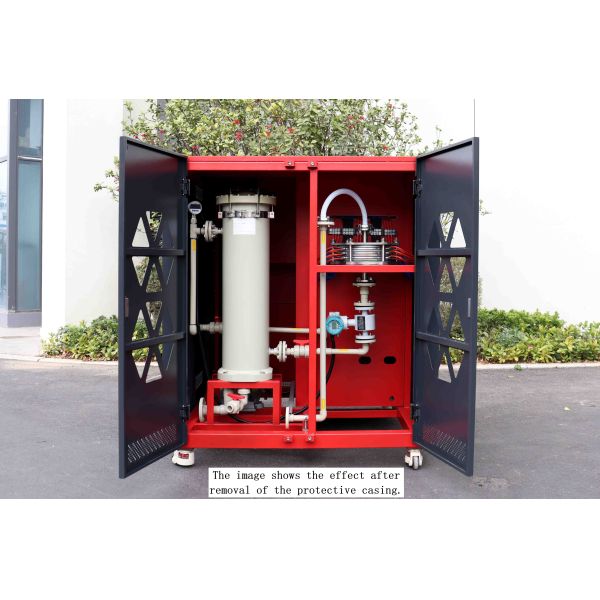
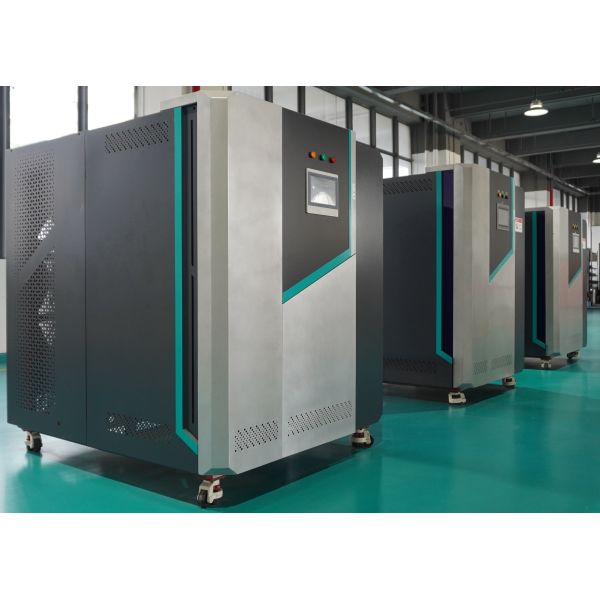
Electrochemical wastewater treatment equipment for bio-chemical manufacturing wastewater treatment.

VI.Process Location

Option 1: Pretreatment Detoxification

bio-chemical manufacturing wastewater (high concentration/high toxicity) → Bar screen/Equalization tank → Sedimentation/Flotation (SS and oil removal) → Electrochemical equipment (antibiotic inactivation, ring-opening and bond breaking, B/C ratio enhancement) → Intermediate tank → Biological system (hydrolysis acidification + A/O or A²/O) → Discharge meeting standards

Explanation: The electrochemical detoxification unit is located before the biological system and undertakes the core functions of "antibiotic inactivation + toxicity elimination + ring-opening of recalcitrant substances". This is the most critical process in bio-chemical manufacturing wastewater treatment—directly introducing untreated bio-chemical manufacturing wastewater into the biological system poses an extremely high risk of system collapse. After detoxification, the effluent B/C ratio is ≥0.35, the COD removal rate of the biological stage is significantly improved, and the overall system operates stably and reliably.

Option 2: Advanced Treatment to Meet Standards (Applicable when COD/color of biochemical effluent still fails to meet standards)

bio-chemical manufacturing Wastewater → Pretreatment → Biochemical System → Secondary Sedimentation Tank → Electrochemical Treatment Unit (Removal of Residual Stubborn COD and Color) → Standard Discharge/Reuse

Note: When the biochemical effluent and color still fail to meet discharge standards, an electrochemical advanced treatment unit is added after the biochemical system to reduce COD and completely eliminate color, fully meeting direct discharge standards.

Option 3: Direct Compliance of Raw Water

bio-chemical manufacturing Wastewater → Pretreatment (SS Removal) → Electrochemical Treatment Equipment → Effluent → Standard Discharge or Industrial Park Pipeline

Send your message to this supplier
Send Now

Electrochemical wastewater treatment equipment for bio-chemical manufacturing wastewater treatment.

Ask Latest Price
Place of Origin :
China
Operating voltage :
3 ~ 15 V (DC, safe voltage)
Model Number :
CQDHX
Installed power :
5 ~ 500 kW (depending on water concentration and treatment target)
Price :
$20,000 to $500,000 per set
effluent COD :
Removal rate 30%~95%, B/C ratio increased to over 0.35.
Contact Supplier
Electrochemical wastewater treatment equipment for bio-chemical manufacturing wastewater treatment.

AA SS AQUA HITECH CO., LTD.

Verified Supplier
1 Years
guangdong, shenzhen
Since 2005
Business Type :
Manufacturer, Exporter, Trading Company, Other
Total Annual :
$5 million-$6 million
Employee Number :
40 people~60 people
Certification Level :
Verified Supplier
Contact Supplier
Submit Requirement