I. Product Overview
Coal chemical wastewater mainly originates from coal coking, gasification, liquefaction, and coal-to-methanol and coal-to-olefins processes. Typical water quality characteristics include: high COD concentration (2000~15000 mg/L), high ammonia nitrogen concentration (200~2000 mg/L), large amounts of recalcitrant organic matter (phenols, polycyclic aromatic hydrocarbons, heterocyclic compounds), strong biological toxicity, extremely poor biodegradability (BOD₅/COD is usually below 0.2), large fluctuations in water quality, and high salinity.
Traditional treatment processes typically employ a long process combination of "pretreatment (oil removal, phenol removal, ammonia stripping) + biological treatment + advanced treatment," which has problems such as lengthy process flow, huge land area, biological system being prone to collapse due to toxicity inhibition, low operating efficiency in winter, large sludge production, and difficulty in consistently meeting discharge standards.
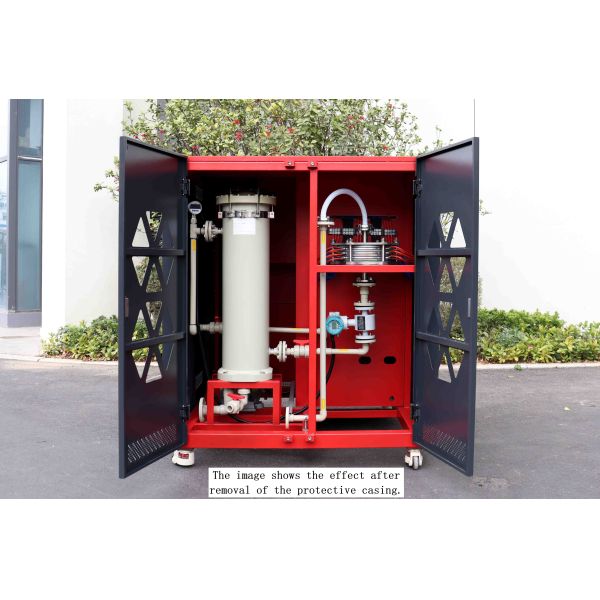
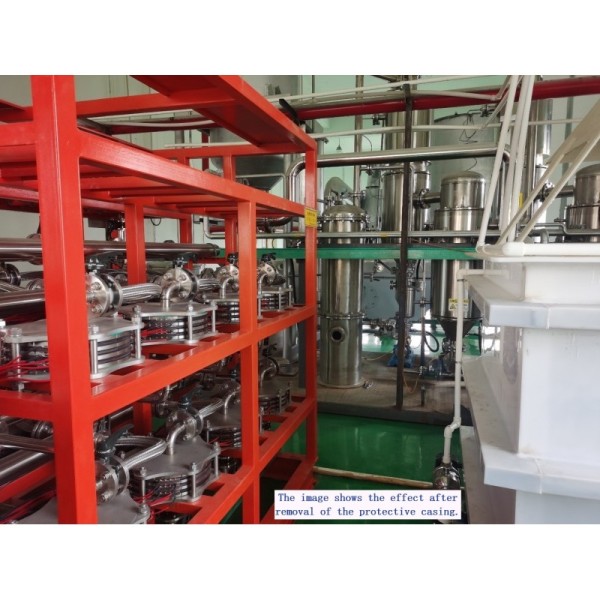
This system employs electrochemical oxidation technology. Coal chemical wastewater, after necessary pretreatment such as oil removal, hardening removal, and pH adjustment, enters the electrochemical reactor. Through direct anodic oxidation and indirect oxidation by strongly oxidizing active species generated by electrocatalysis, phenolic and heterocyclic toxic pollutants can be rapidly oxidized and decomposed within 1-2 hours, increasing the wastewater's BOD₅/COD ratio from 0.1-0.2 to over 0.35, completely eliminating biological toxicity and creating safe influent conditions for subsequent biological treatment systems. Alternatively, it can be directly treated to meet discharge standards without requiring a biological treatment stage.
No chemical reagents are required throughout the process, and no sludge or concentrated water is produced. The electrodes are designed to be resistant to pollution and scaling, making them suitable for the complex water quality of coal chemical wastewater with high hardness and high salinity.
II. Challenges in Coal Chemical Wastewater Treatment and Solutions from This Equipment
| Addressing difficulties |
Electrochemical solutions |
|
It contains phenols and heterocyclic compounds, has strong biological toxicity, and its biochemical system is easily disrupted and collapses. |
Electrochemical pretreatment rapidly oxidizes and decomposes toxic substances within 1-2 hours, completely eliminating biotoxicity and ensuring stable operation of the biochemical system. |
|
It has extremely poor biodegradability (B/C < 0.2), and cannot be effectively degraded by biochemical methods alone. |
Electrochemical oxidation disrupts molecular structure, increasing the B/C ratio to over 0.35 and significantly improving subsequent biochemical efficiency. |
|
The traditional "pretreatment + biochemical treatment + deep treatment" process is extremely long and occupies tens of acres of land. |
The electrochemical module can replace the pretreatment oxidation section + deep oxidation section, reducing the floor space by 50%~70%. |
|
Biological systems are greatly affected by temperature; nitrification efficiency drops sharply or even stops in winter. |
Electrochemical operation at ambient temperature and pressure (0~40℃), unaffected by seasonal and temperature changes. |
|
Pretreatment processes such as ammonia stripping and phenol removal are energy-intensive and have high operating costs. |
Electrochemical treatment can directly treat wastewater containing phenols and ammonia, reducing ammonia stripping load and overall energy consumption. |
|
Advanced treatment commonly uses ozone/Fenton, but this method consumes a lot of reagents and generates hazardous waste such as iron sludge. |
Zero chemical dosage, no solid waste/hazardous waste generation, and no secondary pollution treatment costs. |
|
High hardness and high salinity lead to severe fouling and frequent cleaning in conventional membrane systems. |
The electrodes have a special anti-scaling coating that is insensitive to hardness, eliminating the need for frequent acid washing and making them suitable for water with high mineralization. |
III. Working Principle
After pretreatment such as oil removal and sedimentation/filtration, coal chemical wastewater enters the electrochemical reactor, where the following reactions occur under the action of electrodes:
(1) Direct electro-oxidation
Phenols and heterocyclic compounds (such as pyridine, quinoline, carbazole, etc.) are directly oxidized on the anode surface, the benzene ring and heterocyclic ring are opened, and macromolecular organic matter is decomposed into small molecule organic acids or carbon dioxide. This pathway is particularly efficient for the removal of phenols and polycyclic aromatic hydrocarbons.
Indirect electro-oxidation (main pathway)
Chloride ions in wastewater (coal chemical wastewater typically contains 500~5000 mg/L Cl⁻) are electrolyzed at the anode to generate active chlorine. The active chlorine further oxidizes ammonia nitrogen into nitrogen gas, while simultaneously performing deep oxidation and degradation of phenols and heterocyclic compounds.
The anode simultaneously electrolyzes water to generate hydroxyl radicals (·OH), which act as a non-selective strong oxidant to indiscriminately oxidize and attack various organic pollutants, ensuring the complete elimination of biological toxicity in the effluent.
Synergistic effect
Ammonia nitrogen is oxidized into nitrogen gas, while COD is simultaneously degraded.
After organic matter is removed, its competitive interference with ammonia nitrogen oxidation is avoided, achieving efficient removal of both ammonia nitrogen and COD. A small amount of residual active chlorine in the effluent has an antibacterial protective effect on the subsequent biological system, preventing toxic bacteria from entering the biological tank. The treated effluent has a significantly increased BOD₅/COD ratio and can directly enter the biological system for further degradation; for low-concentration coal chemical wastewater, it can also be directly treated to meet discharge standards.
IV. Core Advantages (Targeting Coal Chemical Wastewater
|
Advantages |
illustrate |
|
Rapid elimination of biotoxicity |
Within 1-2 hours, it oxidizes and decomposes phenolic and heterocyclic toxic substances, increasing the effluent B/C ratio from 0.2 to over 0.35, thus protecting the biological system from impact. |
|
Synergistic removal of ammonia nitrogen and COD |
Simultaneous oxidation of ammonia nitrogen and organic matter eliminates the need for segmented treatment; a single system accomplishes multiple objectives. |
|
Completely eliminate sludge problems |
It does not produce chemical sludge, biological sludge, or concentrated wastewater, and there are no sludge dewatering or hazardous waste disposal processes. |
|
No chemical agents added |
No need to add acids, alkalis, oxidants, carbon sources, flocculants, etc., eliminating the risks associated with chemical procurement and storage. |
|
Extremely adaptable to water quality |
It resists phenolic toxicity shocks, hardness scaling, and salinity fluctuations; it automatically compensates for significant fluctuations in influent COD and ammonia nitrogen through current regulation. |
|
Significantly simplify the process flow |
It can replace the traditional "pretreatment oxidation stage + deep oxidation stage" process, significantly shortening the original long process. |
|
Stable operation throughout the four seasons |
The removal efficiency remains basically unchanged within the temperature range of 0~40℃, and there is no concern about nitrification stagnation in northern winters. |
|
Long-term operation of electrodes |
Titanium-based coated electrodes are resistant to contamination and scaling, and do not require replacement under normal operating conditions; maintenance only requires periodic inspections. |
V. Technical Specifications (Customizable)
|
parameter |
scope |
|
Processing volume |
5 ~ 2000 m³/day (modular parallel operation) |
|
Installed power |
10 ~ 500 kW (depending on water quality and treatment objectives) |
|
Working voltage |
3 ~ 15 V (DC, safe voltage) |
|
COD of influent |
500 ~ 15000 mg/L |
|
Influent ammonia nitrogen |
50 ~ 2000 mg/L |
|
Effluent COD (Pretreatment Mode) |
Removal rate 40%~70%, B/C ratio increased to over 0.35. |
|
Ammonia nitrogen in effluent (pretreatment mode) |
Removal rate of 60%~90%, effectively reducing biochemical load. |
|
Effluent COD (Direct Compliance Mode) |
It can be reduced to below 100 mg/L (with post-treatment). |
|
Ammonia nitrogen in effluent (direct compliance mode) |
Can be reduced to ≤10 mg/L |
|
Energy consumption (COD degradation portion) |
Depending on the complexity of the water quality |
|
Equipment Material |
PP / Stainless Steel / Titanium |
VI. Applicable coal chemical industry segmentation scenarios
|
Sub-sectors |
Wastewater characteristics |
Key points of electrochemical adaptation |
|
Coal coking |
COD 3000~8000 mg/L, ammonia nitrogen 200~800 mg/L, containing phenols, cyanides, and sulfides. |
Rapid detoxification and cyanide removal, followed by biochemical treatment of effluent, solves the problem of biochemical instability in coking wastewater. |
|
Coal gasification |
COD 5000~15000 mg/L, ammonia nitrogen 500~1500 mg/L, contains tar, phenols, and fatty acids. |
Pre-degreasing followed by electrochemical ring-breaking significantly improves biodegradability. |
|
Coal-to-methanol/olefins |
COD 1500~5000 mg/L, ammonia nitrogen 100~500 mg/L, contains methanol, organic acids, and trace amounts of catalyst. |
Low power consumption degrades organic matter, simultaneously removes ammonia nitrogen, and the effluent can be directly discharged or reused. |
|
Coal liquefaction |
COD 2000~6000 mg/L, containing polycyclic aromatic hydrocarbons and heterocyclic nitrogen compounds. |
Ring-opening oxidation of heterocyclic compounds to eliminate biotoxicity |

VII. Process Location
Option 1: Pretreatment and Detoxification
Coal chemical wastewater → Oil removal and sedimentation (removal of suspended oil and SS) → Electrochemical treatment equipment (removal of biotoxicity, improvement of B/C ratio) → Biochemical system (A/O or A²/O) → Advanced treatment (optional) → Discharge to meet standards/reuse
Note: Physical pretreatment such as oil removal and sedimentation is required before the electrochemical equipment to remove suspended solids and grease, protect the electrodes, and ensure treatment efficiency. Increasing the B/C ratio of the electrochemical effluent to above 0.35 can improve the COD removal rate of the subsequent biological system by more than 30%, and significantly enhance the overall process stability.
Option 2: Separate treatment (suitable for upgrading medium- and low-concentration coal chemical wastewater or biochemical effluent)
Coal chemical wastewater → oil removal and sedimentation → electrochemical treatment equipment → discharge in compliance with standards/reuse within the plant area
Note: Wastewater can be discharged directly after electrochemical treatment, without the need for a biological treatment system. It is especially suitable for upgrading existing biological treatment systems when the effluent ammonia nitrogen/COD exceeds the standards.