I.Product Overview
High-salinity wastewater widely originates from chemical synthesis, pharmaceutical manufacturing, pesticide production, coal chemical industry, printing and dyeing, food processing, landfill leachate, and zero-discharge projects. This type of wastewater not only has high salt content but also often exhibits high COD and color. For this type of wastewater, evaporation crystallization (MVR, multi-effect evaporation, etc.) is currently the most mainstream resource recovery route—recovering condensate through evaporation and industrial salt through crystallization.
However, the evaporation process faces two long-standing key challenges:
key challenge 1: Continuous accumulation of mother liquor. COD and color-producing substances in the wastewater do not volatilize during evaporation and are entirely concentrated in the mother liquor. As the evaporation cycle continues, the COD and color of the mother liquor continuously increase, along with viscosity and boiling point, leading to decreased evaporation efficiency and increased energy consumption. To maintain system operation, a certain amount of high-concentration mother liquor must be periodically discharged as hazardous waste, resulting not only in salt loss but also high transportation and disposal costs.
key challenge 2: Poor quality and low whiteness of the evaporated salt. During the evaporation process, COD and chromogenic substances are partially carried or encapsulated into the crystalline salt, causing the industrial salt to appear yellow, black, or gray, and its purity to decrease, making it difficult to meet industrial salt standards. It can only be disposed of as low-value waste salt in landfills, significantly reducing its resource value.
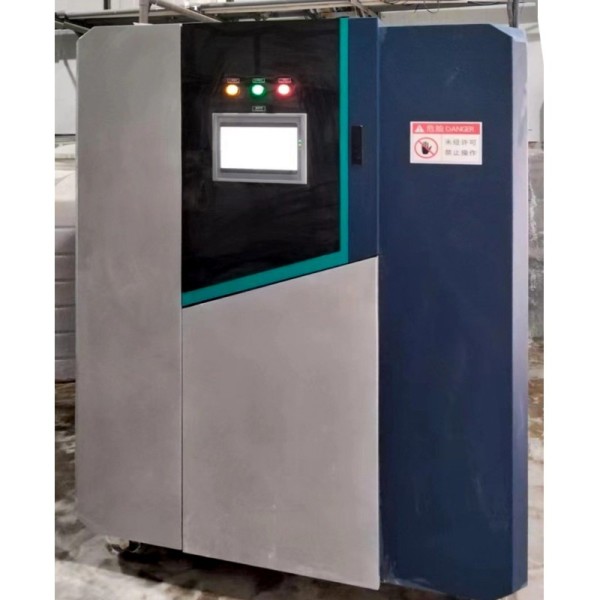
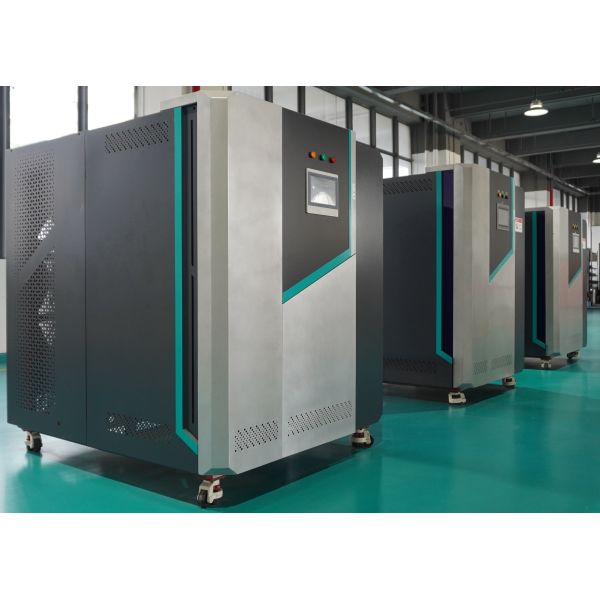
This system places the electrochemical oxidation equipment before the evaporation system as a pretreatment step. Wastewater is first treated electrochemically—direct anodic oxidation and electrocatalytic generation of strong oxidizing species such as hydroxyl radicals (·OH) oxidize and decompose COD (including recalcitrant organic matter, surfactants, complexing agents, chromogenic groups, etc.) into CO₂ and H₂O; simultaneously, it completely destroys the unsaturated conjugated structure of the chromogenic groups, significantly reducing the color of the wastewater. After electrochemical pretreatment, the high-salt wastewater, with significantly reduced COD and color, enters the evaporation system, achieving the following goals: Significantly reduced production of evaporation mother liquor; Significantly improved whiteness and purity of crystalline salt; Extended evaporation system operating cycle and reduced cleaning frequency; Realized high-value recovery of salt resources rather than disposal as waste salt. The entire process consumes only electricity, introduces no chemical agents, does not increase the salt content in the wastewater (COD is mineralized into CO₂ and released, and non-coloring substances are oxidized into colorless small molecules), and produces no solid waste or concentrated water. It is an ideal "pre-treatment" unit for evaporation systems.
II. Difficulties in chemical treatment of high-salt wastewater and solutions of this equipment
|
Address the difficulties |
Electrochemical solutions |
|
The COD in the evaporation mother liquor continues to accumulate, and the mother liquor needs to be discharged as hazardous waste, resulting in high disposal costs. |
Electrochemical pretreatment can remove 50% to 80% of COD, significantly reduce the amount of mother liquor generated, and lower hazardous waste disposal costs. |
|
Evaporated crystallized salt has a yellowish-black appearance and low whiteness, and can only be used as waste salt for landfill. |
The chromophores are completely broken down, resulting in over 90% removal of color from the influent and improved whiteness of the crystalline salt, meeting industrial salt standards. |
|
The evaporator is severely scaled inside and the heat exchange surfaces are contaminated, requiring frequent shutdowns for cleaning. |
After COD and color removal, the tendency for evaporator to scale is significantly reduced, and the cleaning cycle is extended. |
|
High COD increases the boiling point of the evaporation system, leading to increased evaporation energy consumption and a heavier load on the MVR compressor. |
Pretreatment reduces COD, decreases the boiling point elevation, and lowers evaporation energy consumption. |
|
Some wastewater undergoes pretreatment (activated carbon adsorption, resin adsorption) to transfer COD to the solid phase, generating hazardous waste such as saturated waste carbon/resin, and the cost of adsorbent consumption is high. |
COD is directly mineralized into CO₂ and released, without generating any solid waste or incurring adsorbent consumption costs. |
|
Fenton oxidation requires the introduction of a large amount of reagents, and the oxidant itself introduces impurities or byproducts, which in turn increases the load on the salt system. |
It consumes only electrons, introduces no impurity ions, and places no additional burden on the salt system. |
|
Evaporation systems struggle to adapt to fluctuations in water quality. |
The electrochemical unit responds rapidly to changes in water quality through current regulation, stabilizing the quality of the evaporating influent. |
III. Working Principle
After suspended solids are removed by a screen/filter, high-salinity wastewater enters an electrochemical reactor. Under the action of electrodes:
(1) Direct electro-oxidation (COD mineralization and chromophore destruction)
Organic pollutants in the wastewater (solvent residues, surfactants, complexing agents, dyes and intermediates, humic substances, etc.) directly lose electrons and are oxidized on the anode surface:
Chemical chain breakage of macromolecular organic matter → Organic acids/alcohols/aldehydes → Further oxidation to CO₂ and H₂O
Chrophore destruction → Wastewater decolorization
Aromatic ring opening → Elimination of color and COD
Direct oxidation has a mineralization effect on organic pollutants on the electrode surface, with high COD removal efficiency and controllable energy consumption.
(2) Indirect electro-oxidation (broad-spectrum oxidation dominated by ·OH and active chlorine)
The anodic electrolysis of water generates hydroxyl radicals (·OH), which utilize the naturally occurring high concentration of chloride ions (one of the main components of salts) in the wastewater to generate active chlorine (Cl₂, HOCl, OCl⁻):
The hydroxyl radicals indiscriminately oxidize various organic compounds, especially aromatic and heterocyclic recalcitrant COD contributors.
Active chlorine further diffuses into the solution, supplementing the oxidation of organic pollutants that did not directly contact the anode.
Indirect oxidation ensures uniform removal of COD and complete elimination of color in all areas of the reactor.
The synergistic effect of direct and indirect oxidation achieves maximum coverage of different types of organic compounds, ensuring that both COD removal rate and decolorization rate meet the standards.
(1) Key effect: "Reducing the burden" of the evaporation system rather than "transferring" it
The final products of COD oxidation are CO₂ and H₂O—CO₂ escapes into the gas phase in gaseous form, and H₂O evaporates into condensate with the evaporation system. Neither COD nor color remains in the mother liquor or crystallized salt. The small molecules (usually colorless organic acids) resulting from color degradation are carried away by the mother liquor in minimal quantities during evaporation, thus not affecting the whiteness of the salt.
In short: The electrochemical unit ensures that COD and color "leave" the salt system in gaseous and colorless forms before evaporation, leaving a purer, whiter salt and less mother liquor.
IV. Core Advantages (Targeting the Resource Utilization of High-Salinity Wastewater)
|
Advantages |
illustrate |
|
Significantly reduce the amount of mother liquor to evaporate |
After COD is removed by 50% to 80%, the mother liquor discharge rate decreases, and the cost of hazardous waste disposal drops. |
|
Significantly improves the whiteness and purity of crystalline salts |
Color is removed by 90%~99%, and the whiteness of the salt is improved to the standard of industrial salt, realizing the leap from "waste salt" to "product salt". |
|
Extend the operating cycle of the evaporation system |
After the removal of organic pollutants and color, the rate of scaling and contamination in the evaporator is significantly reduced, and the cleaning cycle is extended. |
|
Reduce evaporation energy consumption |
After COD and color-producing substances are removed, the boiling point rise of the evaporation system decreases, evaporation energy consumption decreases, and the load on the MVR compressor is reduced. |
|
No impurity ions are introduced. |
It consumes only electrons, does not add chemical reagents, and does not increase the load on the salt system. |
|
Zero solid waste, zero concentrated water |
COD is mineralized into CO₂ and released, without producing secondary waste such as saturated adsorbent, iron sludge, or concentrate. All influent water enters the evaporation system. |
|
A high-salt environment is beneficial to oxidation efficiency. |
High concentrations of Cl⁻ are efficiently converted into active chlorine at the anode, resulting in better treatment effects. This is a unique advantage of this technology compared to conventional oxidation. |
|
Safe operation at normal temperature and pressure |
Operating voltage is 3~15V DC, no high temperature or high pressure required, no safety hazards. |
V. Technical Parameters (Customizable)
|
parameter |
scope |
|
Processing volume |
1 ~ 1000 m³/day (modular parallel operation) |
|
Installed power |
5 ~ 400 kW (depending on COD concentration and water volume) |
|
Operating voltage |
3 ~ 15 V (DC, safe voltage) |
|
Inlet TDS |
3%~25% (no upper limit) |
|
Effluent COD (after treatment) |
Removal rate of 50%~80%, and significant reduction in COD of evaporating influent. |
|
Water color after treatment |
Removal rate of 90%~99%, effluent is basically colorless and transparent |
|
Whiteness of crystallized salt (after treatment) |
Meets industrial salt standards |
|
Equipment Material |
PP / Titanium / Duplex Stainless Steel |
|
Inlet water requirements (pretreatment recommended) |
SS ≤ 100 mg/L,pH 5~9 |
VI. Applicable to specific scenarios of high-salinity wastewater resource utilization
|
Sub-sectors |
Wastewater characteristics |
Key points of electrochemical resource adaptation |
|
High-salt mother liquor from chemical synthesis |
TDS 10%~20%, COD 5000~20000 mg/L, contains organic solvents and intermediate residues. |
After significantly reducing COD, the salt is then subjected to MVR evaporation, transforming the crystalline salt from waste salt into industrial by-product salt, and reducing the discharge of mother liquor by more than 80%. |
|
saline wastewater from pharmaceutical/pesticide production |
TDS 5%~15%, COD 3000~15000 mg/L, contains color-developing impurities, evaporated salt is yellow. |
By combining decolorization and COD reduction, the salt whiteness reaches over 85%, allowing for reuse or sale, thus achieving a "closed-loop resource utilization of salt." |
|
Coal chemical concentrated brine (nanofiltration/RO concentrate) |
TDS 5%~8%, COD 500~3000 mg/L, contains humic substances, evaporative salt grayish-black. |
Electrochemical removal of humic substances and chromogenic organic matter significantly improves salt color, meeting the requirements for the resource utilization of crystalline salt. |
|
High-salinity wastewater from printing and dyeing/dyeing |
TDS 5%~10%, contains a large amount of residual dyes and auxiliaries, extremely high chroma, deep color of evaporated salt. |
It has extremely high decolorization efficiency (90%~99%), and the evaporated crystallized salt is white in appearance and can be used directly as industrial salt. |
|
Landfill leachate membrane concentrate (nanofiltration/RO concentrate) |
TDS 5%~15%, COD 2000~15000 mg/L, dark brown color, large volume of mother liquor after evaporation. |
Electrochemical processes destroy humic acid-based colorants and COD, significantly reducing the amount of mother liquor in the evaporation system and increasing salinity and whiteness. |
|
Zero-emission project pre-evaporation treatment |
Various concentrated saline solutions were combined, with TDS ranging from 5% to 20% and COD fluctuating significantly. |
As the "evaporation and purification pre-processing unit" in the ZLD system, it ensures the long-term stable operation of the evaporation system and the quality of the salt. |
|
Food/MSG/Yeast High-Salt Organic Wastewater |
TDS 5%~8%, contains Maillard reaction products, caramel color, etc. |
The salt whiteness recovered after decolorization and evaporation is high, and the condensate can be reused in production, achieving zero wastewater discharge and resource utilization. |

VII. Process Location
Option 1: Pre-treatment before evaporation
High-salinity wastewater → Equalization tank → SS removal (precipitation or filtration) → pH
adjustment → Electrochemical pretreatment equipment (COD and color removal) → Evaporation system (MVR/multi-effect evaporation) → Crystallized salt + condensate (recycled after meeting standards)
Explanation: The electrochemical equipment is placed before the evaporator as a "refining" step. The wastewater, after SS removal, undergoes significant COD and color removal via electrochemical treatment before entering the evaporation system. The evaporation system treats "clean brine," resulting in high evaporation efficiency, low mother liquor, and high-quality salt. This is currently the most valuable incremental process configuration in zero-discharge and high-salinity resource utilization projects.
Option 2: Mother liquor reduction (for existing evaporation systems)
Evaporation system → Evaporation mother liquor (high COD, high color, high viscosity) → Electrochemical treatment equipment (removal of enriched COD and color) → Return to the evaporation system for further evaporation (or partial discharge)
Explanation: For existing evaporation systems, the continuous enrichment of COD and color in the mother liquor is the biggest operational challenge. A small electrochemical treatment unit can be added to the mother liquor circulation pipeline to continuously or intermittently circulate and treat the mother liquor, removing and enriching COD and color online, maintaining the mother liquor in a low COD and low color state for a long time, and significantly reducing the frequency of mother liquor discharge. This method does not change the original main process, requires low investment, and yields quick results.
Option 3: Direct Resource Utilization of Raw Water High-salt organic wastewater → Filtration → Electrochemical treatment equipment (COD removal to ≤200 mg/L, complete decolorization) → Evaporation and crystallization → Refined industrial salt + Reclaimed water